


History & Evolution of the Field
The art and science of therapy are ever-evolving. Some therapeutic approaches have staying power, some fade away, and some remain obscure but beloved by those who practice them. What can we learn from our past mistakes as a field? What opportunities are emerging from the latest research and advances?
These articles explore the advances, critiques, and turning points across the history of our field. They examine topics from the impact of technology and AI on therapy to perspectives on the DSM and diagnoses. Discover what our field’s thought leaders believe about where we’ve been and where we’re heading.
Learn from Bessel van der Kolk, Dan Siegel, John Gottman, Janina Fisher, Terry Real, Cloe Madanes, Salvador Minuchin, Esther Perel, and others as they share their evolving ideas and perspectives on psychology’s past, present, and future.


How the False Memory Debate Rewrote the Rules of Practice
Facing a Dark Chapter in Psychotherapy's HistoryCritiques & Turning Points
From questioning diagnostic frameworks to addressing venture capital’s impact on mental health care, our profession continues to examine its own identity, effectiveness, and ethics. Learn more about the history, and the future, of our field.
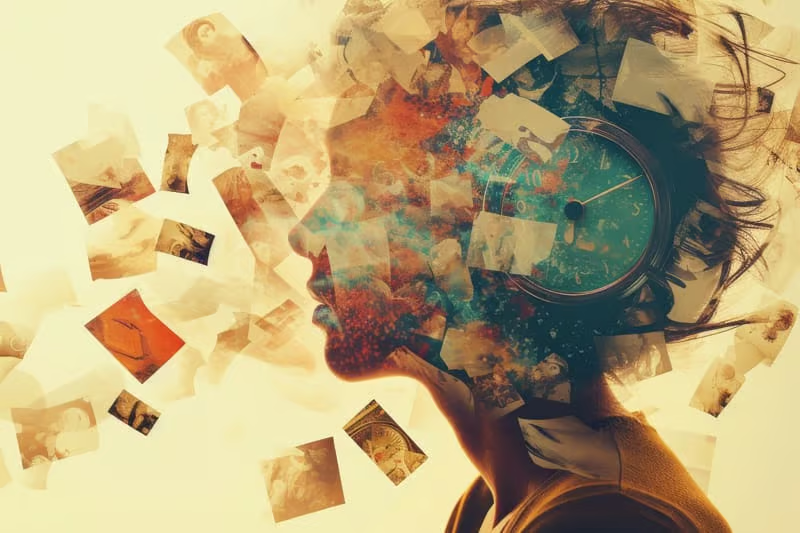


Perspectives on the DSM & Diagnoses
Critics of the DSM argue that it pushes for the pathologization of human experience, while supporters maintain that its diagnostic frameworks are essential for treatment and research. Dive into insightful pieces documenting its history and the many debates it has prompted.


Science & Research
Articles in this category explore the studies and research that continue to shape our understanding of the science of psychotherapy. Explore pieces on effectiveness research, common factors for change, and other evidence-based insights.



Technology & AI in Therapy
Technology presents both opportunities and challenges for therapeutic practice. Read thoughtful reflections from seasoned clinicians on how to incorporate technology with intention without compromising human connection.



Therapy's Thought Leaders
These articles feature reflections from, and tributes to, influential figures including Sue Johnson, Bessel van der Kolk, Esther Perel, Irv Yalom, Salvador Minuchin, Dick Schwartz, and others.




Few diagnoses intimidate therapists more than BPD. The reality is far less frightening. Read more

The latest neuroscience challenging the common notion that "the body keeps the score" might actually provide the precise neurological mechanism for why... Read more

The reason people find Orna Guralnik so compelling isn’t the stylish clothes, her trendy office décor, or fancy camera work. It’s something else entirely. Read more

What if clients had a way to stay connected to therapy between sessions? AI could be a way to reinforce what therapists are already doing. Read more

Across all our therapeutic modalities, there are elements that most effectively create change. What do these elements have in common, and how can you integrate... Read more

A fantastical journey leads an overwhelmed clinician to unexpected interactions with some of our field's leading luminaries, including Ramani Durvasula, Terry... Read more

Multiple studies now demonstrate that AI can evoke real emotional responses, and in some contexts, even outperform human support. Read more

When it comes to processing work-related trauma, therapists are often isolated, shamed, and hamstrung by the guidelines meant to protect clients. Read more

Mental health professionals receive little support for their own personal healing and development. What will it take to revolutionize training programs in a... Read more

What is deepfake therapy, how can impact therapist's work, and why are clinicians so torn about whether or not it can help clients? Read more

Therapists make space for our sorrow, joy, confusion, and longing. But what if AI can do some of this better? Read more

Tara Brach, Irvin Yalom, Eugene Gendlin, and Daniel Kahneman share answers to some of the biggest, most slippery questions therapists face. Read more

Four thought-leaders take stock of the shifting contours of our field. Read more
Mental health startups were supposed to democratize therapy. Instead, they've cut therapist pay and gutted clinical teams. How can we fight back? Read more
After a moment of crisis, ACT co-founder Steven Hayes began tearing up the floorboards of our most popular diagnostic frameworks—and what he discovered was... Read more

Are we doing enough as clinicians—and as a field—to ensure we’re using truly science-based treatments? Read more

For clients wary of traditional forms of creative expression, using AI art therapeutically offers a novel way to experience a more accessible, visual, and... Read more

These hot takes from Steve Hayes, Nadine Burke Harris, Ruth Lanius, and others will keep you informed and prepared for what's changing in the field of... Read more

Sue Johnson changed the field, creating a ripple effect of healing that continues to transform countless relationships. In a mosaic of anecdotes drawn from the... Read more

Psychotherapy Networker honors the memory of Sue Johnson, EFT and EFIT pioneer, with highlights from her trailblazing career. Read more

Modern psychoanalysts are breaking free of old tropes, helping diverse clients and communities—and they still believe change takes time. Read more
Will people really turn to a human if a “humanly enough” chatbot is available? What if human-to-human therapy becomes accessible only to a privileged few? Read more

What happens when AI enters the therapy room? Therapist influencer Matthias Barker chats with Networker editor in chief Livia Kent. Read more

A clinician on the precipice of launching his own AI therapy bot—HIPAA-compliant, infused with personal warmth, and based on thousands of hours of therapy... Read more
When it comes down to it, what do human therapists really have over artificially intelligent ones? Read more

AI is already being used to create treatment plans, track client change, and detect empathy. How else could it help therapists? Read more

There’s a big, hairy problem shadowing our field: what, exactly, is a mental disorder? Is using diagnostic language helping or hurting our clients? The way... Read more

By obscuring the truth about kids’ adaptive responses to stress, the ODD diagnosis interferes with genuine solutions and effective treatment. Read more

Take a magical journey beyond the DSM’s pathologizing legacy to a place where therapists can name and categorize suffering, while still taking into account... Read more

Although people might benefit from the sense of certainty that accompanies a self-diagnosis, it can also mislead them into embracing a fixed—or even a... Read more
.svg)