



With roots in the EMDR protocol, the Flash Technique claims to offer a pleasurable path to processing trauma. Read more
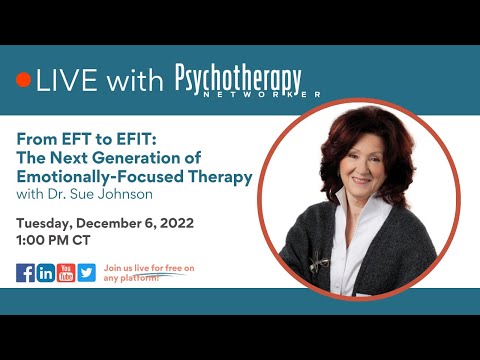
Join Dr. Sue Johnson, developer of Emotionally Focused-Individual Therapy (EFIT), along with Networker’s Anna Lock as they discuss everything EFIT. Read more
Five ways to talk to your clients about the pros and cons of meds—even if you’re not a psychiatrist. Read more

Join Networker’s Anna Lock and Jennifer Payne, Ph.D, LCSW, author, research scientist, and clinician as they discuss how Dr. Payne works to culturally tailor... Read more

Based on her article in our July/August issue, EFT trainer Leanne Campbell talks about how to handle grief. Read more
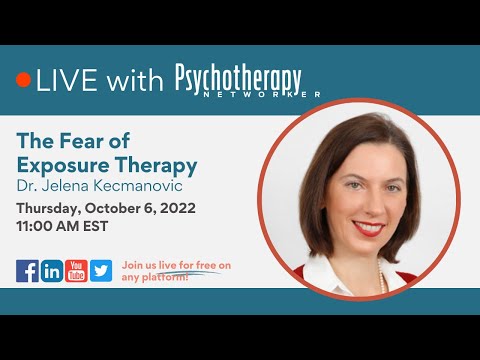
Based on her article in the September/October issue, Dr. Jelena Kecmanovic talks about exposure therapy and why therapists needn't be afraid of it. Read more

Administrators today recognize this therapy as an effective treatment option for “at risk” families. Read more

Networker sits down with Deb Dana to discuss polyvagal theory during a live Ask Me Anything event. Read more

Once blocks to the organic grief process are identified and removed, how can therapists choreograph corrective emotional experiences? Read more

Many play therapists still find themselves having to explain what they do and why it works. But after more than a century, play therapy has finally come into... Read more

Being an expert in your method is only part of the work. Sometimes our clients need us to go beyond administering a protocol. Read more

With its Western focus on secure emotional bonds and demonstrative, healthy attachment in couples, how does Emotionally Focused Therapy fit into ancient and... Read more

In their rush to change family systems—if not the world—family therapists didn’t anticipate that they too would be affected by structural forces. Read more

Integrating art therapy tools into your practice doesn’t have to be complicated, nor does it require artistic skill from you or your client. Read more
As a family therapy trainee in the 70s, it was easy to feel like part of a larger revolution. Read more

How stepping outside our comfort zone when doing our own work can change therapy for our clients. Read more

This week, the Networker's assistant editor, Chris Lyford, sat down for a live conversation and Q&A with hip hop artist and therapist, J.C. Hall. Read more

Beyond identifying the distortions in negative cognitions, how can we help clients understand that negative thoughts and feelings aren’t the result of... Read more

Vulnerability, doubt, fear, and uncertainty—feelings most people try to avoid—are essential to cultivating creativity. Read more

Can psychedelic therapy offer a faster, deeper way to heal the intergenerational effects of racial injustice? Read more

The process of creating beats and lyrics is rooted in therapeutic practices. At one South Bronx high school, a school social worker has traded the therapy room... Read more

Learning to surf requires awareness, focus, and flexibility—perhaps the most essential qualities for navigating the complexities of life. For some young... Read more
David Burns's book, Feeling Good, brought the cognitive revolution to the public. In his new book, Feeling Great, he draws on decades of clinical work to... Read more

Connecting with clients on a nervous-system level is especially important to therapists working from a polyvagal framework. But is it possible to offer... Read more

At the moment, I’m happy to be in my own home, self-quarantining, because I’ve recently been around the world on a training tour. I was in Rome twice... Read more

The coronavirus pandemic is testing us all. But what do we do when our anxiety, loneliness, or grief gets overwhelming? Therapist and author Deb Dana shares... Read more
I’ve begun to worry that in our headlong rush to embrace teletherapy, we’re going to train ourselves out of expecting the depth of connection and intimacy... Read more
What does Attachment Theory tell us? That emotion is the most powerful force in the therapy room, says couples therapist Sue Johnson, developer of Emotionally... Read more

Life in quarantine is testing our relationships with family members and romantic partners. It's also impacting our nervous system, says therapist Deb Dana. She... Read more

Regardless of training, the most important thing a therapist can have is the strong belief that clients can get better, despite life circumstances. Read more
.svg)