


Family Therapy
Family therapy allows us to view clients within the relational systems that originally crafted many of the patterns and identities they’ve continued to carry through their lives. By convening the family unit, therapists can observe and interrupt dysfunctional cycles, realign hierarchies, and strengthen connections that individual work alone can’t address.
Family therapy has evolved dramatically from its structural roots, raising questions about what’s been lost and gained as the field has shifted toward individual and couples work. These articles explore family therapy’s evolution through insights from Esther Perel, Salvador Minuchin, Jay Haley, and more.
Video Intervention Therapy
Using Client's Home Videos as a Clinical Tool

Long before “self of the therapist” was a clinical concept, the father of structural family therapy was teaching it by example. Read more

In their rush to change family systems—if not the world—family therapists didn’t anticipate that they too would be affected by structural forces. Read more
As a family therapy trainee in the 70s, it was easy to feel like part of a larger revolution. Read more

Regardless of training, the most important thing a therapist can have is the strong belief that clients can get better, despite life circumstances. Read more


In order to understand the particularity of almost any couple's personal experience, we need to adjust our lens to include not only their private domestic... Read more

A maverick and a visionary in the ’60s and ’70s, Salvador Minuchin put forth a brand new model of psychotherapy—family therapy. In the following video... Read more

How do you get family members to talk together productively? Enactments can be among the most valuable tools for getting a family's communication going. Read more
Editor’s Note: This article this blog is taken from originally appeared in the March/April 1996 issue of Psychotherapy Networker. When his family was... Read more
To be a young, intellectually curious therapist in the 1960s and ’70s was to fall under the spell of the new systems practitioners, who were redefining what... Read more
Far too often, trauma survivors appear to progress in therapy and then go home and fall right back into the same old patterns of negative emotion and... Read more
Over the years, I’ve found that I’ve needed a solid, research-backed clinical model, which would guide me in sessions and keep me grounded during... Read more
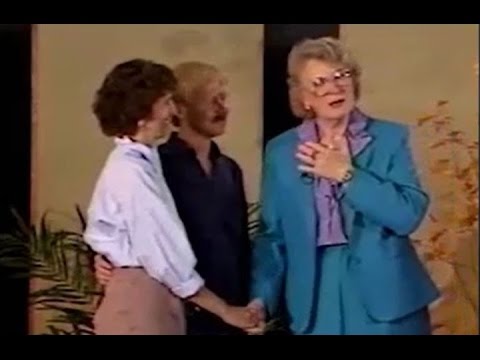
A few decades ago, when young therapists like myself watched Salvador Minuchin, Virginia Satir, Carl Whitaker, or other leading lights, it was like... Read more
What does inventive therapy look like? We often overlook that for all skilled therapists, there are well-established patterns and techniques underlying even... Read more

Trainees today are buried beneath textbooks on theory, bombarded by lectures on current research, and taught to be experts in a variety of methods. But where... Read more


Both doing psychotherapy and the writing of fiction are about stories. The essence of the art of both pursuits is the openness to the possibility that, no... Read more

There's no substitute for a clear clinical model that can guide you through the therapeutic change process. Read more
There's no more emotionally demanding work than that with an incestuous family. A therapist offers an uncensored look at the fear, loathing, and fascination of... Read more
Strategic therapy is less about technique than a search for the information that'll illuminate the solution to your client's problem. Read more
Although Salvador Minuchin is arguably the most influential clinician of the last half-century, his work is light-years away from the routinized approaches... Read more
At 83, family therapy pioneer Salvador Minuchin, the most dazzling therapeutic practitioner of his generation, continues on in his search for clinical wisdom. Read more
When Carl Whitaker died at age 83 on April 21st of this year after a long illness, it might be said that the therapy world lost its oldest, wisest and most... Read more

At the Family Therapy Institute of Washington, DC they don't believe self-knowledge fires the engine of change and insist instead that therapy is really just a... Read more
.svg)