

Enjoy the audio preview version of this article—perfect for listening on the go.
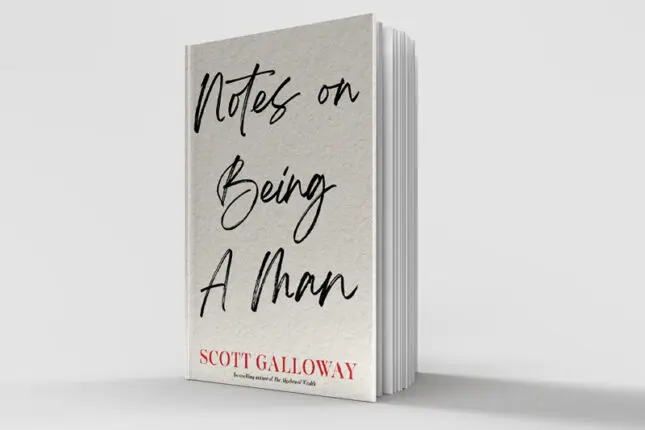
When I first picked up Scott Galloway’s new book, Notes on Being a Man, I came to it from three places that have shaped my life’s work. First, from nearly five decades as a psychotherapist, sitting in the room with men’s longing and their “becoming.” Second, from decades spent working with horses and people, where there’s no hiding and no performance, just the truth of who you are in the moment. And third, from the territory of eldership. Galloway’s book found me in all three of these worlds simultaneously, something that doesn’t happen often.
My work with men has been about helping them come back into relationship—with themselves, with others, and with something deeper that often gets lost in the daily grind. I’ve spent years watching men wrestle with strength and vulnerability, with protection and tenderness, and with the tension between who they were taught to be and who they really are. Men crave guidance that’s clear, concise, direct, and kind—and with this book, Galloway delivers.
Galloway isn’t a therapist, nor is he in the mental health space. He’s a marketing professor at New York University’s Stern School of Business, an entrepreneur, and a podcast host, known for his provocative takes on business, tech, and society. But he does, I believe, have a message that therapists would do well to hear.
Notes on Being a Man isn’t a self-help book, as the title might suggest, nor is it a therapeutic guide. Rather, it begins with a story—purposeful, direct, and at times parental. It’s the autobiography of a man who’s loved deeply and succeeded significantly, but who’s also lived a hard life, sometimes making costly mistakes. Now, he’s trying to distill what he wishes someone had taught him when he was a young man.
Galloway’s “notes” format is his vehicle for delivering these teachings. They’re short, direct, and actionable. Each note feels like he’s looking you in the eye and speaking to you directly. He’s refreshingly honest about his privilege, acknowledging outright that he was “born on third base”—that his advantages as a white, heterosexual male gave him opportunities that weren’t earned. This kind of transparency matters in a book for men, especially for those who weren’t born with the same advantage. Had Galloway not addressed this so directly, I wonder whether he would’ve inadvertently sabotaged his message. After acknowledging his privilege, he encourages the reader to use what fits for them and discard what does not.
There are four places where Notes earns its keep. The first is in pointing out that young men are struggling. This is not an opinion. The American Psychological Association, Pew Research, and countless scholars have documented the measurable declines in male educational attainment, workforce participation, relationships, social connection, and mental health. A single mother I recently spoke with described her 20-year-old son: bright but directionless, and retreating from the world. She told me she’s terrified he might harm himself before he finds his footing. This conversation, and hundreds like it I’ve had over the last five decades, is just one reason why this book matters.
Galloway’s second significant contribution is the principle that nobody is coming to save you, and it may be the most important statement in the book. At some point, a man has to stop waiting for circumstances, institutions, or other people to create and guide the life he wants. This shift from victim to agent isn’t comfortable, but it’s the threshold many struggling men need to cross. Young men require a degree of initiation that doesn’t exist in our society. Although Galloway doesn’t use this terminology, he doesn’t soften this truth either, delivering it with what I call useful severity.
Third, Galloway’s argument that “action absorbs anxiety” is practically sound—with one clinical caveat I’ll return to later. Many of today’s young men are caught in loops of thinking, scrolling, comparing, and retreating. The world doesn’t open to this level of passivity or analysis; it opens to action and participation. Galloway’s insistence on stepping into the arena, learning courage through risk, learning confidence through difficulty, learning to handle rejection, and learning to fail isn’t new information; it’s ancient wisdom that must be brought to the forefront. He speaks to this well, with intensity and empathy.
Fourth is Galloway’s point that men need other men—not as competitors, or as drinking companions, but as fellow witnesses to life. Galloway admits he avoided male friendship throughout much of his own early adulthood, viewing other men primarily as rivals. He got this wrong, and says so. He speaks eloquently about the terrible loneliness men experience. But he does not speak directly to the need for every man to have another man he can call at 2:30 in the morning, knowing that person will pick up. Many men have no such person. This loneliness is clinical, and often experienced as depression. And the stakes are high: in some situations, not having this person may be the difference between life and death.
Galloway primarily ties masculinity to striving, discipline, risk, and competitive achievement. There’s no question that these things shape men. But five decades providing psychotherapy have taught me that over time, masculinity also grows through something quieter: the capacity to simply be with another person in the thick of life without trying to alter, fix, or overcome them. The ability to not only lead, but to follow. The willingness and ability to, in the right moment, touch another with softness and kindness.
One of my specialties in working with men is Gestalt Equine Psychotherapy, a specific modality of equine-assisted therapy that I’ve provided for over 20 years. I’ve learned that horses respond to presence, not performance. They don’t care what you’ve built or what you’ve achieved, they respond to whether you show up fully and engage from a place of presence. The men who struggle most with horses are the ones who approach every relationship as a transaction or a competition. Those who manage to connect with them are the ones who’ve learned to simply be with another living being without an agenda, by choice, and without judgement.
Another point I found interesting is that Galloway challenges the phrase toxic masculinity, calling it “the emperor of all oxymorons” and arguing that cruelty, predation, and abuse of power aren’t masculine at all—they’re anti-masculine. This rebuttal will resonate with a lot of men who’ve felt utterly dismissed upon hearing this description of their inner struggles.
So, should you read this book? Yes, I believe you should, especially if you’re a young man who’s feeling adrift, avoidant, and hasn’t heard an older man speak honestly about what it costs to waste your 20s. After all, Galloway writes the way a mentor talks: directly and bluntly, converting stories of regret into valuable lessons.
Men navigating identity across race, class, sexuality, or gender in ways the book doesn’t address will need supplemental writing. Galloway writes from a specific vantage point, and although he names it honestly, the book’s blind spots are real. The experiences of men of color, queer men, and trans men—men navigating masculinity in systems built against them—are largely absent here, and it’s a limitation worth mentioning to clients before you hand them this book.
And a clinical flag on “action absorbs anxiety”: for men who use busyness and productivity as avoidance, action isn’t always the answer. Sometimes the work is sitting still long enough to feel what’s actually there.
Whether he intended it or not, Galloway is doing elder work with his book. He’s asking what his younger self needed to hear, and writing it down for men who don’t have an elder close enough to ask. This work is ancient and necessary. Young men suffer when older men keep what they’ve learned to themselves.
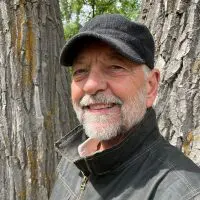
Duey Freeman
Duey Freeman, LPC, is a licensed therapist, attachment specialist, and trainer who developed his own attachment and development model. He’s the co-founder of the Gestalt Equine Institute and the Gestalt Institute of the Rockies in Colorado.