
Think back to when you were a young therapist, trying to figure out what to say, how to say it, and what to do when you got it wrong. You had your theories and techniques, but eventually you learned that what mattered most was harder to teach: paying close attention to the person in front of you, learning from your mistakes, and slowly discovering what kind of therapist, and person, you wanted to become. Every generation of therapists has had to find its footing, but today’s are doing it in a world of technological and culture shifts that increasingly blur the boundaries between truth and fiction.
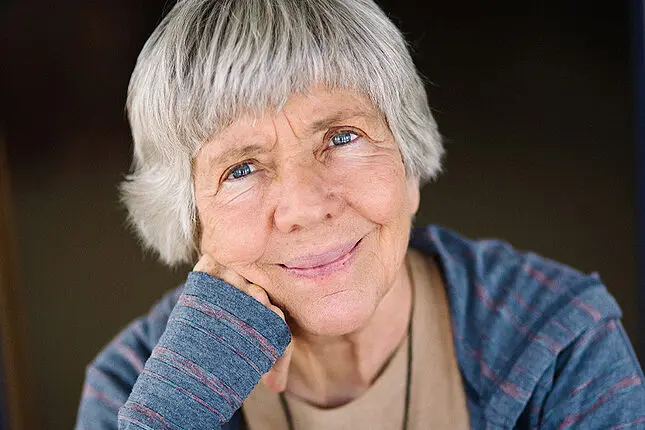
Few therapists have spent more time thinking about growth amidst culture shifts than bestselling author and clinical psychologist Mary Pipher, whose groundbreaking 1994 book Reviving Ophelia, which named the pressures facing adolescent girls, made her nothing short of a cultural icon. Not only did it spend more than three years on the New York Times bestseller list, but decades later, it even helped inspire Greta Gerwig’s 2023 blockbuster Barbie. In Women Rowing North—another New York Times bestseller—Pipher turned her attention to women navigating the second half of life.
Over the years, she’s become a cartographer of the human lifespan, mapping where our growth collides with the culture around us. But for many therapists, Pipher’s most treasured guide may be her 2003 book Letters to a Young Therapist. Written as a series of letters to a young graduate student beginning her life as a clinician, it’s a warm, candid reverie full of practical advice for emerging therapists that Publishers Weekly called “refreshing, informative, and insightful.” This fall, it’s being reissued with a timely new preface, in which Pipher examines the factors she believes are currently dividing us from each other, the natural world, and our true selves.
Over the years, Letters has become the kind of book supervisors hand to trainees and seasoned clinicians return to when they need a reminder of why they chose this profession in the first place. Harriet Lerner, psychologist and author of The Dance of Anger, called Pipher “a magnificent storyteller and a wise, trustworthy guide for our times.” And fellow therapist William Doherty remarked of Pipher, “She makes me proud to be a therapist.”
Despite our epidemic of disconnection, Pipher remains hopeful about the possibility for reconnection. She illuminates what our clients—especially young people—desperately need: the opportunity to struggle and recover, lean into our differences, find a place in communities and in nature, and develop a sturdier sense of self. She’s hopeful about the future of psychotherapy, too, which she calls “the most valuable and important work right now in the country.”
Yes, there are big challenges ahead: How do we honor our clients’ relational pain without reinforcing the impulse to cut difficult people out of their lives? How do we give young people the “stress tests” they need to develop resilience? And how do we help them reconnect with other people, the natural world, and themselves?
These might feel like modern problems, but for Pipher, the solutions begin where they always have: in the therapeutic relationship.
Livia Kent: Mary, what first inspired you to write Letters to a Young Therapist in 2003?
Mary Pipher: I wrote it because I had things to say after decades of being a therapist and supervisor, things that weren’t addressed in textbooks or graduate schools, like how to deal with transference, or what happens when a client is frightening or when you’re treating a family and the dad is drunk. I also wanted to write about how wonderful our profession is and the wondrous process of how therapists can grow alongside their clients.
LK: In the book, your wisdom about therapy is offered in the form of letters to a young supervisee about you and your life. It evokes not only the beauty of Rainer Maria Rilke’s classic Letters to a Young Poet, but the beauty of writing real letters to real people. How do you think the digital age has affected the way that we connect with one another?
Pipher: Since 2003, when I wrote the book, there’s been enormous degradation of human connection, and one of the primary culprits is technology. For example, this morning I got an email from a friend saying that her brother-in-law died. Historically, she would’ve called me, and we would’ve had a chance to discuss it with more embodied presence.
I think therapists who are doing all their sessions online are missing physical presence. When I said goodbye to my clients, I always touched their hand when I handed them an appointment card. I thought even that small amount of touch conveyed some important kind of connection.
Many other things were different when I was doing therapy, like that you couldn’t look up your clients online, and they couldn’t look you up. I didn’t have to worry about challenging a client and then that client posting a public review of me. I would’ve been a different kind of therapist if that were the case, more cautious and risk-averse. As it was, I wasn’t worried about the impression I made; I was worried about the client’s needs.
LK: The essence of your work has always been about the therapeutic relationship. Do you feel that’s different for therapists now?
Pipher: No matter what, therapy offers clients time with someone who actually cares and listens to them, which is rare in the current world. A lot of the protocols and approaches that have been developed since I started my practice are really great. But in spite of all the new ways of working, I think there are core things all clients need. One is to be able to articulate their pain and eventually reframe it in a way that has meaning and allows them some sense of agency and a path forward.
Another is recognizing we’ll always have problems, and all we can do about that is focus on our attitudes toward the way life goes up and down. I’m very big on the idea of waking up in the morning and setting an intention for the day. We can tell ourselves, “I’m looking for beauty today,” or “I’m looking for gratitude.” If that’s what we’re looking for, we’re going to find it.
When I worked with clients, I always looked for victory stories. If somebody had been depressed for a long time, for example, they may not have been able to do the simple assignment of walking around their block after dinner. So if they finally came in and said, “I walked around the block this week,” instead of just going, “That’s great,” I’d go, “Say that again. Say that again.” And then I’d go, “So you walked around the block this week. Do you realize how important that is?” It’s important to really underscore clients’ progress.
LK: You wrote that brief therapy strikes you as bogus because relationships take time. These days, when so many people are interested in truncating therapy, are there any other trends that set off that same bogus detector in you?
Pipher: When I was a therapist, insurance covered most therapy regardless of diagnosis. We were able to do therapy with people who worked at food processing plants and Goodyear Tire. Now, fewer low-income people are able to access good therapy. So brief therapy might be cheaper, but you don’t want to jump into someone’s life and start offering suggestions and advice if you don’t have a sense of who they are and what they’ve tried and the context they’ve lived in. That takes time to understand.
One of the best things to say to someone at the end of a first session is, “This is really a complicated situation.” People love to hear they’re complicated, because they are.
LK: Yes! You wrote, “Labeling a problem as complex is one of my more effective therapeutic approaches.” I love that.
Pipher: The other effective thing to do is set expectations. You can tell people, “You’ve had this problem for a while, and we’re not going to solve it in a week.” Respect the problem enough that you don’t jump in and say, “We’ll have this figured out in three sessions.”
LK: We talk a lot about the crisis of loneliness in our culture. What’s your view on that?
Pipher: We’re not only lonelier than ever, we’re more anxious and more depressed than ever. There’s statistical data to prove that. One cause is covid. It drove people into their homes, and they’ve never quite come back out. Also, most people are on their devices four or five hours a day. And on top of that, there’s the brutalization of the culture, which contributes to the sense that we’re being driven apart.
I’m not one to get particularly worked up if I have a friend with a different political philosophy than me. If I can go out and talk to them about their family and cultural events in town and trips they’ve taken, I enjoy them.
Same with my family. My daughter is a very progressive woman who works with refugees in Canada. My son is an evangelical Christian minister and conservative. It’s a great pride to me that we all get along just fine, and we’d never consider letting politics or religion interfere with how we love each other. But sadly, I know we’re a rare case. I hear about people breaking with their families or friends over politics all the time.
LK: Speaking of family, you warn us in Letters to a Young Therapist about the knee-jerk reaction to blame parents for somebody’s unhappiness. Why do you think estrangement has become such a hot topic in our culture and our field these days?
Pipher: It’s very upsetting to me. Younger people have had less experience negotiating difference and working around conflict than previous generations. So when people make them unhappy or frustrated, they’re vulnerable to calling their relationship with that person “toxic” and just walking away from it.
I’ve had times when I was unhappy with friends and family members, but there are ways to work through that. Almost every relationship has its difficulties. Instead of using the word toxic so much, we should consider using the word difficult. I also don’t like the word gaslighting, because it comes up too quickly when people disagree on something.
Family’s who we have, ultimately. We can have really close friends, but if we need to borrow money, if we get sick and need to move home, if we lose a job, it’s likely going to be our family who ends up taking care of us. So it’s a horrible thing to separate people from their families. Of course, sometimes it’s absolutely necessary, but not always.
LK: As the author of Reviving Ophelia, you’ve had your eye on teen mental health for a long time. What’s your read on it these days?
Pipher: It’s not only my read, it’s statistical. Between 2011 and 2022, rates of suicide have increased sharply in teenagers, and so have rates of anxiety and depression. I think part of that comes from this generation having grown up with what author Jonathan Haidt calls a phone-based childhood, as opposed to a play-based childhood, so they haven’t accumulated the skills they need to move out in the real world.
They haven’t had the social interactions. They haven’t had the stress tests. They haven’t had the skill building they need to be ready.
I have three grandchildren who all have been RAs in college, and they talk about the freshmen coming in and how little they know about getting along with other people and sharing space. A lot of them have never shared a room with anyone before, and need so much help living away from their parents, structuring their lives, and making their own choices.
A lot of Gen Z’s despair is also attributed to the world they’re moving into: climate change, the political atmosphere, the job market, and a certain kind of anomie, because if you’ve spent most of your childhood on TikTok, playing Fortnite, and disconnected from a larger sense of community, how can you develop a life of meaning? To me, having a sense that there’s meaning in the universe, that there’s something larger than you are, is essential to being a healthy adult.
One simple thing we can do to help teenagers is start introducing the small stress tests they need to grow up. For example, have them plan a family vacation, host a party at your house where they make all the plans, or walk to school instead of being driven. The point is to figure out just the right level of stress at which they can succeed and move to the next level. That’s so important.
LK: Did you see the recent news about the mother in Virginia who let her five-year-old walk to the pond in their neighborhood by himself and now she’s on a child abuse list for seven years?
Pipher: Well, I feel this child is kind of vulnerable not because of what he was doing but because there was only one of him. In other words, all children should have the freedom to be outside. Then it’s much safer if there’s people out on the streets. Part of the problem is people are not on the streets anymore. You can drive through neighborhoods and not see a single soul. One of my grandsons, who’s 12 now, is very lucky because he lives in Canada, in a safe town on a cul-de-sac, and there’s a whole bunch of boys who can run all over, and they’re safe. That’s the kind of childhood all children need.
But we can do things about making the situation better for kids. I was talking to one of my grandsons this weekend who’s in college now, and he said that his parents gave him a cell phone when he was 13. But before they gave it to him, they had him read three articles about the effects of being on his phone all the time. He said he didn’t pay much attention to what he read. He just wanted to read the articles fast so he could get his phone. But he did read them, and in the back of his mind he’s always known what to watch out for.
Another story I heard recently that gave me hope was about my friend’s grandson. He’d grown up just playing Fortnite 24/7 and didn’t much care about grades. He hardly came out to eat with the family. And suddenly at 15, he decided, “This is crazy. I’m wasting my life.” And he just got off his devices. He started taking long walks at night with his dad, and his grades got better. He started having a social life, playing tennis. So there’s things children can do to save themselves.
One thing that evangelical churches do well is they have community, and they have a lot of activities for kids. And if you go to an evangelical church, it’s full of young people whose lives are held in place by a community that knows them and loves them and gives them a sense of meaning. Now that wouldn’t be my way of building community, but I respect it. There’s a lot to be said for it.
LK: Let’s talk a little bit about how our cultural stories are shifting these days.
Pipher: When I was growing up, the kinds of books I read were books about heroic people. I read the story of Albert Schweitzer and Helen Keller and Eleanor Roosevelt and Marie Curie. I even read a book about Knute Rockne, the famous football player of the 20s. I also read books about good, admirable children. Literature changed at some point for children and started being much more about naughty children.
Now those aren’t necessarily bad books, but they’re a move away from heroic stories. On TV too, you see unhealthy stories about murders, crime, violence, sexual exploitation, drugs, guns, betrayals of all kinds. The stories we’re telling as a culture are that people can’t be trusted, that we should be scared of each other.
That may be true if you’re living most of your life online, but if you’re living mostly in the world of real people, which I still do, the world’s full of trustworthy people. These days, the least trusting people are young people, which is really sad.
LK: Usually, you’re more trusting when you’re young and you get more jaded as you grow older.
Pipher: It’s a vicious circle. If you’re online a lot, you’re likely to see a lot of angry, vicious things, so you’re likely to be mistrustful of people, so you’re likely to not go out to engage in the real world, so you’re likely to be more online. The people who are happiest, and I would put myself in this category, are the people who are actively engaged in the world, rubbing shoulders constantly with people and working for good causes.
LK: There’s a theme of resilience that runs through your book. How do you feel about our capacity for resilience these days as a society?
Pipher: I think it’s at an all-time low, but I also think the political scene may change, and there’s reason to have hope. The pushback around data centers is important because I see it as people saying, “We want to take back control of our lives.” It’s not just about land use, electricity, water. It’s about not being sure we want all this AI in our lives. There’s also a sudden interest, especially among young people, in things like book clubs and social clubs and potlucks. And I see that as a really good sign.
I think that humans have survived for hundreds of thousands of years, and there’s a pretty good chance we’ll figure out how to keep surviving. It’s a dark time, and the assessment I had for this latest book is pretty grim. But I don’t see how you can live without hope. I think hope is as vital as oxygen. And if you know real people, it’s impossible not to have some hope in them. There’s so many good people out there working so hard to make things better.
Parenthetically, I feel great hope for therapists. More than ever, we’re doing the most valuable and important work right now in the country. We’re giving people a chance to grow and become more engaged with the world, become more trusting. So I think that our own field is vital to progress in our country. It’s a place where individual stories matter and those individual stories, if improved with better narratives, with a meaningful path forward, can be a really important part of cultural change.
LK: That’s beautiful. What suggestions do you have for helping people tap into that sense of hope and reconnect with the part of themselves that lives offline and is surrounded by nature and other people?
Pipher: You’re right to use the word offline. We all need to reconnect with our offline selves. The curated self has become so important that the true self in many people has withered. So we need to return to the grounding devices that have always held human beings in place: our friends, our family, our communities, nature, and whatever else gives us joy and hope. In my case, I love reading history. It’s such a good way to put things in perspective. I also have a spiritual path. Mine happens to be Buddhism, but any spiritual path can give us hope and a sense of meaning and purpose.
There are so many ways people can empower themselves and their communities. It doesn’t have to be a lot. You can start just talking to your neighbors, even to strangers, or the clerks at your grocery store. You can offer to help some older person in your neighborhood. If we all engage together, we can make it a world we want to live in again.
LK: Is there anything you want to make sure new therapists understand now?
Pipher: Being a therapist is the best work in the world. Not only do you develop more empathy and a larger sense of what humanity means, but the skills you learn and the understanding you gain will enrich you and allow you to lead a deeper, kinder, more authentic life.

Livia Kent
Livia Kent, MFA, is the editor in chief of Psychotherapy Networker. She worked for 10 years with Rich Simon as managing editor of Psychotherapy Networker, and has collaborated with some of the most influential names in the mental health field on stories that have become widely read articles and bestselling books. She taught writing at American University as well as for various programs around the country. As a bibliotherapist, she’s facilitated therapy groups in Washington, DC-area schools and in the DC prison system. In 2020, she was named one of Folio Magazine’s Top Women in Media “Change-Makers.” She’s the recipient of Roux Magazine‘s Editor’s Choice Award, The Ledge Magazine‘s National Fiction Award, and American University’s Myra Sklarew Award for Original Novel.
Mary Pipher
Mary Pipher, PhD, is a clinical psychologist, author, and climate activist. She’s a contributing writer for The New York Times and the author of 12 books, including Letters to a Young Therapist, Reviving Ophelia, Women Rowing North, and her latest, A Life in Light. Four of her books have been New York Times bestsellers. She’s received two American Psychological Association Presidential Citation awards, one of which she returned to protest psychologists’ involvement in enhanced interrogations at Guantanamo.