

Facing Our Field’s History of Infidelity Treatment
What's Cringey? What's Compelling?
Magazine Issue
May/June 2026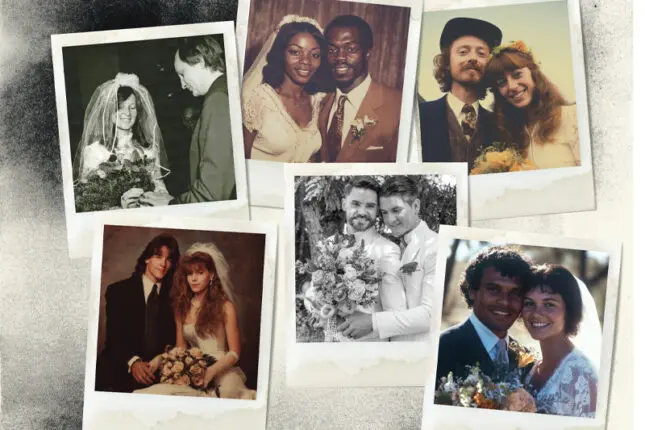

What's Cringey? What's Compelling?
Naming and Treating Trauma’s Most Elusive Dimension

How to Navigate Empathy and Ethical Pitfalls


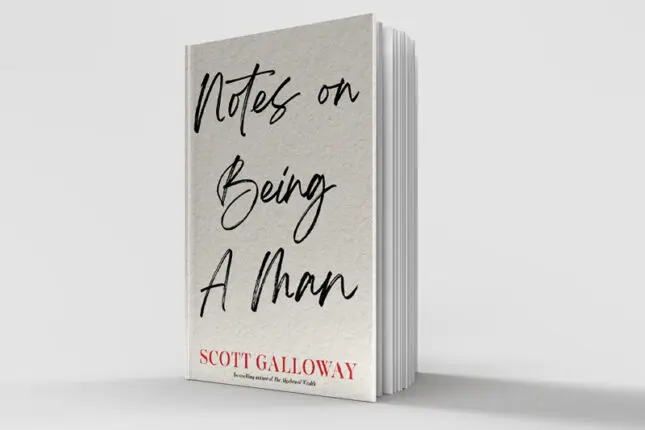
What "Notes on Being a Man" Can Offer Your Clients
Two Clinicians Respond to Subtle Suicidal Ideation in a First Session

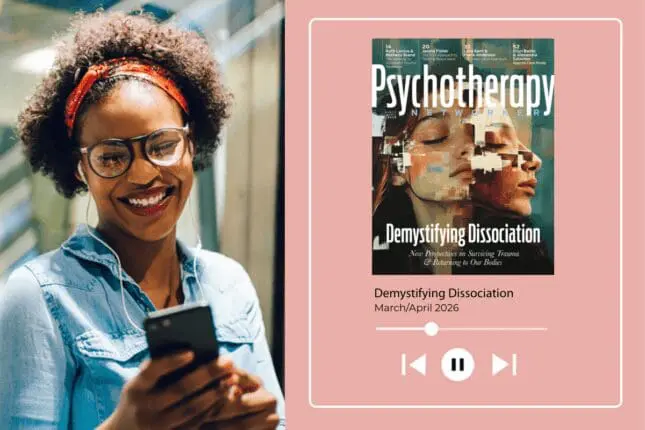
Demystifying Dissociation
5 Therapists' Stories About Going Against the Grain

Humor and Insights Your Colleagues are Sharing

How Dungeons & Dragons Can Help Clients Explore New Skills
Two Therapists, Two Different Approaches to Reconnection

When DNA Testing Rewrites Your Story

A Survival Strategy Hiding in Plain Sight

Grounding, Somatic Resourcing, and Other Strategies

Addressing Hidden Disconnection in Therapy
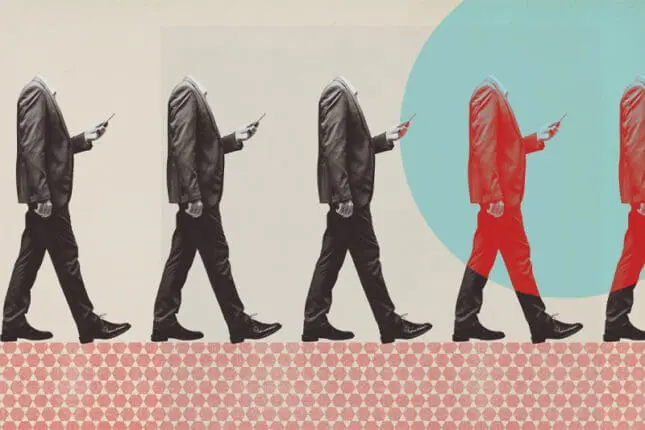
A Neuroscience-Informed Path to Integration

Welcoming Our Lost Parts Home


Dating Apps & the Intimacy Crisis
The Year that Reshaped Therapists: Finding Regulation in a Dysregulated World


Enjoy the audio version of this article—perfect for listening on the go.
This year, we published 150+ articles on just about every clinical topic under the sun, but with all the content flooding your inbox, it’s easy to miss things that matter. That’s one reason why we’re offering a curated collection of the standout Psychotherapy Networker articles from 2025. Another reason is because this collection is a powerful way to take stock of where we are as a field. How so? Because it was curated by you—our therapist readers—who know better than anyone what’s relevant, inspiring, and instructional for today’s clinical practice.
Whether you voted for stories that helped give shape to your unique struggles or provided practical tips you shared with your clients, these are the pieces you told us resonated most with you. Congratulations to the winners of the 2025 Best Story award—as well as the many deserving nominees—for sparking conversation and connection in our community.
Voted Readers’ Choice in the “Autism” Category
Couples therapy was designed for neurotypical people—yet we know that neurodivergence is everywhere. How can we better identify, help, and support neurodiverse couples, including the ones you may be missing in your practice?

Voted Readers’ Choice in the “Clinical Challenges” Category
Many therapists believe their intense care and concern for clients is a form of selfless love. Maybe it’s time to rethink that.
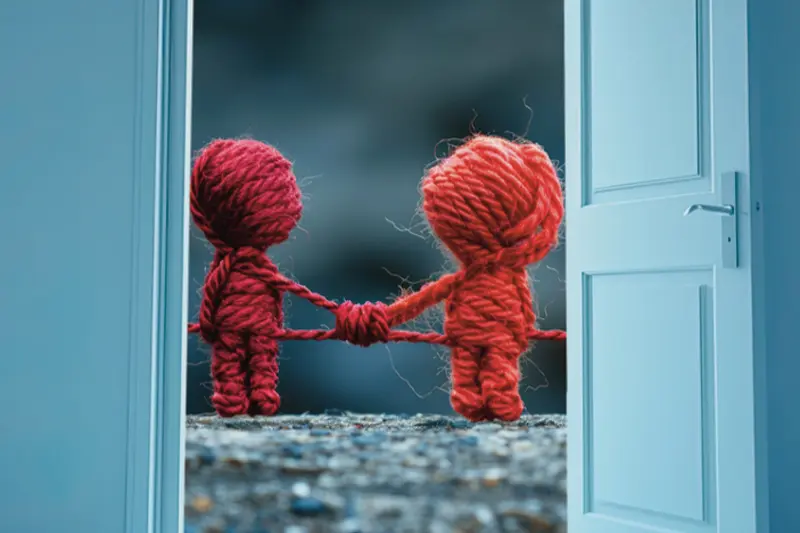
Voted Readers’ Choice in the “Grief” Category
In the wake of a chronic illness, a body image advocate challenges toxic narratives about what it means to have a healthy body.

Voted Readers’ Choice in the “Opinions on the Field” Category
Mental health startups were supposed to democratize therapy. Instead, they’ve cut therapist pay and gutted clinical teams. How can we fight back?
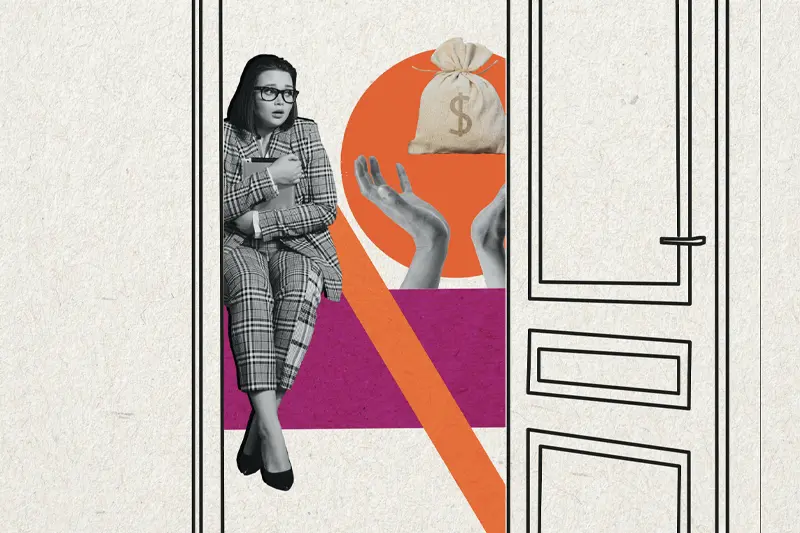
Voted Readers’ Choice in the “Relationships & Sex” Category
Asking a client about sex doesn’t need to feel intimidating or awkward—but it is important for all therapists to do.

Voted Readers’ Choice in the “Spirituality” Category
“Bittersweet” invites us to better understand and celebrate the wistful, sensitive people in our lives—and in our therapy practices.

Voted Readers’ Choice in the “Practice Tips” Category
Janina Fisher, Britt Rathbone, Steve Shapiro & Kirsten Lind Seal
Longtime experts in the field offer tips on how to get the conversation going when your clients have nothing to say.
Voted Readers’ Choice in the “Therapists as Clients” Category
Mental health professionals receive little support for their own personal healing and development. What will it take to revolutionize training programs in a way that centers the therapist?
Voted Readers’ Choice in the “Trauma” Category
Here’s a five-step process for working with survivors of parental abandonment that helps mitigate self-blame and build trust with the therapist.
And Busting Myths about Today’s Relationships


What do you do when a client you’ve worked with for years shows up with a holiday gift that’s inside a beautiful, light-blue Tiffany box? And as she hands you the gift, what if she says—without a hint of manipulation—“I know that you’ll tell me that you can’t accept this, but it will break my heart if you don’t keep it.”
Most therapists have a policy about receiving gifts. Some will accept a gift if it’s under a certain dollar amount. Some won’t accept a gift under any circumstances. Some will accept a gift but make it clear that it’ll be put in the waiting room and shared with everyone. Up to this point in my career, I’d been confronted only with a small candle and a few homemade cards. In each case, it seemed appropriate to accept the offering graciously and move on with the session.
I was completely caught off guard by the Tiffany box that my client, Dawn, had handed to me. But I knew two things: I couldn’t keep whatever was in it, and I couldn’t simply hand it back to her unopened, either. After she’d done so much work in therapy over so many years, resolving a lot of childhood trauma, I didn’t want to rekindle old feelings of rejection and shame. Yet as we sat down together and I lifted the lid, my eyes grew wide.
Inside was an exquisite, heart-shaped gold pin studded with diamonds—real diamonds. Once again, I had two thoughts: I have a dress that would go perfectly with this, and How the hell am I going to navigate this one? I want to emphasize that if she’d handed me a chocolate-chip cookie or a loaf of zucchini bread, I wouldn’t have had an issue. But this was an elegant and expensive piece of jewelry.
“You’ve been so kind to me for so long,” Dawn said, leaning forward. “You never judge me, always support me. I feel like you’ve given me a piece of your heart, and I wanted to give you a small piece of mine.” Dawn had been horribly emotionally and physically abused by her father throughout childhood and never protected by her mother. Throughout her 20’s, feeling invisible and worthless, she landed in several emotionally abusive relationships and silently struggled with depression and anxiety. I’d been working with her for eight years, and she’d been making great progress. She was managing her depression well, feeling confident living on her own, and volunteering at a local elementary school. She was unhappy in her job at a science lab, but was beginning to pursue an advanced degree, hoping to change jobs in the near future.
I was genuinely moved by her gift—and genuinely at a loss. Picking it out clearly demonstrated tremendous thought, and even love, on her part. “Thank you, Dawn. I’m so touched,” I said sincerely. She beamed, sitting up straighter on the couch. Taking a deep breath, I continued, “But you know that I can’t keep it.”
At this, Dawn’s body slumped. A look of pain set in around her eyes, reaffirming my fear that refusing her gift would be devastating for her. I could feel my palms getting moist as I held onto the box. I was flying by the seat of my pants, with no strategy or precedent to work from. “Dawn,” I said, hoping to find a way forward, “would you be willing to share with me why you thought I was worthy of such a beautiful gift?”
Without missing a beat, she rattled off a long list of loving qualities she felt I possessed and had shared with her, so many that I began to blush. What now? Where could we possibly go with this? Then, watching this client I’d known for such a long time, who’d done such powerful trauma work with me and had such a gentle, fragile heart, I had an epiphany. I put my hand up, pausing her in mid-sentence, and asked, “Would it be okay if we wrote some of those qualities down?”
With this request, she looked at me strangely, but given our safe and trusting relationship, she went along with it, perhaps thinking I was in need of some extra affirmation that day. I handed her a large sheet of white paper and with great speed and alacrity, she wrote down phrases like never judgmental, always unconditionally kind, makes negative thoughts more positive, tells me I have worth. I remained silent as she wrote. After she’d scribbled about 10 phrases, I told her that was plenty.
“Here’s what I’d like to do,” I said, sounding more confident than I felt. “I can’t take this gift home with me, but I’m going to lock it in the bottom drawer of my filing cabinet here in the office. And then I’d like to propose that you and I work together, for however long it takes, to help get you to a place where you believe that everything on that list describes you. Then, you’ll be ready to claim this gorgeous pin.” It seemed like a pretty good idea, considering I was thinking on my feet.
“Well, that sounds like a pretty stupid idea,” Dawn quickly said, with more anger than I’d seen from her in a long time. She sighed in frustration, broke eye contact, and slowly shook her head. “It’s certainly not what I was hoping for,” she added. I anxiously waited out this reaction, hoping she’d soften to the idea. Finally, given that we had such a safe and trusting relationship, she begrudgingly agreed.
So we locked the pin away and got to work on developing greater self-compassion and a stronger ego. Over the next several months, we reframed her self-criticisms to reflect the strengths that others saw in her. We chipped away at the shame and self-blame that were byproducts of her trauma. It was hard work, and sometimes her determination flagged. But she kept at it. After a few months, she even managed to extricate herself from her toxic workplace and was surprised by the quiet pride that opened up inside her. We moved on to help her set better boundaries with dysfunctional family members, and l gave her lots of homework assignments that focused on self-care.
There were still many times when Dawn struggled with self-confidence, particularly as she approached the work required for her master’s degree. Despite her great intelligence, she questioned her abilities, didn’t believe she had anything worthwhile to contribute in class, and felt too anxious to ask her professors for help when she needed it. This added layers of unnecessary stress and often impacted her sleep. Several times I felt the potential setback coming as she contemplated leaving the program, but she stayed with it.
Then a particularly pivotal moment occurred one day when I congratulated Dawn on her ability to speak up and set limits with a friend who was regularly taking advantage of her. For the first time ever, she maintained eye contact with me as I pointed out her success. She made none of her customary attempts to minimize, rationalize, or deny the compliment. She even nodded her head, ever so slightly, in agreement. It was a giant step in her ability to embrace an expanded and more loving narrative about herself.
Almost a year later, Dawn sat down in my office one day and asked, “Can I see that thing in the bottom drawer?” If I’d had a soundtrack playing in my office, this was the point where the strings would’ve swelled and a dramatic drumroll would’ve rumbled through the air. It had been an arduous journey to get to this point, full of ups and downs. I tried to act as nonchalant as she did, but my heart was pounding with excitement.
As calmly as I could, I took the Tiffany box out of the drawer and ceremoniously placed it in her hands. Dawn opened it slowly, with great care, and looked at the pin for a long time. She even picked it up and gently traced the outline of the heart with her finger. Then, she closed the box and handed it back to me. And that’s when the soundtrack would’ve gone wah-wah-wah.
A few weeks later, Dawn came to our session clad in an elegant, stylishly cut red dress. Beyond the dress and the artful upsweep of her hair that showed off the soft features of her face, there was something new, even fresh, about her. Maybe it was the heels, I thought, but even sitting on the edge of the couch, she appeared taller, the usual hunch in her shoulders momentarily gone. Since it was mid-December, I asked if she were going to a holiday party.
“No,” she said, a small smile playing at the corners of her mouth. “I just thought this dress would look nice with my pin.”
This time, I helped Dawn fasten it on, and it sparkled and glowed, just as she did.
So here’s what I’ve learned: sometimes, clients give us the gifts they want for themselves but don’t feel worthy of receiving. And sometimes, by helping them see the attributes in themselves that they admire in us, we can help them reconnect with those qualities. And I also learned that sometimes, making a difference means thinking outside the box—especially if it’s a beautiful, light-blue one from Tiffany.

With some trepidation I approached Room G, where I’d been instructed to report for my first day as a family therapist at the Solomon School for Boys in a suburb of Philadelphia. As I cautiously opened the door, I was pleasantly surprised to see that the eight boys I was to meet with had already assembled, sitting on metal chairs in a circle, with an empty one apparently reserved for me.
But as I looked more closely, I saw that the kids appeared eerily detached from each other. They also seemed completely indifferent to my presence as I walked toward my chair. One kid, who later identified himself as Darryl, glanced up and mumbled, “Yo, you the doctor?” There was no other indication that I’d even entered the room.
Quickly, I took in the environment—green-painted concrete walls, a scarred linoleum floor, and harsh fluorescent lighting overhead. The institution officially called itself a school, but for all practical purposes it was a jail for adolescents. All the kids had been convicted of one or more offenses, some of them violent. Like many places of its kind, it was heavily populated with poor youth of color.
Over the next several weeks, much of my time with the boys was characterized by long periods of silence and numerous failed attempts to engage them. Once, I asked them to go around the circle and tell the group one thing they liked and respected about themselves. Radio silence. Finally, a kid named DeShaun muttered, “Lamest shit I ever heard.” Chortling all around. Trying fiercely to avoid relying solely on “talk therapy,” I brought in art supplies and asked each of the boys to draw a picture that could represent some aspect their lives. Nothing. Not one of them made even a cursory attempt to put anything on paper.
At some point, I realized that they couldn’t do what I was asking, because if one of them complied, the rest of the group would consider him “soft.” So in a strange way, each of my failed attempts to engage them was helping them form a bond, albeit one of resistance against me.
Still, their individual strategies for shirking my efforts were limitless and creative. Every time we met, Malik would slump down in his chair with the brim of his Yankees cap covering his face. Darryl would softly rap his favorite song of the day as he swiveled in his chair. DeShaun would doodle, drawing designs of his street name, “Sadat,” with black and red markers.
Then, about a month into our time together, I walked in with my index finger heavily wrapped in white medical tape. Thirteen-year-old Drew pointed at it. “You had to mix it up with somebody?”
“No,” I replied, “I jammed it playing basketball.”
Several boys exploded into laughter. “You play basketball?” “I don’t believe that shit.” “Who you? Dr. J?” Malik added, “I bet you as soft as rich peoples’ toilet paper on the court. Probably how you got your finger jammed.”
For the first time, they were interacting with each other. The steady stream of belittling assessments of my basketball skills continued as they extended high fives to each other and embellished each other’s criticism. I pretended to defend myself, but I was secretly delighted. They were engaged.
In subsequent sessions, I made a point to use basketball as the centerpiece of our conversations. As I bragged about my ball skills to both bait and engage them, I tried to sneak in advice about their lives as poor youth of color. For example, I’d say to Malik, “I can’t imagine you beating me in a game because your eyes are always covered by your baseball cap. You block things out so you can pretend they’re not there. How you gonna beat me when you can’t even see me?”
This type of banter continued for weeks, culminating in a threat from me that I’d bring in four of my “old head” friends and beat them in a game of whole-court basketball. I further asserted that we’d spot them points and still beat them, because they didn’t seem to know how to trust each other, play together, or sacrifice for each other.
Trust and teamwork weren’t these boys’ strong suits. All had suffered severe and debilitating trauma that had left them perpetually wary of others. Fortunately, basketball had captured their attention and imagination—and I had to seize on this. As we continued to meet, I used video clips from NBA games as an entree to discuss how to effectively manage one’s emotions, think critically, and make good decisions. The weekly basketball repartee motivated Malik to suggest, “We should organize a team.” I responded, “Only if I get to be coach.” The idea quickly gained traction.
After determining that this group was serious about forming a team, I met with the administration to pitch the idea. The CEO reminded me that I was hired to do therapy, not coach basketball. “Think about Malik and Rashard,” he said. “They’re both 17 years old with a long history of violent offenses. This is their last chance. If they offend again after leaving here, they’re going to adult prison. They’re beyond your play therapy.”
I refused to give up, ultimately volunteering to coach them on my personal time. Finally, the school approved our application to form a team and enter a league comprising detention and residential treatment centers in the area. We called ourselves The Hawks.
Recognizing that these kids had little time to lose, I toughened my persona. Gone was any trace of a gentle, “therapeutic” demeanor. I was now in lecture-hassle mode, especially with Darryl, who was severely overweight and tended to stand around rather than run up and down the court. “You’ve got to try harder!” I badgered him. “Give up here and you’ll give up in life.”
We weren’t a very good team. Even though Malik was an outstanding player, probably talented enough to play collegiate ball, his eruptions of rage regularly sabotaged him. He led the team in ejections—including one at tip-off for viciously elbowing an opposing player. After playing eight games, we were 1 and 7. The more we lost, the harder it was for the boys to stay focused. It was as if they believed that if they didn’t play hard, they’d be spared the even worse humiliation of losing badly when they did try to win.
I imagined that this was the same approach that governed their lives off the court and how they dealt with being born into circumstances where the odds were stacked mightily against them. Malik had been abandoned by his family early in life. DeShaun, at age 12, had witnessed his stepfather rape his mother and had intervened by beating him with a pipe. Their familial struggles were exacerbated by poverty and racial oppression. Their losses on the court, it seemed to me, were a reflection of the unaddressed issues that had landed them in juvenile detention in the first place.
It was a 10-game season. After our seventh loss, I met with the team in Room G and had them listen to a song by Tupac called “Keep Your Head Up!” I gave them another mini-lecture about the importance of not quitting. “Listen up,” I said. “If your ancestors could overcome slavery, you can do almost anything you’re determined to do. Starting next game, we’ll no longer call ourselves The Hawks. Instead, we’ll be Doc Hardy’s Hustlin’ Hawks. We might win or we might lose, but we will not be out-hustled!”
In the next game, something had shifted. Malik scored a season-high 26 points and managed to stay in the entire game. And Darryl played with unprecedented energy and focus. We lost by eight points, but it was a huge moral victory.
Still, when the regular season ended, we were solidly in last place. The playoffs were next, and we were slated to play our first game against the Wildcats, the first-place team, which had beaten us by 40 points in an earlier game. This pair-up demoralized the Hustlin’ Hawks, and a couple of guys hinted that they might just skip the game. In response, I wrote a personalized, handwritten message on an index card to each of the boys. Malik’s read: “Malik, I believe in you! And remember, if you quit in basketball, you’ll be a quitter in life. Quitters don’t survive, and you must survive because you come from a long list of survivors! Keep your head up! We’re going to shock the world!” Secretly, I didn’t know if we would, but I wanted them to experience a sense of personal power and agency nonetheless.
A week later, everybody gathered in the locker room before game time. I had a surprise for the guys. I pulled out an enormous shopping bag and presented each kid with a complete uniform that I’d purchased a few weeks earlier. The uniforms were black with gold numbers and each boy’s name printed in gold across the back. The front of the uniforms proclaimed in gold letters, “Doc Hardy’s Hustlin’ Hawks.”
They exploded with excitement. As they grinned and leapt around the locker room in a manic state, I saw that many of them had tears in their eyes. I could hardly hold back my own. When they’d calmed down a bit, I explained that I chose the black uniforms to represent all of us as black people and that they should always be proud of that. The gold symbolized all the parts of them that were valuable but that they couldn’t see at times. I wasn’t sure how much they actually heard as they called out, “Thank you, Doc Hardy! Thank you!”
When they ran onto the court to meet the Wildcats, the tiny crowd in the stands burst into raucous applause. With their adrenalin pumping, the Hustlin’ Hawks played like never before. Malik had his best game of the season and assumed a key leadership role, facilitating play after play and shouting encouragement to his teammates. Then, with two minutes remaining, he fouled out. The score seesawed. We were down by one point.
With only seconds left in the game, the Wildcats were called for a three-second violation, and had to return the ball to the Hustlin’ Hawks. DeShaun took it out of bounds and threw it to Darryl, who’d been left unguarded by his opponents because he rarely moved to the ball and virtually never shot it. In a split second, however, Darryl caught it, turned around to face the basket from just above the foul line, and banked it off the backboard before it swished through the net. His grin lit up the court.
The final score was 61-60, with Doc Hardy’s Hustlin’ Hawks the victors! Every kid on the team was shouting and dancing and hugging. They’d shocked themselves. They’d shocked me. They were winners.
The taste of victory was short-lived, though. A few days after he made the shot of his life, Darryl was arrested for theft while on a home visit for the weekend. Shaken and dismayed, I took it personally. It was heartbreaking. I’d defied all the “rules” I’d learned in graduate school about not getting too close to your clients, keeping a professional distance from those you serve.
Ten months later, the Solomon School lost funding, and my position was eliminated. The guys and I had an emotional goodbye. I gave Darryl one final, probably unwelcomed, lecture about the importance of him fighting to avoid becoming another black-male statistic. My final words to him: “Dude, you have a life and it’s precious, even if others think it isn’t. If you want to stay alive, you need to find your purpose.” Then, gradually, I lost touch with all of them.
Fast forward five years. I walked into a neighborhood barbershop to get a shave and a haircut. Sitting down, I waited for the barber to cover me with a white cape, and suddenly, from behind me, I heard him shout, “Doc Hardy! You’re Doc Hardy, right?”
I felt a bit vulnerable, because this man was holding a straight razor and I had no idea who he was. He looked around and announced, “Hey y’all, this is Doc Hardy. Man, this dude saved my life.” His voice cracked. “He believed in me when no one else did, not even my own pops. He’s the reason I’m here today and not on lockdown.” He turned to me. “Doc Hardy, it’s me, Darryl!”
Stunned, I managed to say, “Darryl, look at you! You look great!”
Darryl flashed his familiar grin. “Thanks, Doc.” Then he tilted my chair back and expertly placed a steaming towel around my lower face and neck. I breathed deeply and began to relax. Darryl handled the straight razor with dexterity and precision as he shaped my mustache, and I took great pleasure in noting how much he’d changed over the years. He was no longer the reckless, ill-focused adolescent who broke my heart. He was confident, mature, and full of gratitude. He even refused to accept payment for my haircut and shave, saying, “Nah, I can’t. I owe you, Doc. I owe you a lot! You helped me find my purpose.”
I paused briefly to take it all in. Fighting back tears, I gave him a hug and whispered in his ear, “You helped me find mine as well.”

When I first met Stuart, he was 92 years old. His son, a therapist, had seen me at a conference and decided, for some reason, that I was the guy to treat his normally pugnacious but now depressed father.
As I walked into my waiting room to greet them, Stuart wasted no words. “I don’t know why the hell I’m here,” he said, scowling.
Stuart’s son, Matt, broke in. “My father’s gotten very depressed. He’s withdrawn from interacting with me, my sister, and his grandchildren. He’s even withdrawn from my mom. But I think you can help him.” He turned to Stuart. “Dad, I’ll stay in the waiting room.”
Sitting across from Stuart, I didn’t feel what you often do with someone who’s depressed—a kind of depletion of energy, a sense of despair. Instead, I got a feeling of someone who just didn’t give a crap. Because he had a reputation as one of the most aggressive litigators in the Los Angeles area, I decided to take a low-key stance. “So what do you think is going on?” I asked.
“I think you guys are just idiots,” he said, waving his hand dismissively. “This is all useless.”
“Well, let’s just talk about what’s going on in your life,” I responded.
“Nothing,” he said. But after some prodding he told me that a few months ago, his wife had been hospitalized with pneumonia. When she recovered and came home, he’d become fascinated with the law books he had lying around the house, and was now spending most of his waking hours immersed in them.
“Well, that’s very interesting,” I told him.
“Yeah?” he retorted, leaning forward a bit, ready to spar. “What’s so interesting about that?”
I said, “Just that you’d start studying so much, all of a sudden.” He stared at me. I pressed on: “Would you be willing to answer a few questions? I know it sounds weird, but I’m trained as an attachment researcher, and I do this thing called the Adult Attachment Interview (AAI), where we just kind of talk about your memories of childhood.”
“Look, I’m 92,” he said with disgust. “Why would I care about what happened in my childhood?”
I shrugged casually and responded, “I don’t know—you might just find out something about yourself.”
“Okay. Whatever,” he acquiesced, throwing up his hands. So I went through the AAI with him, and what emerged was a classic portrait of what’s called “dismissing attachment.” The two hallmarks are not remembering much of your childhood and simultaneously insisting that your childhood had no impact whatsoever on your development. Basically, you dismiss the importance of relationships. This became clear when I began to ask Stuart about what he remembered about growing up. “Didn’t I just tell you I’m 92?” he spat.
“I know 92-year-old people who remember a lot about their childhoods,” I told him calmly. “You don’t. And that’s just interesting.”
“What’s so interesting about that?” he snarled.
“Well,” I said, “your wife got pneumonia and then you immerse yourself in studying for hours on end. Your son says you got depressed, but you don’t seem depressed to me.” He made a show of aggrieved patience. I continued, “So it’s interesting that your AAI suggests you might have reacted to early experiences in a way that, to put it simply, shut down half of your brain.”
“To put it simply,” he said immediately, “You’re a moron.” Then something shifted in his expression. “Which half of my brain don’t I have?” he asked. For the first time, there was no trace of contempt.
“I know you have your left half. That’s for sure,” I told him.
He cocked his head slightly and asked, “Which side is that?”
“It’s the side with all the L’s,” I said. “It develops later, it’s logical, it has a kind of linear approach that uses language and deductive reasoning, and it likes making lists—like the one I’m making now. The right brain, on the other hand, is where feelings reside.”
I could almost see the pugnacity drain out of him as he sat with this for a bit. Finally, he said, “There’s this guy, Bill Smith, who started my law firm with me 60 years ago. He’s developed cancer and he’s dying.” He paused. “And I don’t feel anything. My whole life, my whole life, people have said to me, ‘Stuart, how do you feel?’” He shook his head. “I have no idea what they mean by that question.”
At this, I sat back slightly, taking in the vulnerability I sensed beneath his confession. Then he surprised me further with a request. “Can you help me?” he asked, “to feel something?”
“I don’t know why you’d want to change anything, Stuart,” I found myself saying. “You’re 92, after all.”
His forehead wrinkled. “You think it’s too late?”
Sticking with my paradoxical approach, I answered, “Well, I don’t know if it’s too late, but you’ve done so well all this time with half a brain.”
With a sudden sense of urgency, he said, “But maybe before I die, I can find out what the question really means, ‘How do you feel?’”
“Maybe it’s possible we can develop the other hemisphere,” I told him. Aware that Stuart didn’t have all the time in the world, I suggested we meet twice a week.
So we began to do everything you can imagine to activate his right hemisphere. We did nonverbal game-playing, where I asked Stuart to use different tones of voice and facial expressions. We did pantomime. We did exercises to activate autobiographical memory. Since you can’t retrieve a right-hemisphere memory that’s never been encoded, we had to start this very simply. “Tell me what life was like this morning when you woke up,” I’d ask. “Which sock did you put on first? How did you pour your milk on your cereal?” By paying attention to this kind of daily activity, slowly Stuart began to develop his capacity for autobiographical memory. Of course, he thought this was all totally stupid, but he went along with it anyway.
Then one afternoon, Stuart came in and told me that his grandchildren were going skiing and it’s making him feel worried. My heart bumped a little: he used the word feel. “What are you worried about?” I asked.
He thought for a moment and said, “I don’t know. Something about the skiing,” and I flashed on his AAI, when he told me that his brother had been in a skiing accident when they were kids and had lost a leg. When I’d asked Stuart back then how he’d felt about his brother losing a leg, he’d said flatly, “Nothing. He had another one.”
“You told me about your brother losing his leg,” I said to him now. “I’m just wondering if you’re worried about your grandchildren going skiing because you have some leftover feelings about that.”
Tears sprang suddenly to Stuart’s eyes. After a moment, I said, “Do you think you have leftover worries about your brother’s leg?”
“Oh, no. He’s fine,” he said. But once again, he got teary. “I just can’t believe you remember what I say to you,” he added softly after a long pause.
Whoa, I thought. And we just gazed at each other.
At the end of the session, when we shook hands goodbye, Stuart put his other hand on top of our clasped ones and said, “This was amazing.”
In the sessions that followed, I continued to feel like there was now a “we” coming together. Then one morning, about six months into therapy, Stuart’s wife, Helena, called me up. “Dr. Siegel,” she said, “what have you done to my husband? Did you give him a brain transplant?” She was joking but not joking.
“No,” I said. “Why do you ask?”
“Because he’s like a different person,” she answered. She paused a moment. “Some friends moved away the other day and I put my arms on Stuart’s shoulders for a bit of comfort. And he said, ‘That feels good.’ I said, ‘Would you like a shoulder rub?’ And he said, ‘Yes.’” Helena’s voice went thick with emotion. “That’s the only time in 65 years of marriage that he’s let me give him a shoulder massage.”
My first thought was God, why did she wait around for 65 years? But that’s a whole other story.
When Stuart came in next, I told him, “Your wife called.”
“Yeah, yeah, I heard,” he said.
“So what’s the story with the massage?” I asked.
He went silent a moment, then said, “You really wanna know? What we’re doing here, this therapy thing . . .” In a flash, the bellicose litigator reappeared. “First of all, I don’t know why it’s taking so goddamn long. We’ve been working at this for what, six months? I thought it was going to be six weeks. Are you just trying to get my money?”
“Well, I don’t mind your money,” I said. “But no, that’s not why. Therapy usually takes a while. In fact, a lot of people would have to spend six years doing what you’ve done in six months.”
His face softened a bit and he said, “Really? Well, maybe I’m just very motivated because I don’t have that much time left. It’s just a very different feeling to be, uh, alive like this.”
I circled back. “So what’s going on with the massage?”
“You know what happened to my mother?” he responded. I nodded because he’d told me earlier that she’d died when he was young. “It was so painful,” he continued. “And then my father just stopped talking. He didn’t take care of me.” He stared at the rug. “So I decided that I’d never need anyone again. And that’s why, when my wife got pneumonia, I just had to disappear from everyone.”
I stayed quiet, wanting to give him a chance to take in the full impact of what he’d just said. “But with what we’re doing here,” he went on, “I feel I can need people now. I could let Helena massage me. I could let it feel good. And what I want to work on now,” he said, his voice gathering energy, “I want to work on joy. I want to have joy in my life before I go.”
Stuart and I worked together for several more years. He died recently, at the age of 99, having achieved his goal of contacting joy. One of the last times I saw him he told me, “You know, none of this would’ve happened without getting the other half of my brain back.” He looked at me with a kind of wonder, then his eyes crinkled. “And just to set the record straight, you’re not a moron,” he added.
No compliment I’ve ever received has touched me more.

I met Luke when he was about to turn 15. He was at the beginning of a growth spurt, thin and lanky, with sneakers that looked far too big for the rest of him. Polite but reserved, he made eye contact fleetingly and didn’t smile. He wasn’t attending school, had stopped playing baseball, and for the last eight months had spent most of his time alone in his room. When his best friend had moved across the country, he’d withdrawn even more. His social anxiety became so overwhelming and painful that he told his mother that going to high school “felt like being shot.” He’d been in therapy before and had tried medication, but as his anxiety and depression deepened, he felt hopeless, and his parents were increasingly desperate.
This is a success story. Luke, now 17, is back in school full-time. He started taking drum lessons, and he and some new friends formed a band. He joined a baseball team and showed up to the first practice knowing no one. He missed a grounder that first day, but went back. I could spend hours describing the steps Luke and I took to manage his anxiety and get him to where he is now, two and a half years later. But this isn’t a story about that—it’s a story about connection and what happens when we therapists allow ourselves to be genuine and flawed and real.
Looking back, I think two conversations started us off down this path. The first took place during an early session, when he was wary of what I had to offer him. “How do you know what this is like?” he asked. “You’re not me. I can’t walk into school and not feel the anxiety. It’s awful.”
I told Luke that, for the first half of my life, I was held hostage by a powerful medical phobia. Actually, the term medical phobia is far too specific for what was really a fear of anything I considered even remotely “gross” in the realm of bodily function or dysfunction. Even the vague suggestion of something “medical” or “gross,” would cause me to have a full-on panic attack, a vasovagal reaction that came on slowly but quickly picked up speed. Once the symptoms started—always with a rushing in my ears—the panic and physical reactions spiraled. Ultimately, I’d lose consciousness.
I passed out frequently and in the most embarrassing situations imaginable. Although I worked hard to avoid any possible triggers, it didn’t take much to set me off. Once, as a swimmer after college, I developed an ear infection and went to the doctor. He looked into my ear and said rather dryly, “Wow, it’s red in there.” That was all it took. I fainted.
Luke was leaning forward in his seat, taking in every word as I told him this. I went on to say that my first job after graduate school was in a hospital, which, I reminded him, “is one of those big buildings where they keep all the gross medical stuff.” I was working on the inpatient psychiatry unit—as nonmedical an environment as I could hope for. But still, inside every elevator, around every corner, even in the cafeteria, lurked potential horrors that I might see or hear or imagine. I was determined that this fear wouldn’t rule me, but I had no skills or plan to back up my determination. I had to figure it out.
“And I did,” I told Luke. “I’m proof that this can be done. And in the last 18 years, I’ve only passed out twice. Both times were embarrassing, and both had to do with bones. Bones and dislocations can still get me every once in a while. But I’m much, much better. I’m on offense with this thing. I don’t avoid it. And I’ll teach you to do what I do.”
The second conversation took place about a year into treatment. As Luke was steadily moving back into his life, I asked what made him stick it out in therapy with me, way back when.
“One thing, I think, was that I knew you were funny,” he told me. “And I knew I was funny. I wanted to show you that. I wanted to make you laugh, and it made me mad that my anxiety didn’t let me do that. I wanted you to see who I was because I knew you’d appreciate it.”
This brings us up to the last few months. Luke was doing so well that we were meeting only every six weeks or so. At one visit, he began to tell me about recent events and successes, as had become the routine. “Oh, yeah,” he added, “and I have a girlfriend. Annie.” I beamed immediately, but then felt myself working to rein in my excitement. Instead, I did the therapist nod as he filled me in. She was a girl from school, also anxious, he told me. They’d become friends first, able to tell each other all sorts of things. “I like her,” Luke said, grinning in spite of himself. “So a few weeks ago, I asked her to be my girlfriend. She said yes.”
But there was a problem, and he was hoping I could help. “We’ve agreed to be boyfriend and girlfriend,” he said. “Except since then, nothing has happened that you’d consider ‘boyfriend and girlfriend.’” Luke looked down at his sneakers. “Do you know what I mean?”
I told him I did, and we talked about what he could do to take that next step. Should he hold Annie’s hand? Put his arm around her when they were watching TV? “How do you just do that?” he wanted to know.
“Take her to the movies,” I said, with more confidence than I felt. “Annie’s hand will be resting on the armrest or her lap. Then during the movie, tap the top of her hand like this, and offer your hand to her.” I acted it out. Finger tap. Offer hand with palm up.
The next week, Luke reported success. After they’d gotten over that hump, it was easy to hold hands and sit close while hanging out. “But now I want to kiss her,” he said. “Tell me how to do that.”
I asked Luke if he thought Annie wanted to kiss him. Yes, he thought so. “So ask her,” I said. “When you’re sitting together, turn to her and say something like, ‘Can I kiss you?’”
“Really?” said Luke. “Isn’t that weird? Is that what people do?”
I told him it was kind and polite and sweet. And, yes, that’s what kind and polite people do—even teenage boys. I predicted that Annie would say yes. I was almost sure of it.
“Okay, I’ll do it,” he said. “And can I come back next week? You’re the only one I can talk to about this.”
The following week, he sat down and made a few minutes of small talk. “Oh, and I kissed Annie,” he added, casual as can be.“Damn!” I said, laughing. “You buried the lead!”
“I did what you said,” he grinned. “We were watching a movie at my house and I turned to her and said, ‘Do you want to kiss me?’ She said yes. But then we realized we didn’t know what to do next.” So, he said, they took out his iPad and searched for “how to kiss a girl” on wikiHow. They figured it out, step by step. They laughed a lot. I assured Luke that kissing was something that improved with practice. He smiled. We talked about school and his thoughts about going away to college the following fall, and then scheduled another appointment.
His mom emailed a few days before his appointment to let me know that Luke had dislocated his shoulder while playing touch football. “All is well,” she wrote. “He’ll tell you about it when you see him.” I got nervous.
The last time I’d passed out, four years earlier, was the direct result of my friend Jim telling me about his dislocated shoulder. We were at a fancy fundraiser, and Jim was a bit drunk. In some detail, he described to me his fall while skiing, his subsequent belief that his shoulder was “just dislocated,” and his repeated attempts to shove it back into place. “I didn’t know it was broken,” he said. “While I was pushing on it, it got a bit gummy in there.” Gummy. Such a seemingly innocuous word, but I felt those familiar symptoms moving in fast.
The last thing I remember was excusing myself, saying I needed to take a trip to the bathroom. I regained consciousness about 15 feet from where I’d left Jim. I was flat on my back in the foyer. When I came to, the live music had stopped and several people were leaning over me.
The night before Luke’s appointment, I struggled to fall asleep, which is unusual for me. He was going to tell me about his dislocated shoulder. I’d taught him to step in to his worries, that avoiding triggers only made the anxiety stronger. He could handle it. But now, it was my turn. I felt responsible for the progress of both of us.
I reminded myself I could handle whatever happened. “If I faint, I faint” had been my liberating mantra for decades. I’d been humiliated in more scenarios than I could remember, and I’d survived. Bring it on, I told myself, and then stayed awake for another hour or two.
Luke arrived for his appointment the next afternoon. We chatted about school (he was finally catching up in math), Annie (the kissing was going well, and the need for coaching diminished at this point), and his dogs (his mother had added another rescue to the pack, much to his father’s dismay). “I dislocated my shoulder, did you hear?” he finally asked. I told him his mom had emailed, then he filled me in on the details.
After baseball practice he and his teammates were playing a little touch football that quickly came to include tackles. One boy took him down hard, and he immediately knew there was a problem. “I couldn’t move,” he said. “I was just on the ground groaning.” He didn’t tell me anything too graphic—and no mention of “gummy.” I focused on my breathing and was doing fine. Then Luke said, “I have the X-rays on my phone. Right here. Pictures of when my shoulder was out and then when they put it back in. I want you to see them.” He looked at me with anticipation.
“Sure!” I said, perhaps a little too enthusiastically. “In a few minutes.” The session was almost over, and I decided I’d look at the X-rays as he was heading out the door. That would be safe.
But Luke was having none of it. “You should look now. No avoiding. Let’s go.”
He was right. I needed to walk the walk. “Okay, let’s see them,” I said. Pressing my hands together and breathing as slowly and silently as I could, I felt my heart rate bump up a bit.
Luke found the X-rays on his phone and turned the screen toward me. “This one is when the shoulder was out,” he said. “See that? Look closely. And here it is back in. See?” He toggled back and forth several times. Then he looked at me. “How’re you doing?” he asked.
“I’m fine. I really am,” I said, hoping Luke could feel my confidence. My heart rate was evening out, and there was no telltale rush in my ears.
Luke told me I’d done a great job. He’d known I could do it, he said. He put away his phone and we talked some more. I don’t remember what we discussed, but he was making me laugh, probably by imitating his poodle’s nervous grimacing. Luke is funny.
When the hour was over, we scheduled several weeks out, back to our previous routine. “Thank you,” I said. “This was my lucky day, you dislocating your shoulder and then showing me the X-rays. You’ve helped me a lot.”
“It’s the least I could do,” he answered.
I felt my eyes well up as he left. This was a boy who came to my office barely able to look at me, wanting so desperately to find friends and connection, but terrified to show himself to the world. He left this day knowing, I’m quite sure, that connection happens when you take a bit of a risk and share a human, emotional experience.
When I was in graduate school, I was told not to self-disclose, to always be careful about how I reacted and what I said when I saw a client outside a session. As a 22-year-old social work intern, one of the many things I worried about was my ability to hide my “real” self from the families I was assigned to help.
Believe me, I like boundaries. My office is attached to the back of my house, and the rules surrounding that are made clear to my clients. But how can I teach my young worriers (and the older ones, too) to relish the uncertainty of human connection if I’m unwilling to connect genuinely with them? Now you know the truth: I’m funny, and I faint. When you specialize in anxiety disorders, these two qualities can come in handy as needed.
Have you ever worked with someone who brought you to your knees? I have—and this impossible woman humbled me. Nothing I said or did seemed to help her. She had airtight reasons for why her life would never change, and why she’d never feel better. She hit a nerve, reminding me of my own vulnerabilities, my own uncertainties. In fact, she more than reminded me.
She was me.
On a cold morning in February 2004, the lights went out. I’d been feeling incredibly stressed at the time: work was unusually overwhelming, my long-term marriage had hit a rough patch, and our youngest was about to leave for college. Perhaps you’re thinking that our son’s leaving home for college was a good thing, and it was. But frankly, I like my chicks in my nest. Besides, my son’s departure meant that I had the arduous task of finding a place to store, or better yet to junk, the helicopter I’d used to perfect my parenting style.
During the weeks leading up to that frigid February day, I found myself ruminating endlessly about the issues that were troubling me. I realized that ruminating was making me feel worse, but I simply couldn’t stop. Days blended into nights. I even dreamed about the issues plaguing me. Many nights, I barely slept at all.
Then one morning, it was as though someone had flipped a switch. From that day forward, I felt the most intense anxiety I’d ever experienced. My stomach was twisted in a constant knot. My heart raced. I lost so much weight that my clothes hung on me. My eyes were sensitive to light. Sounds overstimulated me. I felt as if I were in constant danger. As if that weren’t debilitating enough, I then plunged into a deep depression. I’d never experienced this before, and nothing in my then 30 years of clinical experience had prepared me for what was about to happen. If you’ve ever been depressed yourself, you know exactly what I mean.
Depression sucked the life out of me. Waking up felt like a curse. I just wanted to pull the covers over my head and stay in bed, but I was too anxious to do that. I couldn’t keep still. Each day was a battle to stay connected to the things that gave my life meaning, the things that anchored me, like my husband, my children, my mother, my supportive friends, my work with couples, even my dog. But I couldn’t. It was as if I were in an insulated space suit, floating in darkness, completely untethered.
One day, in the midst of the darkness, I picked up the phone and called a psychiatrist. Although I viewed medication as an undesirable last resort, my deepening depression prompted me at least to get evaluated for the possibility of beginning a regime of antidepressants.
The psychiatrist’s office was housed in a large, sterile-feeling hospital, not exactly the feng shui I’d been hoping for. He greeted me in the waiting room, white lab coat and all, with barely a smile. I think I even remember his having a stethoscope dangling from his neck.
The good news was that, after talking to me, he said, “You won’t need medication. You just need 6 to 10 sessions of CBT and you’ll be fine.” Enormously relieved, I scheduled a second appointment for a week later, and the next seven days were remarkably depression and anxiety free. I couldn’t wait to tell the doctor how well I was doing! When I did, he said matter-of-factly, “It’s good that you’re feeling better, but it probably won’t last. Besides, you need to stay in therapy to figure out why you were vulnerable to depression in the first place, because not everybody is, you know.”
Do you know the meaning of the phrase iatrogenic disease? It’s when a condition is made worse by a healthcare provider or treatment. And that’s exactly what happened that day. I thought I was on my way up, but as soon as the doctor said that, I started to sink again. Mustering my last ounce of energy, I set out on a path to find the magic bullet that would relieve my pain. I’m pretty sure I tried every model of psychotherapy, from top-down to bottom-up, and everything in between. You wouldn’t have wanted me in your practice. I was your classic “yes, but” client. I knew just enough about each therapy model to be dangerous. No therapist was going to pull a fast one and trick me out of my depression.
When therapy didn’t work, I read every book on depression I could get my hands on. I went on week-long retreats. I changed my diet. I tried vitamins and supplements and hormones. I used a light box. I did acupuncture. Then, out of pure desperation, I tried numerous antidepressants. Nothing worked.
Almost a year later, I realized that there was no single magic bullet. I had to face the fact that I couldn’t afford to wait until I felt better to do better. So I promised myself that every morning I’d make my bed. This might seem like a small thing, but believe me, it was huge. Making my bed gave my life structure. It was a metaphor, a springboard for forcing me to engage in other therapeutic behaviors, such as exercising daily, finishing a long overdue book, and honoring my work commitments. Realizing that I had the strength to get my feet moving, no matter how crappy I was feeling, was a major turning point for me. I began to feel some hope.
This fledgling sense of hope, in turn, enabled me to appreciate the life rafts that had been floating beside me all along—my people! I began to feel the power of their love. I had an insatiable need to talk about my feelings all the time, and I can still picture the faces of my family and friends as they listened patiently, their eyes filled with quiet compassion. They sent me self-help articles, drove me to appointments, and answered my frantic, late-night calls. My mother sent me daily emails with inspirational quotes. No matter how exasperating I must’ve been, they wouldn’t give up on me, even when I felt like giving up on myself.
I began to notice, too, the love that showed up in unexpected places. About a month into my struggle, I’d contacted Michael, a friend and colleague who specializes in depression. We spoke on the phone for an hour, after which he said, “Get out your calendar so we can schedule another appointment next week.” At the end of that session, he said the same thing. And he continued to say that for a solid year. Repeatedly, I told him that I wanted to either pay him or stop having the sessions. His only response was “Michele, we’re not stopping, and I’m not taking money from you.” This man threw me a lifeline. Little by little, I began to feel tethered again.
And then there was my Buddhist therapist, Jennifer. Many times, she encouraged me to meditate. “Start by doing it for one minute every day,” she said. I told her I would, but I never did. I was a “yes, but” Buddhist. So what about Jennifer was helpful? Plain and simple—she loved me. I wasn’t just her 2-o’clock appointment. She had a way of making me feel cherished. She always seemed happy to see me. I felt certain I was her favorite client, even though that’s what 30 other people who saw her each week probably thought.
Because my crises didn’t always happen during the time of my sessions, she made herself available to me between sessions for reality checks or pep talks. She’d talk about rising above adversity in her own life and say, “Michele, if I can do this, I know you can too. You’re going to get through this.” That’s all I ever really wanted to hear. And somewhere deep inside I knew she was right. It just felt so comforting to be reminded of my inner resources by someone who I deeply respected—and loved. It was as if she held up a mirror to reflect the best, most resilient parts of me.
Of course, my healing from depression didn’t happen in a straight line; there were many hills and valleys. The biggest challenge came one morning when I was getting ready to do a two-day intensive with an out-of-town couple. I was standing in my kitchen, feeling at peace and thinking, I’m doing so much better, when the phone rang. My mother, one of my primary anchors in life, had been in a car accident and was being airlifted to a hospital in Denver.
The world stood still.
When my daughter and I arrived at the hospital, the staff placed us in a “family room,” not a good sign. After what seemed like an eternity, I learned my mother had died—without my holding her hand, kissing her goodbye, saying, “I love you” for the billionth time, or even being able to tell her that she didn’t have to worry about me because I was going to be okay.
In the days that followed, my biggest fear was that my grief would consume me, taking me to a frightening place from which I’d never be able to return. But while I did experience depression again as I tried to embrace this unfathomable loss in my life, I found each emotional setback was slightly more manageable than the one before. Each time, I found my way home.
I’m back now, and I’ve been back for a very long time. But I’m not the same person. One of depression’s gifts has been the deep sense of gratitude I feel on a daily basis for the blessings in my life—the way the morning light casts shadows on the mountains near my home, the boisterous laughter of our grandchildren, and the enduring love of so many people in my life. My clinical work has deepened, too. Although I’ve always recognized the importance of this thing we call “the therapeutic relationship,” I now understand it in my heart. When I’m with my clients, I’m totally in the flow. They feel my laser focus. Together, we laugh, we cry, we hug. I’d always been comfortable being open and vulnerable with my clients, but now somehow the membrane between us feels more permeable. And when they lose their way between sessions, they know they can count on me.
Most importantly though, when my clients seem disheartened, I flash on that granite-faced psychiatrist in the white lab coat I first saw—and I intentionally ooze hope. I brazenly predict, “You’re going to get through this. I know you will. And I’ll help you get there.” You see, the worst part of depression for me was the unbearable loneliness, the sense of being untethered, and the belief that things would never change. And the antidote to that was love and hope. Love and hope, as it turned out, were the medicine for my soul.

When Ben first entered my office with his wife, Sylvie, the word that came to my mind to describe him, and I don’t mean this disrespectfully, was schlub. While Sylvie was svelte and stylish in black jeans and a cropped jacket, Ben was a mess. About six-foot-two and a good 60 pounds overweight, he wore baggy chinos that hung precariously on his hips. His shirt hung half out. His eyeglasses were held together with a paper clip. If they still sold plastic pocket protectors, Ben would be first in line.
And schlub, in its way, was the presenting problem. Sylvie was bored in her marriage. When they’d first met, she said, Ben had shown her a poet’s soul. “He poured out his heart to me, asked me a million questions,” she recalled. “He even wrote me love poems.” But those days were long gone. Nowadays, Ben would come home from work, pop open a beer, plop in front of the TV, and affably give . . . not much. Sure, he loved his three daughters and was particularly close to his youngest, Carrie, a 16-year-old, with whom he shot baskets and took long bike rides. But when it was time to set limits with their daughters, he was nowhere to be seen. Even he admitted that he was more of a playmate than a father. Sylvie spoke the words I’ve heard from women for 30 years: “I need a real partner.”
When I asked Ben what he thought and felt, he looked bewildered. “Well, I know she’s always mad at me,” he muttered, shifting his gaze from me to his wife like a kid in trouble with his parents. He went silent for a moment, and then shrugged, “Honestly, I don’t have a clue what I’m supposed to do.”
By the end of the third session, I found myself agreeing with Sylvie’s point of view. (I’m not a neutral therapist; when called for, I take sides.) It’s not that she was a model spouse: she alternately lit into her husband about his failings and kept her distance from him. But he was an immovable force. He seemed like a guy who’d made it to his wedding vows and then had pretty much given up. He seemed to expect to be left alone, much the way his family had treated his distant father.
When I told Ben that Sylvie was largely right, that he’d let himself go in all sorts of ways, he nearly collapsed in shame. I had to prop him up emotionally, but he soon digested the difficult news, and together we embarked on an explicit makeover. He went on a diet, made an appointment with a personal trainer, and went to Newbury Street in Boston for a new hairdo, clothes, the works.
The name of the game was rendering Ben attractive again, in all sorts of ways, most of all emotionally. He needed to come out of his shell of passivity and engage.
When Ben complained that it was too complicated for him, I held the line. “You have to give, Ben. You’ve got to make an effort.” I handed him a dog-eared copy of a book I kept in my office, 50 Romantic Things to Do for Your Wife. A week later, in an individual session, he told me he’d conspired with Carrie to choose the perfect romantic gesture—until she’d gotten fed up with his waffling. “Just buy Mom some damn flowers,” she’d said.
To her credit, Sylvie didn’t disqualify or criticize Ben’s nascent efforts at getting close. She loved him, had three kids with him. She wanted him to succeed. Besides, Sylvie came from Old Yankee stock and she had the best characteristics of her tribe—she was a person good to the bone. Driving Carrie home from a friend’s house, it was Sylvie’s goodness that compelled her out of her car one snowy New England night to help another car that had skidded on an icy curve and got stuck on the shoulder of the road, caught in a snowbank. That’s when a second car skidded in exactly the same spot, careening into the first car, and then careening into Sylvie and Carrie. Sylvie had multiple fractures in an arm and both of her legs. Carrie died within minutes.
When Ben called me the next morning, he was weeping, grief-stricken for the loss of his daughter. But he was also worried sick about Sylvie. She was in the hospital on a high dose of morphine, and “between the drugs and the shock, she’s pretty much out of her mind,” he said. “She keeps waking up and asking for Carrie: ‘Where is she? Where is she?’”
And no matter how many times Ben tried to tell her, and no matter how he put it, she would not let in that her daughter was gone. “She turns her head, changes the subject, acts like I haven’t even spoken,” Ben said. “You’ve got to help,” he said urgently. “She’ll listen to you. She always listens to you.”
When I walked into Sylvie’s hospital room, the profusion of flowers and gifts had the opposite effect of cheering me. It looked like a funeral home. While I’d tried to prepare myself, the sight of her was shocking—tubes everywhere, both legs and one arm in traction, her face swollen almost beyond recognition. I sat next to Ben and took her good hand. “Sylvie,” I said, “Something terrible has happened.” She closed her eyes. We went round and round for 5 minutes, 10 minutes. I felt cruel, sadistic.
At one point, Sylvie looked at me, really looked at me. Her eyes grew wide. Then she swung her head away from us and sobbed, letting out raw, heart-wrenching sounds.
After many minutes, she turned to Ben. “Go home and get Carrie’s old fisherman’s sweater.” Her voice was trembling, urgent. “It’s in her bottom drawer.” Then she turned to me. “You’ve got to make sure she gets it,” she told me. “She’ll need it. She’s cold. She’s dead.”
Carrie was buried in that sweater three days later. It seemed like half the town had come out. Friends and family squeezed into every church pew, a sea of kids spilling out the steps and into the street. I sat close to the family—Sylvie propped up in a portable hospital bed, Ben standing next to her, holding her hand, straight and stiff in his handsome new suit.
Over the next several months, I went to their home as often as I could. About three months into it, Ben pulled me aside and confessed that since the accident—and unbeknownst to Sylvie—he’d been keeping a blog. He’d been pouring his anguish out into the internet, garnering thousands of followers from all over the world. I read the posts; they were shattering. Later on, I asked his permission to excerpt an early entry, entitled “Holding My Breath.”
People ask me if I miss her. Actually I don’t, not yet anyway. Maybe I’m in shock or some kind of denial, but I actually feel close to her. I feel her in the air, the sky. She’s with me now as I write. What I miss isn’t her, but us, the two of us together. The back and forth, teasing—what she called, “talking smack.”
Everything froze the minute they told me. My heart stopped, my world stopped. Since then, I’ve hovered somewhere between here and god knows where. I’m the ghost. I don’t think I’ve taken a full breath since. I don’t really want to. If the whole thing started up again—if I begin to live again—it would mean that the world will go on without her, and that’s just not thinkable. I can’t imagine accepting that. There can be no world without her in it, laughing and alive.
Ben told me he was keeping his blog secret from Sylvie because he was afraid it would hurt her too much. But shortly after our meeting, a friend spilled the beans to her. She went right to her laptop and read every entry. “It was amazing,” she told me at our next visit. “Here was my poet’s heart—the man I loved. I fell for him all over again.” She took his hand. “It’s not just the blog,” she explained. “It’s Ben. The way he’s showing up for his own feelings. And the way he’s showing up for mine.”
Ben squeezed his wife’s hand. “We’re holding each other up, best we can,” he said. He was looking at her, not me. “We’re in this together.”
About six months after the accident, we sat together, each of us locked into what felt a heavy, interminable silence. Three people breathing, each of us thinking what Sylvie finally spoke out loud. “I lost my daughter,” she said, “and found my husband.”
You hear that the greatest single predictor of divorce is the death of a child. You hear that no force on earth is more capable of ripping apart a loving union.
But not always.
Return to the other stories in “What’s Your Most Memorable Therapeutic Moment?”

In 2004, I lost my daughter. Jesse died four days before her 10th birthday, following months in the hospital and a series of medical catastrophes after brain surgery that ended with a condition called Stevens-Johnson Syndrome. Jesse spent the last three weeks of her life in New York’s Cornell Burn Unit, in a chemically induced coma. It was a terrible way to die.
For the first couple of years after losing Jesse, I woke up every morning to the same horrific thought: I’m still alive? I’ve really got to drag myself through another day?
The answer was always yes. I had to stay alive. Above everything, I had to stay alive for my 20-year-old son, Cory, who’d been devastated by his little sister’s death and badly needed his mom. Suicide was out of the question. So I went into therapy instead.
Now I’m not the easiest person to find a therapy fit for—and not just because I am a therapist. I’m queer, but I’m also a Baby Boomer, lefty liberal, second-wave feminist, atheist, hippie peacenik. A likely fit might’ve been a feminist woman, or maybe a gay man. Instead, I was drawn to a colleague whom I’d first met as a couples-counseling trainer in a program I’d attended 15 years earlier. Bruce, the therapist I picked, was way at the other end of the Boomer continuum. He was an older, white, straight, Midwestern guy. An ex-Marine. An ex-seminarian. My guess was that he voted Republican.
Bruce was a tall man, thin, and kind of severe-looking. He had a calm, level, neutral way about him, and at times, with his pale skin, he could look almost ghostly. I’m not saying he was cold, because he wasn’t, but he didn’t do warm and fuzzy, either. He had a poker face and talked in a kind of deadpan way—quiet and measured. Considered. Slow.
It helped that I knew that Bruce was a recovering alcoholic and a Vietnam vet. I knew that, like me, he’d seen things people shouldn’t have to see, endured things people shouldn’t have to endure. I didn’t know a lot about him, but I knew he understood darkness.
Every week, once a week and sometimes more, I’d go to Bruce’s office and scream, rant, rave, and bang the sofa. I’d weep and wail for a really long time. Bruce always had tissues and a wastepaper basket out for me. Mostly, he just listened, intently and completely. He never moved to hug me or put a hand on my shoulder. This was a good thing, because at that time, any physical comfort would’ve short-circuited my grief. Sometimes, though, when I’d finished crying, I’d look up and see tears standing in his eyes.
Bruce never tried to cheer me up. I’d say, “I’m never gonna be happy again,” and he’d say in a neutral voice, “That could be true. It’s possible.” I’d say, “There’s a part of me that’s dead and will never come alive again,” and he’d respond in the same, matter-of-fact way, “Yeah that sounds about right. You’re not going to quite be alive in the same way ever again.” I’d say, “Life fucking sucks,” and he’d reply, only slightly ironically, “Yep, the Bible’s right. Life is a vale of tears.”
I’d rage a lot, too. About all kinds of things, large and small, but a special pet peeve of mine was the sentiment that everything happens for a reason. No one had the nerve to say that to me about Jesse, but I heard people say it a lot, about other stuff. You know the type, the people who insist that every storm cloud has a silver lining, the ones who say cheerily, “Oh, I know you lost your job three months ago, but I bet you’ll get one that’s even better. You see, everything happens for a reason.” Whenever I overheard that, I’d silently scream, You idiot. Everything happens for a reason? Really? You want to give me one good fucking reason why my daughter died?
In one session with Bruce, I said through gritted teeth, “The next person who says, ‘Everything happens for a reason,’ I swear I’ll put my fingers around their neck and choke them to death.” I illustrated by putting my hands out in front of me and squeezing the life out of the imagined victim. “And you’ll have to bail me out of jail.” His response came slowly, but I could tell he meant it. “I’d not only bail you out of jail,” he said, “I’d defend you on the grounds of justifiable homicide.”
The most dramatic session I had with Bruce took place about eight months after Jesse died. My son, Cory, was more torn up by his sister’s death than I’d realized. He was away at college and, unbeknownst to me, became involved in some very self-destructive behaviors. One night, I got one of those terrible middle-of-the-night phone calls that every parent dreads. I won’t go into the details, but let me just say that for some period of time, I felt strongly that his life was in jeopardy, that I might lose both my children. One day, during the worst of it, I walked into Bruce’s office and calmly said, “If Cory dies, I’m going to check out myself.” I’d decided that I couldn’t endure the death of both my kids. “I’m going to buy a gun,” I told him, and then shared the rest of my detailed plan.
Now, it’s never fun for a therapist to sit face-to-face with a suicidal client. It’s our job to prevent suicide. So Bruce’s response was remarkable, one I’ll never forget. He didn’t call 911; he didn’t send me for a psychiatric evaluation; he didn’t try to talk me into checking myself into a hospital. He didn’t even make me sign one of those commitment-to-stay-alive contracts. All he said was “If that happens, and that’s what you decide, I’d absolutely understand why. I’ll feel sad, but I’ll in no way blame you.” Basically, Bruce gave me permission to commit suicide. To me, it meant that he was meeting me human-to-human, not shrink-to-patient. It meant he understood that perhaps there’s some pain in life that people shouldn’t be expected to bear. That empathy was precious to me. I had a place to go, week after week, year after year, as long as I needed, where I could sit down and say, “Yup, still feel like dying,” and this man would say to me, “Got it. Understood.”
It’s 12 years later. Cory is doing well. In fact, later this year he’ll receive a PhD in philosophy from Princeton. And sometime after Jesse died, I adopted two older girls, sisters who were growing up in desperate conditions in a Guatemalan orphanage. They’re my heart, and the three of us continue to heal each other every day.
It’s also true that a part of me is dead, and isn’t coming back. It’s true that my life will never be the same, or as happy, as it was when Jesse was alive. Once, I heard a parent say about the enduring effects of losing a child, “It’s like the backdrop of my life is painted blue.” That’s what it’s like for me. Still, these days the foreground of my life is pretty damn good. Sometimes, I can even say I’m happy.
In no small measure, I owe that to Bruce.
Return to the other stories in “What’s Your Most Memorable Therapeutic Moment?”

Arriving at Claire and Martin’s home on a sunny winter morning, I walk up a wooden ramp to their front door. At my knock, the door flies open. “Welcome, come in!” cries Claire. She’s animated, vigilant. Martin sits behind her in a wheelchair, his face colorless, his gray eyes turned inward. “Hello,” he says, nodding briefly. It’s our first meeting of a two-day, intensive session.
This couple has been married for 27 years. For 20 of them, multiple sclerosis (MS) has been a constant presence. MS is a disease that eats away at the protective membrane of the brain, slowly shutting down muscle function and other bodily processes. You get around on a walking stick for a while, and then discover you need a walker. Soon, the walker can’t support you, and finally, you find yourself using a motorized wheelchair, as Martin had been for the past six years.
We enter a sunlit, comfortable living room with an aqua velveteen couch, two wing chairs, and an abstract painting covering most of one wall. Intuitively, I choose a corner for our work, one with a lamp shining brightly over a big, bushy plant. As we move the chairs into place and sit across from each other, I feel the tension in the air.
“Can we shut off this light?” snaps Claire. “I hate it.”
Almost imperceptibly, Martin’s face tightens. Then he turns to me. “When I got this dieffenbachia,” he says, looking at the plant, “it was just two straggly leaves. I’ve nursed it for two years into this beauty.”
Before I can respond, Claire says, “I wish I got the attention this plant’s been getting.” Martin looks away.
As we talk more, I find out that this disconnection has plagued them from the beginning, long before MS knocked at their door. Before getting married, they took a trip to France and Italy, and Claire suggested that they keep journals of their journey. One evening two years later, as they sat up in bed reading, she said, “How about we read our journals out loud? Just one entry, from the same day.” Martin agreed.
Claire flipped through her journal at random and found an entry from a day they spent in Rome. She read pages and pages of angst: Is he right for me? Will he talk? He hasn’t looked at me all day! Does he love me? Shall I marry him? Does he find me pretty?
Martin skimmed his pages until found the same date. He read: The Vatican. HUGE!
And here we have it: the woman riddled with angst, with many, many words; the man closed-off, monosyllabic. And then, as time passes and MS enters the room, the pattern intensifies. Her angst swells into frustration, bitterness. His silence twists into fear, hesitancy, numbness.
I begin my journey and I ask Claire and Martin the question I always pose: “What is your wildest dream for your relationship? Your deepest aspiration?”
“I dream of shared physical pleasure,” Martin begins after a brief silence. “When I could reach out and hug her, I didn’t even think about it,” he says, struggling to compose himself. “I took it all for granted.” Then he hangs his head and weeps.
When his sobs subside, I ask, “Would you be willing to go inside and find out more about your desire?” He nods. I guide him to close his eyes and visualize, in his innermost being, the pleasures of sexual intimacy. He breathes deeply, and after a moment, his face fully relaxes: “Yes, that would be so nice.” He looks radiant, open. I see that he’s a handsome man.
Suddenly, his eyes narrow. His hands tremble in his lap. I ask, “Who just showed up?” With a bit of guidance from me, Martin names this part of him: the Scared-Uptight-Silent-Boy. “Oh yeah, I know this boy,” he says. “He’s been there for a long time.”
I ask, “What would you like to tell him?” He’s silent for a moment then says, “I need to say to this scared boy, ‘It’s okay. You don’t need to get panicky.’” He breathes deeply, waiting for more. “And I need to say to myself, ‘It’s okay. You deserve this pleasure.’” He opens his eyes and sits up straighter in his chair. “Yes! What I dream about is to embrace the state of physical pleasure that I just experienced.” He grins boyishly. “I felt calm. I felt whole. I felt self-assured. Now, I feel open to all possibilities with Claire.” He steals a look at her. She’s gazing at him, listening, present.
I ask Martin, “What’s the image you have of this physical pleasure?” He blushes. I suggest, “Whisper it in Claire’s ear.” He does, his mouth grazing her lobe. She blushes, too. They chuckle, sharing some delicious, private moment.
Now it’s Claire’s turn to share her dream. But before she can speak, she’s hijacked. Her body goes stiff and her expression turns angry and sour. And I ask, “Who just showed up?”
“I know this sour-faced, angry lady,” says Claire. “I think I’ll call her . . . Matilda the Martyr.”
I say, “Tell us about her.”
Claire grimaces. “Matilda steps and fetches all the time, every hour of every day—never gets a break,” she says between clenched teeth. “She does everything, all by herself, and she’s goddam furious. And guilty. And sad. She’s . . . lost her life.”
As I listen to Claire, I see the constant, grinding work of the caregiver. I’ve read up on MS, so I know a little bit about what it entails. I see Claire using small flex balls to massage Martin’s hurting neck, dispensing multiple medications, making blender meals to aid swallowing, giving attention to the increasingly complex bowel movements.
And for me, a story begins to emerge. I share it with them: “Once upon a time, a passionate and vibrant young woman met a soulful young man. They laughed and shared secrets and made wonderful love. But unbeknownst to them, a seed of disconnection had already been planted in their relationship. Twenty-seven years later, with MS in the picture, this seed had grown and mutated into something painful. Their relationship doesn’t belong to them anymore. They get hijacked by Matilda the Martyr and the Scared-Uptight-Silent-Boy. The more Claire becomes hostage to Matilda, the more Martin gets commandeered by the Scared Boy, which further triggers Matilda, and so on. It’s become a dance of survival, and neither of you wants to continue it. That’s why the three of us are here today.”
Suddenly, Claire exclaims, “I know my dream! It’s for the MS to go away.”
I glance at Martin, fearful that he’ll shut down. Instead, he turns his wheelchair toward her and says, “Yes! He’s an uninvited guest, an intruder who won’t leave, no matter how much we try to push him out the door.” They look at each other with understanding, complicity. She grips the arms of her wing chair and drags it closer to him. Her hand reaches for his knee. Together, they begin to cry.
After a few minutes, I ask, “What’s happening for each of you?”
Slowly, Claire says, “I feel how we share this. Neither of us wants it. But it’s here. Here for both of us.”
Martin muses, “Maybe we can just be here together, being sad together.” He hesitates, and then plunges in. “Maybe we can show each other our helplessness.”
Then and there, they make a decision: they’ll use this corner of the living room, where the plant grew from two scraggly leaves to this flourishing bush, to spend time together, sharing their sadness. “With the lamp off,” Claire adds lightly.
On a personal level, I know that couples need this deep unity to welcome and honor the uninvited guests who show up in all of our lives. I know it in my bones. Twenty-one years ago, I was diagnosed with breast cancer. My husband, Yumi, held my hand in a way I didn’t even know a hand could be held. He named the event Rallying Round the Boob, and he called our circle of supporters the Boob Brigade. We had an international Boob Brigade. My husband and I cried sometimes, but we also laughed together, even in the midst of our fear and pain.
Years later, depression knocked at Yumi’s door. It was serious, this visitor. I decided to marry the fragile, agitated man he was, hovering at the edge of life and death. Several months later, when Yumi was admitted to a hospital psychiatric unit, I crawled into bed with him. The nurse came in. “Who is the patient here?” she asked, her tone reproving. “I see two heads under the blanket.”
A teenager who was also a patient in the unit wondered aloud, “Did you guys just start dating, or what?”
But now it’s day two of my time with Claire and Martin, and we’re sitting in the late afternoon light. They’ve nearly completed their journey, during which I’ve witnessed many magical moments of connection.
Claire exclaims, “Today, the MS is gone! It’s the most exhilarating feeling. We laughed together over nothing, we cried together. For one whole day, the MS just walked out the door.”
Martin adds, “He’ll come back, no doubt. He’s pretty clueless—can’t take a hint. But the kind of connection we’ve experienced today is . . . well, it’s an act of transcendence.” His face, and even his body, looks confident, deeply alive.
Claire’s face has lost its tight lines; she’s radiant. “You’re my brave man,” she says tenderly.
He says, “You’re the one who brought me here.”
I don’t know whether to cheer or bow. I do both.
Return to the other stories in “What’s Your Most Memorable Therapeutic Moment?”