
As I’m sitting here typing this, I’m almost nonverbal. Earlier, I’d gotten confused and drove to the wrong doctor’s office in mid-day traffic thanks to Google and my lack of planning. Then, I drove to the right place, speeding the entire way, just to be told my appointment is for next month.
This fiasco, combined with an event at my daughter’s school at 7 a.m., has used up any spoons I have for the day. There’s no way I can “people” anymore. I’m exhausted. My legs feel heavy, like they’ve been hammered into the ground. My soul feels the same. So do my eyeballs. The thought of speaking makes me want to cry, though I’ll have to pull it together in an hour to pick my daughter up from school.
I stare at the screen for a long while and think about catching up on progress notes but my thoughts are scattered. You’d think working in mental health I’d be able to handle simple tasks. Instead, I just end up staring blankly at hundreds of unopened emails, completely frozen.
As my body shuts down, my brain works overtime, producing negative thought spirals. You should be able to function. What’s wrong with you? Look at that “to do” list just sitting there not being “to done.” Everyone else is walking around functioning like it’s effortless. They’re doing all the things. Look how lazy you are! Why can’t you just move? These thoughts will continue for the rest of the day until I pass out, still staring at my iPad, hoping for inspiration and a burst of energy or motivation to make me not feel worthless anymore.
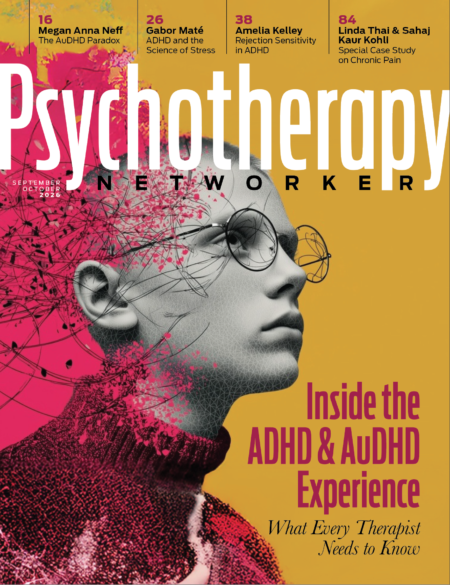
I’ve been a licensed professional counselor for the last five years, and I love my job. I love all the creative neurodivergent women and AFAB individuals I get to support who are like me, AuDHD—both Autistic and ADHD. I own a private practice and co-own a group practice where we mentor associate therapists and teach other clinicians how to help AuDHD individuals who’ve fallen through the cracks of the mental health system. Not every day ends with me speeding to the wrong doctor’s office or spending the rest of the day frozen in front of my computer screen or nonverbal, unable to function. But experiences like these, the debilitatingly shameful events, are part of the reality of life with an AuDHD brain.
Originally, I was misdiagnosed as bipolar by a psychiatrist within eight minutes of entering their consulting room. Eight minutes. She didn’t ask the right questions, or really, any at all. I don’t even think she bothered to look up from her desk at me. I’ve never been suicidal, but being misdiagnosed and then put on strong mood stabilizers my body didn’t need and couldn’t handle made me want to be dead for the first time ever.
I was dismissed when I shared that the meds were making me feel wrong. She said, “No they aren’t. You just started them. Just let yourself get used to them.” I took myself off anyway. But that still left me undiagnosed and alone again without care or help for years—eight years, to be exact. I was left feeling like I had done something wrong by asking someone for help.
For AuDHD women with CPTSD, life can be debilitating, disabling, shame inducing, and utterly exhausting. I hadn’t been experiencing mania or depression. I was struggling daily with undiagnosed CPTSD and had hit my polyvagal threshold—the point at which the nervous system can no longer regulate itself and tips into survival mode. What looked like mania was actually dissociation in a trauma-induced state, which happens to be common for Autistic people with PTSD navigating a world not built for them. But I didn’t know this until I was helped by EMDR therapy, decided to become a therapist, and started doing autism assessments for adult women.
That’s when it all started to make sense. The stories I heard from many of the late-diagnosed women I worked with were hauntingly familiar. There was no clean little F-code they could stick on it, but if you take all the symptoms many of my clients were experiencing—along with their neurodevelopmental characteristics and a disabling interplay of complicated circumstances—commonalities appear. My autistic pattern-finding brain found the pattern.
To understand how an AuDHD brain operates, consider the fundamental clash of needs happening within it. The Autistic brain functions as a precision-based system that requires predictability and sensory stillness to feel safe, while the ADHD brain operates as a novelty-seeking engine that demands constant stimulation and change. When my Autistic side needs answers and definitive closure, my ADHD side can’t focus long enough to find it. In a neurotypical brain, these executive functions generally pull in the same direction, but in an AuDHD individual, they’re in a state of constant friction.
The ADHD side frequently disrupts the routines and structures that the Autistic side requires to avoid burnout, leading to a unique state of “functional instability,” meaning appearing capable on the outside while being constantly destabilized within. When CPTSD is introduced, this internal friction is no longer just a cognitive challenge; it becomes a survival crisis. Because the AuDHD brain is naturally hyper-attuned to environmental shifts, trauma weaponizes this sensitivity, turning baseline neurodivergent traits into high-alert defense mechanisms. Our ADHD demands the very chaos that triggers our Autistic nervous system, while our trauma interprets this internal inconsistency as a bodily emergency and a lack of safety. Cortisol levels shoot up, the amygdala sounds the alarm, and our bodies communicate, “Oh, we’ve been here before,” and either meltdown or shut down, and neither are a choice. The nervous system has been pushed to its limits and can’t process one more sound, feeling, smell, or look.
Neurotypical people appear capable of handling small bumps in the road like misremembered doctor’s appointments. Maybe it irritates them, maybe it slows them down, but they’re still generally equipped to move on with their day. For someone with an AuDHD neurotype, however, the experience of those same small bumps in the road feels vastly different. Small setbacks add up, the energy spent navigating them is greater, and the dysregulation that results can quickly lead to shutdowns or meltdowns. The sensory overload and subsequent reactions I feel trying to parent or exist outside my home is often debilitating. I live a significant portion of my life outside of my therapy sessions wearing noise cancelling headphones and isolating to cope.
Cheat Codes
In my practice, I hear the same shared experience over and over. My clients feel as if the rest of the world got a book of cheat codes to life they never got. Everyone but them seems to just know how to “act right” and “adult right” and “do life.” From a young age, many women and AFAB individuals who are late diagnosed feel different. We struggle with things that seem easy for others, or excel in ways that make us stand out, and then make us feel awkward for being seen. In social situations, we feel like we’re always on the outside looking in, or like our brain operates on a different frequency. This isn’t just a quirky personality trait; it’s a persistent, nagging feeling that we don’t quite fit the mold. It leaves us wondering whether there’s something fundamentally wrong with us and why we can never find the right thing to do or say.
Often, we try desperately to blend in and act normal, but afterward, we replay the conversations over and over again in our minds, agonizing over the fact that we can’t go back and do it over better, and it can be so intense that it manifests as physical pain. These repeated attempts to conform are called masking, and while masking may help you get through your day, the cost of the performance is high. This often leads to burnout, anxiety, and a deep sense of inauthenticity. And from what I have lived, what I have observed in practice, and what I have researched the last three years for my PhD, there’s a direct link between chronic masking, late diagnosis, and CPTSD.
Masking itself is a form of trauma. We’re ridiculed, judged, and corrected just for living. We receive confounding daily messages telling us everything we do is wrong. Stop doing that. Why are you so weird? Quit faking. Stop standing so close. Look me in the eye when I’m talking to you. Listen to me the first time. Why can’t you remember things? What are you staring at? Grow up. Stop tapping. Stop moving. Sit up in your chair. Why are you laughing? Why aren’t you laughing, didn’t you get the joke? Why are you never on time? Why are you early? You’re fine, stop exaggerating. Don’t be so dramatic. Smile more. Smile less. You don’t look autistic. We’re all a little autistic.
AuDHD women and AFAB individuals are traumatized early on. We try and follow, try and understand what the next right move is. We look to the people around us, and tend to trust more than we should, which leads us into situations where we’re taken advantage of and preyed on. We walk through life with an extra layer of vulnerability to danger. We often feel we can’t even trust our own judgement.
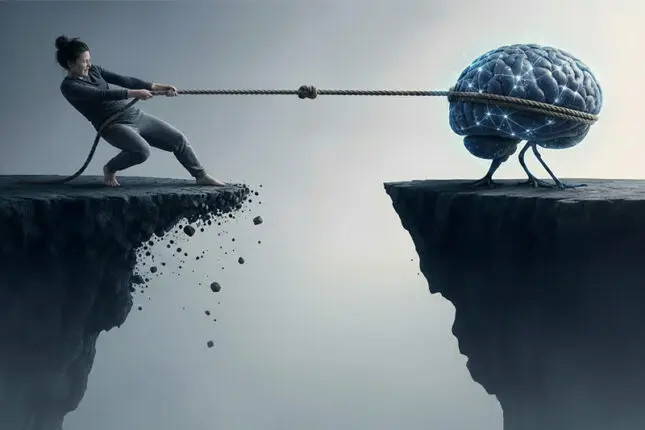
For late-diagnosed AuDHD women, the intersection of neurobiology and trauma isn’t just a list of symptoms: it’s a lifetime of complicated, layered structural and emotional masking. In my practice, I see a constant tug-of-war where one neurotype effectively masks the other: the autistic need for rigid structure and logical consistency often hides a chaotic ADHD interior, leading clinicians to miss the executive dysfunction beneath a veneer of over-preparedness. Conversely, the ADHD drive for excitement and novelty can mask the autistic need for predictability and routine.
When CPTSD is added to the mix, the masking becomes even more complex. The hypervigilance of trauma can be indistinguishable from Autistic sensory overload, and a trauma-informed “fawn” response can mimic the masking an Autistic person uses to survive. These intersections are frequently missed by clinicians who aren’t informed about neurodiversity and don’t understand the physiological reality that one can’t simply rationalize their way out of a dysregulated nervous system.
Imagine spending your entire life feeling like you are playing a video game on the hardest difficulty setting, but everyone else seems to be playing on easy mode. You’re exhausted, overwhelmed, and constantly burning out, even though you might look completely put together. This is life with an invisible disability.
A New Lens
My lived experience and clinical experience led me to develop something I call the neurodevelopmental trauma lens theory (NTLT). Rather than a clinical model, it’s a lens to help therapists understand that for an AuDHD brain, trauma isn’t just an event like an accident or a loss: it’s the chronic, low-grade friction of existing in a world not built to accommodate it. NTLT shifts the focus from “what’s wrong with your personality?” to “how has your neurodivergent nervous system been forced to adapt to an incompatible world?” And it breaks down the AuDHD experience into three key areas.
The Sensory Trap. In AuDHD, this is an internal battle between sensory seeking (ADHD) and sensory avoidance (Autism). You might crave the high-stimulation environment of a concert to feed your ADHD brain’s need for dopamine but then experience a complete Autistic shutdown afterward because the lights and crowds were physically painful. This leaves the nervous system in a state of high alert in every setting.
The Cost of Pretending. For AuDHD women, masking is “high-definition” performance. You use your ADHD “social butterfly” persona to distract people from your Autistic social confusion. You’re essentially running two different operating systems in the background to appear “normal.” This leads to profound interoceptive blindness, meaning you become so good at ignoring your needs to fit in that you struggle to attune to the messages your body is sending you, like that you’re thirsty, overstimulated, or on the verge of a meltdown.
Missed Experiences. While the ADHD side might lead to spiky profiles—such as being brilliant in a crisis but unable to do laundry—the Autistic side struggles with the hidden social rules of adulthood. You might hit professional milestones but experience paralysis with simple things like consistent friendships or executive functioning at home. This creates a deep sense of shame and grief, as you feel like a failed adult despite your obvious intelligence.
The Misinformation Problem
Even as the field starts to become more informed about Autism and ADHD, social media has made neurodivergence clickbait, a hashtag, a funny reel, or a way for “coaches” and self-proclaimed experts to build their following. Studies in 2026 show that over half of the most popular ADHD and autism content on platforms like TikTok is inaccurate.
We need grounded voices to bridge the gap between the rigid, often-inaccessible medical model and the chaotic Wild West of the internet so people don’t end up replacing one incorrect label with another and missing out on the specific support they need to actually heal. Sure, everyone forgets their keys or gets annoyed by a loud noise sometimes, but living with an AuDHD brain means getting hit by many overwhelming challenges at the exact same time.
We see influencers pathologizing universal human experiences like “preferring your room a certain way” or “getting bored during long meetings” as definitive proof of neurodivergence. This relatability bait flattens complex neurological profiles into catchy 60-second clips.
Truly helping people isn’t just about finding a label that works in an algorithm; it’s about helping them find language that reflects their lived experience so they can build a life that finally fits. Imagine a world where we didn’t just hand young kids a script to follow for the comfort of those around them, but a mirror to see themselves clearly. What if we could save a whole generation from having to experience unnecessary suffering?
I believe we can. It starts with helping AuDHD clients understand themselves better. We have the opportunity to intervene before the mask becomes permanent, sparing people decades of trauma. By establishing more accurate diagnoses earlier and dismantling the systems that prize our compliance over our well-being, we’re building a sanctuary for others coming after us, ensuring their light isn’t extinguished by the world that should be nurturing it.
Cassandra Holt Kimbell
Cassandra Holt Kimbell, LPC-S, NCC, is the owner and lead therapist at Freestyle Therapy LLC, an LPCC supervisor, and a doctoral candidate working towards licensure as a psychologist. She’s also a trauma therapist certified in EMDR who offers consulting, supervision, and clinical trainings through a neurodivergent lens. With the lived experiences as an AuDHD human with CPTSD, Cassandra specializes in supporting clients through a strengths-based approach.
Headshot Photo Credit: Larry Gayao