
Enjoy the audio preview version of this article—perfect for listening on the go.
When my therapist, Dr. Dan Siegel, diagnosed me in 1991 with multiple personality disorder (MPD)—today called dissociative identity disorder (DID)—my first reaction was relief: Finally! An explanation! Immediately though, relief became confusion. Really? Sybil? Sybil is the pseudonym used for Shirley Ardell Mason, a woman who’d been diagnosed with multiple personalities in the 1950s—long before it was even a DSM diagnosis—and whose story became the subject of a bestselling book and two television movies.
Back then, the only thing I knew about MPD was what I’d absorbed from the 1976 movie starring Sally Field. Her portrayal—dramatized for effect, not accuracy—was all “split personalities” and dizzying “switches,” where in the blink of an eye she’d morph instantly into someone completely different. It was a sensationalized spectacle that made Sybil synonymous with crazy in the popular culture. And it made MPD seem loud, abrupt, scary—fully externalized—given that she appeared as separate people with distinctive wardrobes, manners of speech, and ways of being in the world.
My lived reality was nothing like that. My experience was deeply internal, invisible to those observing me from the outside. Living as an adult with unresolved DID meant always feeling in danger but with nothing dangerous or terrorizing in sight. It meant lost time that often got attributed to bad memory. Gaps of not knowing how I knew things. Dreamlike experiences with no feelings or cohesive connections to my present. Fragmented was simply how life felt.
That’s the world I brought into therapy with Dr. Siegel, who—35 years ago—wasn’t yet the prolific author or world-renowned founder of Interpersonal Neurobiology (IPNB) he is today. But even then, he spoke of my mind and brain—of how early experiences influence how we develop—in a way that made me feel I was in very competent and safe hands. And most importantly, he offered me deep hope for healing.
“So I’m just crazy?” I asked him after hearing my diagnosis.
“No Sally, you’re not crazy,” he replied, setting the tone for the work we’d do in therapy over the next 10 years. “In fact, I’d say you’re just the opposite of crazy.”
Just the opposite of crazy. These words were the beating heart of my healing process. Out in the world, MPD meant crazy. But in therapy, within the sphere of safety and steadiness he created, I began seeing it as the healthiest thing my mind could’ve done as a child—a brilliant adaptation that made survival possible.
While the diagnosis of MPD had been in the DSM since 1980, the field of mental health wasn’t fully accepting of it. Critics argued it was a fad or something therapists had created. Disbelief, skepticism, controversy, and stigma surrounded it. Was the diagnosis even real? Was it treatable? Could anyone ever fully recover?
At the time, it was considered an extremely rare diagnosis. And no one seemed to connect having a diagnosis of MPD with suffering terribly as a child. It was a complete disconnect. So for a long time, I didn’t talk about my diagnosis with anyone except my husband and Dr. Siegel.
Then, in 1994, once the change from MPD to DID was made, I became comfortable talking with close friends about it, because the new definition described not multiple personalities but dissociated states of mind within one person, a view that reflected both my lived experience and the way Dr. Siegel had always worked with me. But I wouldn’t discuss it openly until 2022 when I joined Dan to facilitate a course called Understanding and Treating Disorganized Attachment and Dissociation. During the Q&A, I realized how misunderstood DID remained—how Sybil and MPD were still the default models—which inspired me to speak and write about my experience and what Dr. Siegel did in our work that was so healing.
Memories of Feelings
A year after adopting my son from an orphanage in Romania, I’d arrived in Dr. Siegel’s office suffering from intense feelings of terror that something was wrong with my son. At the time, my life felt nearly perfect, and the feelings made no sense. Dr. Siegel had met my son and knew he was fine, so he asked to take some history about my childhood to try to understand my fear better.
“Can you tell me about your childhood, Sally?” he asked.
Sitting in the chair across from him, I closed my eyes. At first, it felt like I hadn’t heard him. Or like I’d heard him but couldn’t make sense of the question. Why was this such a hard question? Why was I just feeling blank? It took a little time for me to find my response. Then the words kind of stumbled out. “Um … I had a good childhood.”
“Oh good,” Dr. Siegel said. “Can you tell me something about it?”
I felt a little dizzy … confused, not sure what to say.
“Well, um, I … I don’t,” I began. “The thing is … I don’t really remember my childhood.”
Dr. Siegel paused, and then, very kindly and gently, asked, “How do you know it was good, then?”
Suddenly, feeling oddly fully present, I opened my eyes wide, knowing clearly what I felt. “I don’t know what’s worse,” I said. “That I’m 37 and don’t remember my childhood, or that I’m 37 and just realizing it might be important.”
There’d be many weeks of sessions like this where Dr. Siegel would ask me basic questions about my history and I’d struggle to know and share the answers. Then, when he asked me to tell him about my relationship with my mother, not a single word came to mind. Nothing. Blank. Not one word.
“What about your father?” he asked.
“Terror!” I gasped. The word jumped out of my mouth before I even knew I’d thought it. Even though he’d assured me I wasn’t crazy, it felt like I was losing my mind. My body was bombarded with visceral sensations, as if it was being invaded. Disturbing feelings of being sexually invaded. All the time. All sorts of emotions and feelings that didn’t make sense in my life. Memory gaps. And not a single memory of my childhood. “Dr. Siegel, how can I be so empty of memories but so filled with dread and terror?”
He explained that while I didn’t seem to have much explicit memory—the kind that encompasses events you’re consciously aware of coming from your past—I was experiencing implicit memories. “When we retrieve an implicit memory, Sally, we don’t know it’s from our past. It comes in the form of perceptions, emotions, beliefs, and sensations. The awareness of the memory is very much in conscious awareness, but that it is from the past is not.”
“Are you saying the things I’m feeling—terror, emptiness, confusion—are my memories from childhood? So they’re kind of memories of feelings?”
“I think so, Sally,” he said. “And that’s what we’re here to figure out together.”
For 37 years, I’d been living a dissociated life, fragmented and cut off from myself, carrying emotions and sensations I couldn’t make sense of. My diagnosis opened a door, and as therapy unfolded over the years, I learned more about why I’d developed DID. It was, at its core, protection from my childhood trauma.
“You couldn’t know, Sally,” Dr. Siegel said. “It wasn’t safe to know.”
The people hurting me weren’t strangers—they were my parents, who I depended on to care for me. My system couldn’t integrate what I was experiencing. It was a biological paradox. When my attachment circuitry for safety and connection to my parents collided with my threat-response system to get away from the source of danger that was my parents, my brain did the one thing it could to protect me. It fragmented. And fragmented was precisely how I felt.
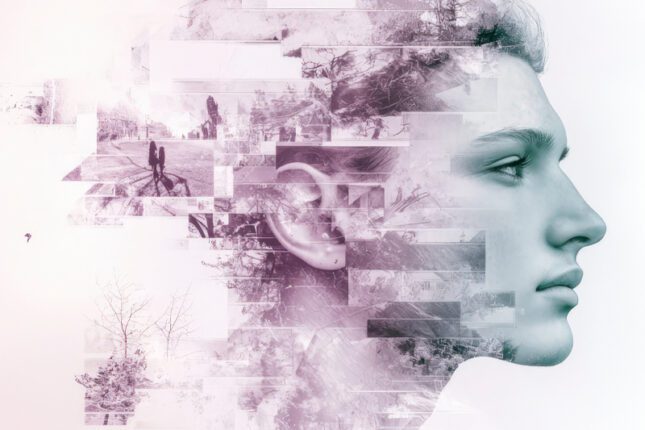
DID isn’t split personalities. It’s not psychotic or sociopathic. It’s not a personality disorder. It’s certainly not how Hollywood has portrayed it. It’s the brain performing mental gymnastics to survive the impossible. It’s fear without solution. Dissociative identity is a protective response.
Fragments and Integration
As therapy with Dr. Siegel unfolded, he listened, followed, and understood, creating a sense of safety for me I’d never known. I was always terrified when a new state wanted to be heard and known, but he met me and the dissociated self-states of my mind with curiosity and care, never with predetermined labels or assumptions about their inherent jobs, roles, or purposes. It was often painful, but nothing I brought into our sessions was deemed too much, too overwhelming, or too dangerous to work with.
Eventually, I learned it was safe to seek answers. It could still feel scary, but no longer dangerous: I’d internalized the felt sense of safety the therapeutic process offered. I could close my eyes, look inside, and ask for what I needed. In time, an answer would come from the dissociated self-state that knew what had happened. I’d notice a shift in my state of mind, but I no longer needed to disappear when that happened. Sometimes my eyes would flutter or there’d be a change in my posture. I might grab a pillow to hold or hide under a blanket.
In one session, when we met the blank state, I’d had a difficult weekend at home. I knew something bad had happened, but I wasn’t sure what. Early on in therapy, I often didn’t remember what happened in previous sessions—not because I hadn’t been there, as though a separate “part” or “personality” had taken my place, but because the protective memory barriers of DID kept from my awareness what, as a child, hadn’t been safe to know.
While some states would say hi when they appeared, the blank state didn’t speak at first, it simply nodded, like it was coming out of hiding.
“Thank you for coming today,” Dr. Siegel said. “Do you know who I am?”
“I think so.” I recognized the blank state’s presence as the state of mind that often had me feeling void of words and information, like I needed to stay hidden. I realized it was there to keep me safe, not harm me. “You’re Dr. Siegel. You’re helping Sally.”
“Yes. Can you tell me your name?”
“The blank state.”
In its quiet child’s voice, the blank state let us know that over the weekend, when my husband—in the most loving way—had expressed a desire to be sexual with me I, well, as the blank state described it, “She kinda freaked out.” With the help of another state that had a broader view of my inner fragmented world, the blank state went on to explain that as a child, I never knew when something sexual was going to happen. I had many different states that managed things but sometimes the sexual violence came too quickly. When that happened, blank state stepped in—like a placeholder—until another state could take over, or until the violence was over.
Dizzy. Confused. Terrified. All the things I’d been feeling that hadn’t made sense were beginning to make sense. But something new was happening. As the blank state spoke, I could hear its small, frightened voice and feel the terror it carried. And I realized it had always been my voice, the one that could never speak. For so long, that voice had been trapped, hidden within walls built for protection and survival.
Now, for the first time, I could listen. I wasn’t lost inside it. I was present, remembering what had happened without being hijacked by it, remembering it not as a flashback, but as memory. The implicit was becoming explicit.
My heart broke for the child I once was, and tears came—my tears—for what had happened. As a little girl, I couldn’t cry. Tears only made things worse. But now, in the safety of Dr. Siegel’s office, I wept for the little girl who never could. I thanked the blank state for all it had done to keep me safe. This was the beginning of integration, of holding what was once unbearable and knowing it was finally safe to know.
With the therapeutic bond I’d developed with Dr. Siegel—which gave me a sense of being seen, safe, soothed, and secure—the traumas of childhood were resolving, allowing the protective memory barriers of DID to dissolve.
Verbs vs. Nouns
Through the lens of IPNB, the field of study Dr. Siegel was developing, integration wasn’t about erasing dissociated self-states or collapsing them into a single state. It wasn’t about blending or fixing what had been broken. It was about coming to know, honor, and connect all that had long been fragmented to keep me safe and sane within the constraints of a troubled family. But how?
“It might help to think of your self-states as verbs, not nouns,” he told me. “A verb is an action or state. A noun is a person or thing.”
“So the states are simply ways of thinking, feeling, acting, remembering, and knowing to keep me safe? Ways of knowing things? Ways of processing what was happening to me? Actions, not personalities?”
“I believe so.”
“Do I lose the states with integration?” I asked.
“I think what happens, Sally,” he responded, “is you’ll keep what the states know. As you’re able to come to know and resolve the many traumas of childhood, your capacity for integration will grow, and the memory barriers between states will begin to dissolve.”
“Because I won’t need the barriers? I’ll be able to remember?”
“I think so,” he said cautiously. “Integration means you’ll be able to remember it all—but as your history, not as your present.”
He was right. In therapy, I came to know when and why all the dissociated self-states arose in my innermost being, how they figured out ways to help me, and what life was like for them. Eventually, I came to know what life had been like for me. I came to honor each self-state and link them to the experiences they held for me. I moved toward wholeness as each state came to know their work was respected, forever making up an aspect of the fabric of my being, not lost or eliminated—just connected to a larger whole. Ultimately, I began my life of no longer being dissociated. I now know my story.
“It might help to think of integration as a fruit salad, not a smoothie,” Dr. Siegel once said to me. I love this metaphor because integration through an IPNB lens isn’t about everything being the same—it’s about honoring and linking differences.
The World Outside Therapy
As my therapy ended, I decided to go back to school to earn a master’s degree in clinical psychology, and I discovered quickly that the specter of Sybil still haunted the field’s perception of DID. Many of my teachers still called it MPD and even referred to people with the diagnosis as “multiples.” Although most of my instructors were trauma specialists, their language and assumptions felt misguided, out of date, and out of sync with research. I kept waiting for them to teach what I’d learned about the mind, brain, and nervous system as Dr. Siegel’s patient—but they didn’t.
In turn, I didn’t disclose that I’d been diagnosed with DID or that I’d resolved it. But when I shared I’d had a traumatic and abusive childhood, more than one teacher remarked it didn’t seem possible because I was “so grounded,” as if surviving severe trauma in childhood meant a life sentence of dysfunction, making full recovery and wholeness forever out of reach.
While my education and clinical training taught me a great deal, the deepest knowledge has come from my therapeutic journey with Dr. Siegel. What I discovered through him—and the lens of IPNB—remains my constant guide in how I work, live, and hold hope for healing. It continues to inspire a lifelong love of learning.
An Invitation
Not long ago, I was watching The Late Show with Stephen Colbert and saw a comedy sketch called “MPD/DID Barbie,” showcasing Barbie switching “personalities”—from crazy to depressed to suicidal to homicidal to sex addict. The studio audience roared. And I found myself wondering, Still!? Why do we find this funny? In 2025, with everything we now understand about child abuse, trauma, the nervous system, neuroplasticity, and relational healing, why are we still treating dissociation with so little understanding and accuracy?
This disconnect shows up in the data brought to light in a presentation I attended by researcher and clinician Bethany Brand about the myths surrounding DID. She points out that a 2020 analysis of eight major films portraying DID found that 100 percent depicted the individual with DID as violent, and 75 percent included criminal behavior. In reality, people with DID are far more likely to be victims of violence than perpetrators.
Only 8 percent of students in APA-accredited doctoral programs are required to take even one course on trauma. Fewer than 25 percent of doctoral-level clinicians accurately diagnose DID when presented with clear symptoms. And, sadly, most people with DID are in treatment for 6 to 12.5 years before being properly diagnosed.
In sharing my story, I’m offering one perspective on what integration through the lens of IPNB can look like, how I experienced it, and how it shaped my recovery. And yet, even now—decades after my integration—when I share my story with fellow clinicians, I’m often met with disbelief or confusion. Some don’t understand what I mean when I say I no longer dissociate. Others quietly question whether full recovery from DID is even possible.
But it is.
I’m living proof.
Many people with DID are living full, high-functioning lives. If they haven’t chosen integration, they may be managing their internal states with deep awareness and effective internal collaboration. They’re navigating life, parenting, partnering, working, advocating, creating, and thriving.
DID isn’t a one-size-fits-all condition, and healing doesn’t follow one path. What unites different stories of DID is that they’re far more human than anything we see or hear in popular culture or even the clinical world. In listening to the people who’ve lived through DID, the clinicians who’ve done the work to understand and respond effectively, and the neuroscientists and researchers seeking answers, we may also deepen our understanding of the human mind itself—its resilience, creativity, and capacity to repair.
Let’s tell the true story of DID not as a punchline, plot twist, stereotype or enigma, but as what it truly is: a brilliant adaptation.
And when supported well, a human triumph.
Sally Maslansky
Sally Maslansky is a psychotherapist and author of A Brilliant Adaptation: How Dissociative Identity Disorder and The Therapeutic Bond Saved Me. Bridging the personal and the professional, her work is informed by lived experience, IPNB, Attachment Theory, and mindful awareness practices.