


Enjoy the audio preview version of this article—perfect for listening on the go.
On March 7, 2020, I took a red-eye flight from California to Boston. I’d been in nine airports in the previous two weeks and was witness to a growing unease over COVID-19. Although no one was wearing a mask at that point, people were using wipes, and most tray tables stayed up. After this final flight, I stopped in the bathroom to wash my hands before leaving the airport, then pushed myself backward through the exit doors like a scrubbed-in surgeon, touching nothing.
Within a week, my spring teaching schedule had disappeared. Absent all travel, my pace slowed. The outside world felt quiet, but inside it was quite the opposite. As I watched instructional videos on handwashing pop up across the internet and on the nightly news, as schools started to close and both my sons were sent home from college, as Clorox wipes and hand sanitizer became coveted, I knew that my young clients’ anxiety and OCD were finding a foothold. I predicted a marked increase in their distress. Solid ground we’d worked hard to obtain would feel shaky again.
Families often return to my anxiety-focused practice for boosters and normal upticks in symptoms, but this felt different. Why? It challenged my fundamental stance: that it’s not what you worry about but how you respond to the worry that matters. Families make great progress when they recognize the meaninglessness of what OCD says (the content) and refuse to play along with its rules, which might dictate that clothes worn at school be removed and washed immediately once home, or that hands must never touch food, so even things like crackers and chips should be eaten with a spoon or even tongs. But it would be much harder to ignore the content now that everyone was talking about how dangerous this virus is and how quickly it spreads. The country was shutting down. People were dying. This content was real.
So what was I supposed to tell my clients? What happens when the threats that OCD makes become legitimate concerns, an actual matter of life and death? How could I disarm this disorder by convincing families to reject their OCD safety rituals in this genuinely hazardous environment?
Don’t Lick Your Shoe
I recalled a family I saw a few years ago. Both teen daughters struggled with OCD, reinforced by their parents’ extreme fear of contamination. They sat on the edge of my couches, backs straight with hands in their laps. They told me they’d twisted their hair into tight buns to keep themselves from getting lice from my furniture. One daughter pulled her sleeve down over her hand before touching my doorknob. Although OCD had been in the family for generations, it had never been addressed. I started with the basics, explaining that as they continued to follow OCD’s rules, their world would become more restricted. I evoked my metaphor of OCD as a cult leader, and we talked of the need to interrupt its rituals. I told them that doing this would feel counterintuitive and scary.
“But germs are real,” the younger girl protested. “There was an outbreak of lice in our school last year.” She added that people got sick all the time, and that washing your hands was the best way to prevent it. Her older sister joined in, peppering me with questions. “Why not take all necessary precautions?” she argued. “What’s the harm? Why not keep protecting ourselves?”
I listened as they rattled off their rationalizations. Reassuring them calmly that many people get lice and can handle its unpleasantness might provide a quick reassurance, but it wouldn’t help them understand how invasive and controlling their disorder was becoming. Rather than countering their arguments with scientific explanations about germs and immune systems, I needed to go big in showing them this powerful disorder requires a big shift in thinking—so in a flourish I took off my shoe and licked the bottom of it. They shrieked and laughed at my antics.
“We could never do that!” they exclaimed.
“You don’t have to lick your shoe,” I shrugged, “but you need to do the opposite of what the OCD demands. OCD wants absolute certainty. It wants to scare you into following its rules. It’s been very good at convincing you that bad things will happen if you’re not very, very careful. So now you feel anxious much of the time, don’t you?”
The girls nodded. Their mom nodded, too. She understood this process well.
“So we could take little, tiny steps, making sure we don’t offend the controlling and threatening OCD. I could give you homework that would be the equivalent of sticking the tiniest tip of your baby toe into the pool. We could do that, but we won’t.”
“I think we need practice,” the older daughter said. “And I don’t think we should do anything unsafe.”
“How do you know what’s safe? What’s risky? OCD will never let you feel safe enough for you to move forward. We can talk and debate and negotiate with the OCD, but your job right now is to do something that’s the opposite of what the OCD demands. You gotta make a move and let OCD get angry, and let yourself feel anxious and even really pissed at me.”
We all sat in silence. They seemed to understand. Could they do it? “Start with touching the doorknob,” I said, adding with a smile, “Or you can try licking my shoe. I already cleaned off the dirt for you.”
Silence again. “I’m working with a boy who’s been doing this for a while,” I said. “When he does the opposite of what OCD demands, he says that he feel anxious for about three minutes, and then he feels awesome.”
“I’m doing it,” the younger sister announced. She stood up, grabbed the doorknob barehanded, walked into my waiting room, and then back into my office. It was a start.
Would I lick a shoe these days? A doorknob? Use any of my usual tricks? Probably not. So what could I do to help my young worried clients? The truth was, I was worried. My conversations with the OCD cult leader were shifting. Oh, by the way, I’m big on talking directly to OCD, making the disorder come alive and eschewing its threats with yawns and eye rolls. I urge kids to create their own visual representation that we can confront together. Some have imagined huge wads of chewed bubble gum (they’re sticky and persistent, after all) or elves with blue faces. One girl described it as a gray cloud that just seemed to float around above her head.
My version of the disorder tends to be a cartoonish, chain-smoking blob, who spreads out on my couch and scratches his belly as he boasts about the power he holds over my clients. Emboldened by the reality of the highly contagious and deadly coronavirus, it whispered to me with delight, “You’ve been telling kids for years that to make me less powerful, families had to do the opposite of what I demand. You taught them how I, the obsessive creator of doubt and compulsive seeker of certainty, am really just a mythical mind game. Not anymore! This is my world, my playground! Brace yourself for the onslaught of anxiety!” I was used to his arrogance, but he sounded more sinister than usual. There was no playful banter.
Now, almost a year later, I can confirm the onslaught: throughout the country, anxiety has exploded. OCD has been thrilled! This environment of uncertainty has been a carnival for him and his anxiety minions. Families I hadn’t seen for months or even years requested urgent appointments. Amid the mixed messages and heightened fear of an entire nation, OCD found existing cracks and widened them into chasms.
Tidbits of Truth
At the start of the lockdown, families that struggled with contamination fears showed up first. One mother, Liza, whom I hadn’t seen in more than a year, requested a video session alone, without the presence of her 14-year-old daughter, Ami. They’d been dream clients, the kind who grab onto what you teach and make it their own. In fact, they’d gotten to the point that Ami’s OCD barely showed up anymore—and when it did, she and her parents recognized its game and boldly refused to play it, often doing the exact opposite of what it demanded. One time, the family even ate an entire dinner off the floor just to show OCD who was boss and why Ami didn’t need to listen to what it said about avoiding germs!
Now Liza worried that the required pandemic protocols would set Ami back. With a sense of fear and familiarity, she was watching Ami wash her hands and use hand sanitizer until her skin was raw. Liza worried that behaviors like handwashing or wiping down groceries, which Ami might do for hours at a time, were being encouraged. We’d worked hard to get Ami to touch doorknobs and eat in restaurants, she reminded me; now not doing these things was being sanctioned by the Centers for Disease Control.
“Told ya so,” OCD whispered in my ear, but I shooed him away so Liza and I could talk things through.
Let’s not forget what we know, we reminded each other. We’ve been here before, just not in this context. Helping kids understand OCD and interrupt compulsions is always easier when the content is outrageous (to protect my dog from getting hit by a car, I have to wear those green sneakers every day) and trickier when it contains, to use the phrase coined by a young client, a “tidbit of truth.” Ami had wrestled with this early in treatment. You should wash your hands after you go to the bathroom! Germs do live on doorknobs! You can get sick at a restaurant!
Her success occurred when she learned to recognize how OCD’s demands felt to her—scary, anxiety-producing, unrelenting—as compared to “normal” acts, which elicited little emotion. She could feel the power of her own doubt factory and its demand to eliminate all risk. She understood the process of OCD and could make the distinction. We just needed to help her differentiate again, this time between the CDC guidelines and her OCD’s demands for absolute certainty against horrible consequences.
Soon, Liza and Ami began to find their footing again, and, honestly, they helped me find mine. I needed those same reminders, because even as the pandemic continued to wreak havoc in unpredictable ways, when I stepped out of the content, OCD itself became predictable again. Its patterns were familiar, even boring—which is just how I like them to be.
Perfectionism as OCD
As we’ve moved from spring to summer to fall and now into winter, I’m repeatedly reminded that OCD is ever the opportunist. As children move through developmental stages and learn of the worrisome realities of life (rejection, illness, the dangers of drugs and sex, suicide, racism), OCD grabs hold, asking “what if?” and devising rituals to stave off newly formed intrusive thoughts and potential bad outcomes. It seeks new content, and the novel content of a novel coronavirus grabbed us all, creating valid doubts and fears. With such a captive audience, OCD has capitalized on our vulnerabilities, both mine and those of my clients. But it has nothing new to offer, and that’s what families need to hear.
Lizzie, a high school junior, whose perfectionism brought external accolades and inner torment, had previously managed her OCD with some success. But remote learning had taken away many of her usual opportunities to get the repetitive reassurance she sought, and received, from teachers. Recently, she’d begun to rely once again on her old routines and safety behaviors, like repeatedly checking her homework and asking friends to confirm the details of a given assignment. At home, her parents were unwilling to join or support her compulsions around assurance (family treatment had worked!), and she was furious at them. The crack had become a chasm.
But looking into the chasm together, Lizzie and I determined how she’d been able to disguise her compulsive reassurance-seeking at school as obsessive perfectionism, which our culture rewards. It had been easy to elicit her teachers’ attention by convincing them she was either curious or confused about her assignments, asking for extensions on homework to make sure she caught any errors, and then soaking in their positive feedback. Although the transition to remote learning had been hard, perhaps it offered her an opportunity to manage her OCD better.
Together, we made a reminder list of her OCD patterns (asking for extensions from teachers, texting multiple friends for details of the same assignment, copying over class notes, having her parents look over all her work), and she began again to see them as OCD demands she could refuse to cooperate with. Lizzie’s parents asked her teachers not to give her extensions, and once OCD was put back in its place, the family’s arguments ceased. Getting Lizzie and her parents on the same side again (with OCD as their mutual opponent, not each other) wasn’t as difficult this time around.
Same Church, Different Pew
Ben, a sweet fifth-grader, who’d worked hard to recognize his OCD’s pattern of over-responsibility, returned to therapy a few months into the pandemic. When we’d started working together, a couple years earlier, he’d worried constantly that he’d done something wrong that would result somehow in harm to someone. What if he talked too loudly on the school bus and the driver decided to quit because of him? What if he wasn’t polite enough to a stranger and that person felt sad? What if he didn’t move a stick off the sidewalk and an elderly person fell? His internal rituals designed to prevent such terrible outcomes—like saying short prayers or repeating certain numbers over and over in his head to give him “good luck”—were too numerous to track. Helping him step back from the content took work, but he understood the concept of process even at his age. “My OCD tries to trick my brain,” he said. “It’ll grab onto anything to play its game.”
And when COVID-19 showed up, it grabbed on big time. What if I get someone sick? What if I’m not careful enough and I kill someone in my family? This tangle of intense fears felt new to Ben at first (and the content had newfound validity, remember). At first, he wanted to dive back into the content and argue with me. This is not like before! It’s not same thing! The pandemic is different! What if I screw up this time? I could kill someone!
I did with Ben what I often do: I opened his chart and read his quotes from the past: “I’m worried that I touched the seats at the movie theater and might bring home a disease to everyone.” “I picked up a worm at recess and I had to ask my teacher over and over if the worm was poisonous.”
“Same church, different pew,” I said.
He nodded. “Let’s do that game again,” he said, referring to the role-playing that I taught him when we first met. I, as usual, played the bossy OCD. He grabbed his “muting pen” off my desk.
“Ben,” I said in my deepest, most menacing voice, “You must listen to my—”
“We’re on to you. We know how you operate,” Ben yelled as he cut me off, pointing the pen at my mouth. “You’re a big, bossy nothing, and I’m not going to listen to you when you make stuff up!” The goal, as always, was to let the thoughts arrive, dismiss them knowingly, and then refuse to follow through with the rituals.
“This is what OCD does, right? The only reason you have these thoughts is because of OCD. The thoughts can show up, but you know they mean nothing.”
Over the next few weeks, our mantra became “This is not new!”
“When you get a new bike,” I told him, “it might be green or black or blue, or have more gears. It might be much bigger. But it will still be a bike, and you’ll still know how to ride a bike.”
I took out an index card and wrote this down: “Of course I’ll worry about COVID and my family. We all need to be careful and follow the COVID rules. But my OCD gets nutty, and I know that.” He can pull out the card when he needs a reminder, and such written reminders help parents stay on message, too. The work was—and is—repetitive. But there’s power and comfort in knowing that the pandemic didn’t require the development of unique emotional skills from my clients. We just had to stay out of the weeds of the specifics and focus on the process.
The Certainty of Uncertainty
So here we are, at the start of a new year, perhaps with a chance to catch our breath. As therapists, what have we learned about treating anxiety? I realized that even in a pandemic I was saying the same things to anxious clients that I’d been saying for years: life is uncertain, and that fact can create anxiety. Learning to tolerate uncertainty and being supported by strong human connection were critical before and throughout 2020; and I’m certain they’ll continue to be critical well into a future we can’t even imagine yet.
No one knew what 2020 would serve up—not by a long shot. In fact, the word of the year for 2020 was unprecedented. The number of people who reported feeling anxiety may seem “unprecedented,” and the content attempting to ensnare us in anxiety may feel “unprecedented,” but the process of how anxiety operates is exactly the same as it’s always been—and stepping back to manage that process remains the way out of it.
Thus far, what did 2020 teach us about our children’s emotional health? Were they equipped to manage what the world was throwing at them—and the stress, anger, and depression that the adults modeled with it? Have we taught them the difference between the processes that help them thrive and the processes that can trip them up? Have we given them the resources to learn? Do we have the skills ourselves?
In my therapeutic work, I’ve seen kids show remarkable insight and skill, and yet the number of children and teens struggling with anxiety and depression continues to rise. Just as OCD has used the pandemic to magnify symptoms in my young anxious clients, this last year has magnified long-standing inequities in the emotional, social, and physical supports available to children and families.
The families I’ve described here have been fortunate to receive therapy, but during the pandemic, even the most basic supports—such as resources provided in schools and face-to-face contact with all sorts of caring adults—were limited. In a time when the emotional needs of many families were acute, were only those already connected to help able to receive it? I’ve read much about how the lack of internet access affects remote learning. What was the effect on mental health access? Will we take this opportunity to address these gaps? Will we help build the broader social and emotional resources kids need?
In my darkest moments, I become overwhelmed by the machinations of a society that’s so at odds with our young people’s well-being that it’s failed to undertake efforts to prevent anxiety and depression. Nonetheless, at my core, I’m an optimist. (Who wants a pessimistic therapist?) I believe this new content called COVID will highlight gaps in our system that we need to address and motivate us to continue to do the work we know how to do. I think I see shifts happening already.
As my hero Fred Rogers said, “Often out of periods of losing come the greatest strivings toward a new winning streak.”
PHOTO © ISTOCK / RUSLAN DASHINSKY
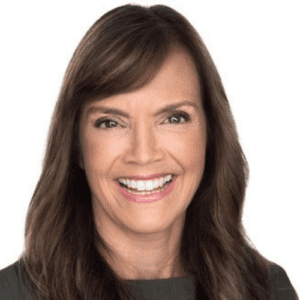
Lynn Lyons
Lynn Lyons, LICSW, is a speaker, trainer, and practicing clinician specializing in the treatment of anxious families. She’s the coauthor of Anxious Kids, Anxious Parents and is the cohost of the podcast Flusterclux. Her latest book for adults is The Anxiety Audit.