

Enjoy the audio preview version of this article—perfect for listening on the go.
I spend about as much time talking about dating as someone would expect a therapist to spend talking about depression.
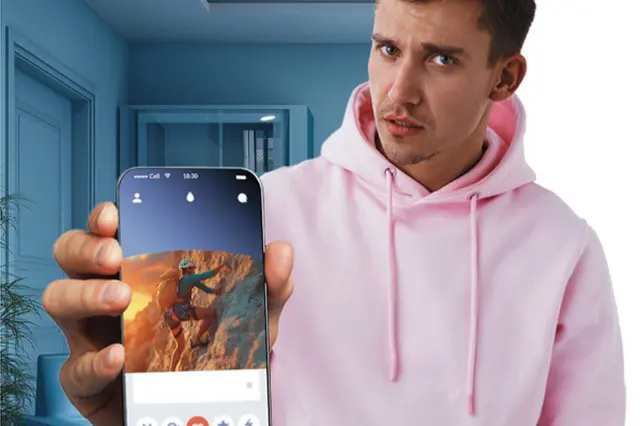
A few years ago, I was struck by my client Michael’s description of his dating life, which for him meant experience after experience of forcing painful small talk with near-strangers over expensive beverages. Just as he was opening up about why this felt so harrowing and what he wished for instead—to be pursued, to feel special, to have connections stick, to make it all feel easier—he got a notification on his phone. And then a few minutes later, another one. And another one. He continued sharing his thoughts, but his eyes shifted back and forth between mine and the device vibrating on the table. “Do you need to answer that?” I asked, noticing his (our) distraction.
They weren’t texts—they were matches. Blushing, he went on to explain that although he’d decided to pause his dating profile a few weeks ago, he’d turned it back on while sitting in my waiting room. “I guess I’m more popular over here!” he chuckled, referring to my suburban pocket of the city.
Michael was tall, athletic, charismatic, and moved through the world as though he was accustomed to positive attention. I had a hard time imagining anyone he’d approach would say no to a date—and they generally didn’t—but that wasn’t the issue. His confident exterior was a carefully maintained shield for the significant anxiety, self-doubt, and loneliness he held inside. It had taken the better part of a year for him to reveal these tender emotions in session.

“You know I hate the apps,” he lamented, “but what am I supposed to do, go up to someone and just be like, ‘Hi, I think you’re hot. Can I have your Instagram?’ I don’t want to look like a creep!”
I didn’t tell him that this was essentially how I remember the process of dating starting (with maybe the addition of some getting-to-know-each-other preamble and an exchange of phone numbers instead of social handles). As a middle-millennial raised on dial-up internet and AOL chatrooms, I’m not anti-tech. Growing up, technology unlocked seemingly infinite possibilities for my peers and me, including friendship and love. But somewhere between Myspace and Match, it seems that our cultural expectations of connectedness shifted. We text before calling. Or really, we don’t call—we FaceTime, or better yet, we send four strategically sequenced emojis to convey the emotional tone of our asynchronous responses.
“Let me turn that off. I don’t know what’s going on. I barely changed anything,” Michael said. But as he reached for his phone, he couldn’t help but pause to look at his screen. “Actually, can I show you my profile?” he asked hesitantly. “Is that something that’s allowed?”
I’d had clients read me a text argument with a partner or send me the meme our session reminded them of. But as much as there is to learn or understand about clients based on how they share themselves outside the room, my ethos had always been to stay out of clients’ digital lives. I don’t look my clients up online or follow their social media pages. So when Michael tipped his phone in my direction, I hesitated. Was this invitation a breach of my code of conduct?
“Tell me some more about what you’d like me to see. If we looked at your profile together, what would you want me to be watching for?” I asked.
I believe that anything, including a dating profile, can be art. And being married to an artist, I’ve learned how deeply vulnerable it can be to offer what you’ve made up for critique. So before saying yes to Michael’s request, I needed to know what kind of feedback he was open to. This is how I hold the responsibility of compassionate confrontations in the room. We receive with intention, critique with care, and witness with reverence. Our clients’ lives are galleries filled with their most expositional art. Unless invited, I don’t touch.
He thought for a moment. “Would you swipe on me? Obviously not you you, but…” He put on his professional persona, the confident one he used to close deals at his corporate job. “Let’s say you’re someone who was dating to meet someone you could settle down with. Would you think I was someone worth getting to know? Am I overselling myself?”
I could feel the self-conscious vulnerability driving his pivot from soft conversation to business exchange. He wasn’t just asking me to help him understand why real connection felt impossible, he was asking me to validate that he was worthy of real connection. Rather than a distraction, it felt like a perfect opportunity to deepen the work we were already doing in therapy. After all, the issue is often not the presented problem—the breakup, the anxiety, the career transition—but the questions underneath: Would someone choose me if they really knew me? Am I a good person? Do I matter? A dating profile makes this devastatingly literal: “Am I enough? Swipe left or right.”
I’ve come to understand that when clients show me their dating profiles, workshop their openers, or screenshot their matches, I’m not just seeing photos and bios—I’m seeing their self-concepts in digital form. What they choose to show, what they carefully omit, how they describe themselves when they appeal to what others want: it’s revealing. Systems theory reminds us to consider all angles of social interactions, not just what our clients can see and share. A dating profile offers another lens—a way to see and know our clients, and to understand how others might see them as well. It’s where self-perception, desired perception, and actual presentation collide.
Michael and I talked a little more about what he wanted to convey in his profile and what he wanted support with. Once we were both clear, I returned to his invitation. “Okay, I’m in character. Yes, let me see it.”
The Marketing Trap
Michael handed me his phone with some forced nonchalance. His profile photo was a close-up of him on a hillside at the golden hour, smiling at something off camera. There was a photo of him rock climbing. Him snorkeling. Him with his arms around some friends and his older brother at a rooftop bar. A medium shot that looked like it was from a fashion editorial shoot. His bio was short, mentioning his love of spontaneous road trips, crosswords, and good coffee. He was looking for someone with a penchant for adventure who could beat him to the answer to 12 across. Brief, easy-going, funny.
I asked him more about the photos, remembering a few weeks prior when he’d mentioned how much anxiety he’d had around choosing the right ones. They’d been a big barrier to him creating a new profile in the first place. Now, he scrolled through them in his mind. “One is from a wedding last year. And there’s one from a climbing trip I did a few years ago. The modeling one my friend took for his photography portfolio. It’s cringe, but The Team said it was the closer.” The Team was a group of his friends that he ran all his ideas by, like a personal board of directors. All their meetings were held via group chat, of course.
“I can understand that. And it sounds like they were right, you’ve been getting messages all session! I didn’t know you rock climbed.”
“I mean, not really. I tried it, though. I got too busy to really pursue it, but that’s the kind of person I want to be. And that’s what people want to see, right? I want to make the most of my profile.” He looked at me expectantly as I passed him back his phone.
I could feel us creeping into tender territory. He’d created a profile of his aspirational self, the version he imagined would be wanted. Nothing was technically untrue, but the emphasis on adventure and spontaneity didn’t align with the person I knew: someone drowning in work stress who craved quiet nights at home. He’d get a lot of attention for this profile, but he’d remain locked in his current pattern: every date he went on would feel like a disappointment waiting to happen because people were swiping on someone who didn’t exist yet.
I imagine we’d have gotten to this place in our work without this exchange, but in holding his dating life in my hands, literally, a new level of vulnerability emerged between us. It struck me that traditional therapeutic boundaries were designed for a pre-digital world. If I could help him practice more authenticity in his relationships, why not on dating apps?
“Tell me more about this person in the profile,” I said. “What do you want me to see in him if I’m looking at it and I’m interested? Who is this guy? What’s his life like?”
Michael told me about someone balanced. Cool, but not arrogant. Successful, but not too serious about things. Hard-working, but fun-loving. “We could go to shows on the weekend or go for drinks somewhere with good music after work.”
“But Michael,” I said gently. “You don’t do those things. You don’t even really want to do those things.”
He nodded quickly and answered in his business voice, “Right. I feel like I’m living in that guy’s shadow, which is messed up, because it’s me.” We sat with that for a moment. When he continued his voice was softer, almost too quiet to hear. “But if I don’t show that stuff, they’ll think there’s nothing special about me. Maybe there’s nothing worth choosing.”
There, in the midst of this doorknob moment, was the wound. Not that he couldn’t get matches—his phone hadn’t stopped buzzing all session. The actual pain was the belief that if someone met the real him—exhausted, anxious, needing structure to feel safe—they’d discover he was ordinary, and struggling. And he’d decided, somewhere along the way, that this kind of ordinary was unlovable.
As is common in therapy work, this breakthrough came as it was time for our session to end. When we picked up again in the next session, we focused on what he wanted to experience in love, exploring his beliefs around worthiness, who “deserves” meaningful relationship, and why someone would have to “earn” love by being special. After a few weeks, Michael paused his profile again, but this time for different reasons. Previously he’d stepped away from online dating because he felt frustrated and overwhelmed from too many private messages, too few dates, and a few too many disappointments. This time, he paused it because he’d realized that in trying to have a wide appeal, he was losing himself. And as we explored his profile “strategies,” he realized he felt confused about who he was hoping to actually meet.
Our work became less about who would swipe right and more about who he was when no one was watching. The Team was a great support in this, each friendship acting as a platonic model for the kind of romantic care he wished for himself. Slowly, dating inspired less anxiety and more adventure.
Michael’s struggle illuminated something I’d been seeing increasingly in my practice: dating has transformed from an organic social process into a marketing problem. My clients weren’t just looking for connection; they were developing brand strategies. They A/B tested photos with group chats, workshopped bios with AI, analyzed their metrics: swipes, matches, response rates. In this marketplace, they were simultaneously the brand manager, the product, and the salesperson. How can you be authentic when you’re also trying to be marketable? This might be the most painful consequence of digitizing dating: taking the universal human fear—Am I enough?—and turning it into a marketing challenge with real-time feedback.
For therapists, the line between helping someone present themselves authentically and helping them market themselves more effectively is uncomfortably thin. With Michael, I didn’t help him “improve” his profile. Instead, we confronted loneliness, the gap between the relationships we want and the ones we have.
Since intimacy requires us to be seen, when his profile went live again, we swapped in some more “cringe” shots: one that showed him in his thick-lensed glasses, a picture of him unfussed with his dogs in the park. He, of course, made other changes too. He was a funny, cool, regular guy, and now he presented that way online just as in real life. In other words, we shifted from profile optimization to emotional exploration. This shift is perhaps the most important clinical move we can make with dating app struggles. We’re not helping clients beat the dating game. We’re helping them see what game they’re playing and whether it’s one they actually want to win.
Parasocial Activity
Profiles reveal relational patterns with startling clarity. The client who uses only group photos is often the same one who struggles with being seen as an individual. The one with no photos showing their face clearly? Often wrestling with shame or fear of judgment. The client whose bio is a defensive joke about how “weird” online dating is? Usually keeping vulnerability at arm’s length by mocking the process itself. I don’t follow my clients on their dates (although honestly, it could probably save us all a lot of time!), but working this way often feels like one step short of pulling up a stool next to them at the bar.
On the one hand, dating apps have allowed even my most shy or socially isolated clients to feel like they have more access to romantic community. My Black, Brown, queer, elder, and kinky clients—because they can choose dating apps that cater to their distinct or intersecting identities—can date without being persecuted or fetishized. These are concrete social benefits. At the same time, we’re living in an era of parasocial relationships, where folks have tons of superficial connections that feel like meaningful relationships. Whether it’s with people we’ve matched with but never met or influencers whose lives we follow like a reality show, it means we’re often in relationships that lack reciprocity.
Jasmine came to session in despair after a first date that felt “so off.” For three weeks, she and her match had exchanged nonstop messages. Long, thoughtful texts about their childhoods, their fears, their dreams. They sent each other songs. They had inside jokes. “I felt like I really knew her,” she told me. “Like we’d already skipped past all the small talk and gotten to the real stuff.”
When they finally met for a walk in the park, something was fundamentally wrong. Her date looked exactly like she did in photos. She was kind and thoughtful like she was in their conversations. But the intimacy Jasmine had experienced with her through text simply wasn’t there in person, and the ease they’d felt in their on-screen interactions didn’t translate to physical space. Jasmine found herself struggling to make eye contact, suddenly self-conscious in a way she hadn’t felt before. “Why did it feel like we were just meeting?” she sobbed.
In many ways, they were just meeting. Digital intimacy had created the feeling of connection without the actual work of being in someone’s presence—navigating the silences, reading each other’s body language, adjusting to each other’s energy in real time. They were strangers, polite strangers who happened to know a lot of facts about each other, but strangers nevertheless.
When her date quietly unmatched her a few days later, she wasn’t surprised. They still interacted with each other’s social media posts from time to time, but when that happened Jasmine would edit, unsend, and occasionally have AI ghost-write her “casual” replies. It took up too much of her time, and even more of her mental energy. When I asked about these fraught points of contact when they weren’t really in each other’s lives, especially considering she was still grieving the relationship she’d hoped to build, Jasmine shrugged. “We’re still friends, I guess.”
Developing Our Digital Language
Sometimes our clinical work is helping clients explore their personal relationships to digital intimacy, parsing out the difference between emotional closeness and embodied presence, feeling and physicality. In some ways, this isn’t new territory—anyone who’s supported clients in long-distance relationships knows the challenges of building intimacy when most of your connection happens through screens. But with the rise of digital-first connections, it’s now increasingly likely that folks will build relationships with people they’ve never met, which is a cultural first. We’ve normalized these patterns, but I wonder what developmental psychologists like Mary Ainsworth would make of all the new ways we’ve found to create emotional crises and attachment wounds—ghosting, catfishing, breadcrumbing, orbiting—and the fact that so many folks would prefer to ask their intimate questions to anthropomorphic chatbots than to their closest friends.
I’m writing this from my fully virtual practice, having now moved all my clinical work online. The irony of musing about technology and intimacy while conducting therapy through screens isn’t lost on me. But if we live in a technocracy where our clients’ social environments are downloaded apps rather than community spaces, how do we respond? This is territory we’re all learning together, and our traditional frameworks weren’t built for a world where intimacy is mediated by algorithms and relationships begin with swipes.
When clients ask to show you their profiles, I encourage you to pay attention to what they’re actually asking for. The question I ask myself before looking at any profile is: Am I being invited to improve and optimize or to witness and explore? The former keeps clients stuck in the performance. The latter opens space for us to dive a little deeper.
When clients show signs that apps aren’t serving them well—such as with compulsive checking, self-esteem tied entirely to match rates, avoidance and shame—fight the urge to prescribe a break as the first course of action. Especially for younger daters, the internet is their social world. More often than not, the tool itself isn’t the problem, but their relationship to the tool is worth exploring as a way of understanding their deeper needs.
I’ve begun to think of online dating as its own culture, where we perform approvable versions of ourselves, receive measurable social feedback, and filter through the mess of actually being known. Online dating can break through the separation that’s become endemic in modern life, but it can also become another barrier to the authentic connections we need to feel truly alive. Therapists not only need to stay literate, but to develop a certain kind of cultural competence in order to walk alongside clients as they build relationships that can survive being translated from digital spaces into physical form. What becomes available when we help them notice the gap between who they’re presenting and who they are? What honesty can still exist in the space between their public and private selves? The experience of intimacy happens in the context of relationships, and an organic relationship has reciprocal stakes. We get to know others and are known by others. We hurt and are hurt. We pursue and retreat. We fail, reflect, and retry. We feel things together.
Dating apps aren’t inherently good or bad; they’re tools that reflect and amplify existing social patterns. The question isn’t whether clients should use them, but how to help clients use them in ways that serve their actual desires for connection. When we introduce inorganic intermediaries into the dance of human connection, what happens to our ability to exchange feelings? What parts of us expand and develop—or shrink and atrophy—when our social world becomes social media? I don’t have the answers, but I do know therapists are well suited to the challenge of remaining curious in territory where none of us has a map. And perhaps that’s exactly what our clients need from us.
Shadeen Francis
Shadeen Francis, LMFT, is a therapist, professor, and author specializing in sex therapy and social justice. She trains organizations and is a guest expert for various media outlets, including CBC, NBC, and Fox.