

In 2004, I lost my daughter. Jesse died four days before her 10th birthday, following months in the hospital and a series of medical catastrophes after brain surgery that ended with a condition called Stevens-Johnson Syndrome. Jesse spent the last three weeks of her life in New York’s Cornell Burn Unit, in a chemically induced coma. It was a terrible way to die.
For the first couple of years after losing Jesse, I woke up every morning to the same horrific thought: I’m still alive? I’ve really got to drag myself through another day?
The answer was always yes. I had to stay alive. Above everything, I had to stay alive for my 20-year-old son, Cory, who’d been devastated by his little sister’s death and badly needed his mom. Suicide was out of the question. So I went into therapy instead.
Now I’m not the easiest person to find a therapy fit for—and not just because I am a therapist. I’m queer, but I’m also a Baby Boomer, lefty liberal, second-wave feminist, atheist, hippie peacenik. A likely fit might’ve been a feminist woman, or maybe a gay man. Instead, I was drawn to a colleague whom I’d first met as a couples-counseling trainer in a program I’d attended 15 years earlier. Bruce, the therapist I picked, was way at the other end of the Boomer continuum. He was an older, white, straight, Midwestern guy. An ex-Marine. An ex-seminarian. My guess was that he voted Republican.
Bruce was a tall man, thin, and kind of severe-looking. He had a calm, level, neutral way about him, and at times, with his pale skin, he could look almost ghostly. I’m not saying he was cold, because he wasn’t, but he didn’t do warm and fuzzy, either. He had a poker face and talked in a kind of deadpan way—quiet and measured. Considered. Slow.
It helped that I knew that Bruce was a recovering alcoholic and a Vietnam vet. I knew that, like me, he’d seen things people shouldn’t have to see, endured things people shouldn’t have to endure. I didn’t know a lot about him, but I knew he understood darkness.
Every week, once a week and sometimes more, I’d go to Bruce’s office and scream, rant, rave, and bang the sofa. I’d weep and wail for a really long time. Bruce always had tissues and a wastepaper basket out for me. Mostly, he just listened, intently and completely. He never moved to hug me or put a hand on my shoulder. This was a good thing, because at that time, any physical comfort would’ve short-circuited my grief. Sometimes, though, when I’d finished crying, I’d look up and see tears standing in his eyes.
Bruce never tried to cheer me up. I’d say, “I’m never gonna be happy again,” and he’d say in a neutral voice, “That could be true. It’s possible.” I’d say, “There’s a part of me that’s dead and will never come alive again,” and he’d respond in the same, matter-of-fact way, “Yeah that sounds about right. You’re not going to quite be alive in the same way ever again.” I’d say, “Life fucking sucks,” and he’d reply, only slightly ironically, “Yep, the Bible’s right. Life is a vale of tears.”
I’d rage a lot, too. About all kinds of things, large and small, but a special pet peeve of mine was the sentiment that everything happens for a reason. No one had the nerve to say that to me about Jesse, but I heard people say it a lot, about other stuff. You know the type, the people who insist that every storm cloud has a silver lining, the ones who say cheerily, “Oh, I know you lost your job three months ago, but I bet you’ll get one that’s even better. You see, everything happens for a reason.” Whenever I overheard that, I’d silently scream, You idiot. Everything happens for a reason? Really? You want to give me one good fucking reason why my daughter died?
In one session with Bruce, I said through gritted teeth, “The next person who says, ‘Everything happens for a reason,’ I swear I’ll put my fingers around their neck and choke them to death.” I illustrated by putting my hands out in front of me and squeezing the life out of the imagined victim. “And you’ll have to bail me out of jail.” His response came slowly, but I could tell he meant it. “I’d not only bail you out of jail,” he said, “I’d defend you on the grounds of justifiable homicide.”
The most dramatic session I had with Bruce took place about eight months after Jesse died. My son, Cory, was more torn up by his sister’s death than I’d realized. He was away at college and, unbeknownst to me, became involved in some very self-destructive behaviors. One night, I got one of those terrible middle-of-the-night phone calls that every parent dreads. I won’t go into the details, but let me just say that for some period of time, I felt strongly that his life was in jeopardy, that I might lose both my children. One day, during the worst of it, I walked into Bruce’s office and calmly said, “If Cory dies, I’m going to check out myself.” I’d decided that I couldn’t endure the death of both my kids. “I’m going to buy a gun,” I told him, and then shared the rest of my detailed plan.
Now, it’s never fun for a therapist to sit face-to-face with a suicidal client. It’s our job to prevent suicide. So Bruce’s response was remarkable, one I’ll never forget. He didn’t call 911; he didn’t send me for a psychiatric evaluation; he didn’t try to talk me into checking myself into a hospital. He didn’t even make me sign one of those commitment-to-stay-alive contracts. All he said was “If that happens, and that’s what you decide, I’d absolutely understand why. I’ll feel sad, but I’ll in no way blame you.” Basically, Bruce gave me permission to commit suicide. To me, it meant that he was meeting me human-to-human, not shrink-to-patient. It meant he understood that perhaps there’s some pain in life that people shouldn’t be expected to bear. That empathy was precious to me. I had a place to go, week after week, year after year, as long as I needed, where I could sit down and say, “Yup, still feel like dying,” and this man would say to me, “Got it. Understood.”
It’s 12 years later. Cory is doing well. In fact, later this year he’ll receive a PhD in philosophy from Princeton. And sometime after Jesse died, I adopted two older girls, sisters who were growing up in desperate conditions in a Guatemalan orphanage. They’re my heart, and the three of us continue to heal each other every day.
It’s also true that a part of me is dead, and isn’t coming back. It’s true that my life will never be the same, or as happy, as it was when Jesse was alive. Once, I heard a parent say about the enduring effects of losing a child, “It’s like the backdrop of my life is painted blue.” That’s what it’s like for me. Still, these days the foreground of my life is pretty damn good. Sometimes, I can even say I’m happy.
In no small measure, I owe that to Bruce.
Return to the other stories in “What’s Your Most Memorable Therapeutic Moment?”
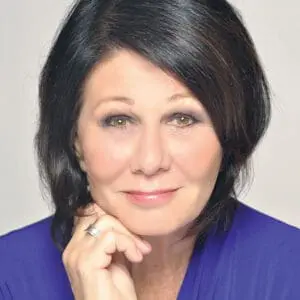
Margaret Nichols
Margaret Nichols, PhD, CSTS, is a psychologist, sex therapist, and author of The Modern Clinician’s Guide to Working with LGBTQ+ Clients. She has more than 40 years of experience doing therapy with sex-, gender-, and relationship-diverse people, and she identifies as queer.