


Enjoy the audio preview version of this article—perfect for listening on the go.
These days, you’d be hard-pressed to find a clinician who doesn’t do some form of trauma work. Yet even as our field’s understanding of the impact of trauma on the brain and nervous system has deepened, and more therapists are becoming trauma-informed, dropout rates for PTSD treatments average 20-25 percent, with rates climbing even higher for clients with complex trauma. What are we missing that makes trauma recovery so difficult, unreliable, and grindingly slow?
For over a decade, two of the field’s leading experts in trauma and dissociation, Ruth Lanius and Bethany Brand, have asked this question. But they haven’t stopped there—they’ve conducted the largest international treatment outcome study of dissociative disorders, dug deep into neuroimaging studies on the brain’s response to trauma, and sifted through input from trauma clients and the clinicians who work with them. In the process, they’ve landed on an answer that’s revolutionizing how we treat trauma and dissociation—one that’s also sure to change the way on-the-ground clinicians like you work with trauma clients in private practice.
A professor of psychiatry at Western University, Lanius is known for her research with trauma survivors that contributed to establishing the dissociative subtype of PTSD in the DSM-5. Brand is a clinical psychologist and professor emeritus at Towson University who literally wrote the book on dissociation, The Concise Guide to the Assessment and Treatment of Trauma-Related Dissociation.
Along with psychologist and researcher Hygge Schielke, Lanius and Brand have codeveloped a trauma-treatment program called Finding Solid Ground (FSG) that emphasizes grounding. They also coauthored the book Finding Solid Ground: Overcoming Obstacles in Trauma Treatment for Therapists and The Finding Solid Ground Program Workbook for clients. Now before you shrug or say you know all about grounding clients, this kind of grounding isn’t so much about encouraging clients to feel their feet on the floor or name five things they see. Rather, it targets the balance/vestibular system, the gateway to all experience, which—as Lanius has discovered through her research—chronic dissociation disrupts.
In this interview, you’ll learn about the importance of developing “gravitational security,” a fundamental, human need to feel connected to and supported by the earth that undergirds our capacity to be present and learn. You’ll hear why sequencing, or the order in which we do interventions, is the lynchpin in successful trauma work. And you’ll also discover surprising signs that seemingly talkative clients may be dissociating right in front of you.
Psychotherapy Networker: Let’s start with a basic question—why do people dissociate?
Ruth Lanius: I had a client—we’ll call her Susie—whose story illustrates why dissociation can be very adaptive at the time of the trauma but comes at a high cost later. This client had a horrific early attachment history. She never felt safe with her mother and was sexually abused by her father. In high school, she was repeatedly gang raped. When she described to me how she detached from her own body to survive the rapes—she was up in a tree so the body that was being abused was no longer hers—I thought, This is so powerful, the way she could survive by detaching. She and her body were separate. But afterward, she spent many years in hospitals in a chronic state of detachment, unable to feel positive or negative emotions, which prevented her from being fully alive.
This pattern of dissociative detachment is part of what led me to question our treatment approaches. Earlier in my career, we treated the highest users of the mental healthcare system in DBT groups adapted for complex trauma. I’d seen how, in the first six months of treatment, people didn’t take in any information. They were all highly dissociative. They learned nothing. They simply went through the motions.
So when I started developing the FSG program with Bethany and Hygge, it became clear to me that we must ground clients first—to help them come back to themselves, be present, and feel connected to earth before we attempt to teach them any skills. We weren’t doing enough of that in those DBT groups. Hindsight’s always 20/20, but I do ask myself, If we’d grounded those patients first, would they have learned more in those first six months? My hypothesis is yes.
But helping my client Susie ground was difficult. She resisted because she was so used to being detached and that’s what kept her safe. Now I was telling her, “We need to ground. We need to help you attach to yourself.” That was terrifying for her. The process takes time and negotiation. But once an individual gets there, it changes their life. It did for Susie.
PN: So, if you’ve got a highly dissociated client, all the skills in the world aren’t going to make much difference until they’re able to reattach to their bodies?
Bethany Brand: That’s right. Dr. Nicholás Rodríguez, a very experienced, well-known Chilean EMDR specialist, consultant, and trainer, who participated in our study, shared how the FSG program accelerated his treatment with a particular patient after years of work. He reported a clear “before” and “after”—grounding allowed the patient to learn recovery-focused skills much more deeply. At one point, when the patient had a suicidal crisis and went to throw herself in front of a train, she remembered a phrase she’d learned in the program: “Step by step, you’ll get there.” She returned home, practiced grounding, and then used the safety plan she’d developed over the course of the program. That’s why she survived. Now, she and Dr. Rodríguez talk publicly about the huge difference the FSG program made in their work.
The thing is, we all think we know about grounding. Clients say, “Yeah, yeah. I know how to get grounded. I was taught that.” Or they might say, “It doesn’t work. I don’t want to do it.” Regardless, when therapists feel like they aren’t making progress with a client, like they keep repeating the same session, and getting pulled from crisis to crisis, it means they’re not getting to the root of the problem.
When this happens, we’ve got to check what we’re doing and ask ourselves, Why isn’t this working? Our research shows that it’s because the client’s brain isn’t fully online. They’re not actually grounded. Our results are extremely compelling in terms of how focusing on grounding as a first step turns people’s treatment around.
PN: Is feeling like you’re having the same session over and over a warning sign that a trauma client may be dissociating?
Lanius: Absolutely. And we have evidence that dissociation impedes emotional learning.
Brand: If your therapist is doing good work but you’re only half-present, you’re not going to remember what you learned from your sessions or be able to use it in daily life. In a very real sense, you weren’t fully there in the session to begin with.
PN: Many therapists think dissociation means a client taking on a different identity, but clearly it’s more subtle and nuanced than that. What are some other clues that a client is dissociating?
Lanius: One telltale sign is when the therapist themselves feels like they’re losing solid ground. Maybe you start to feel floaty, spacey, like you’re not quite present. Or you might start thinking to yourself, Wait, what were we just talking about? Also, you may begin to realize there’s no storyline in what your client is sharing. You’re trying to follow what they’re saying, but the story has no beginning, middle, or end. It’s disorganized, fragmented. In my sessions, when this happens, I often find myself wondering, What’s wrong with me? Why can’t I follow this? Then I realize, Oh, this is a very fragmented, dissociated story. That’s what’s going on here.
Brand: Sometimes, when the client stares off into space, blinks or squints rapidly , or starts pronounced upward eyerolling, it’s an indication that they’re moving out of contact with the therapy session.
Lanius: You can also see extreme cognitive slowing in clients who are dissociating. When people are in an emotionally shutdown state, it can look like they’re over-medicated even though they’re not.
Brand: Some patients will start physically folding in on themselves in an attempt to get smaller and hide. They pull their legs up underneath them. This may be an indication that they feel like they’re under threat. During a childhood trauma, when the threat is real, dissociation is obviously a brilliant way to hide. It’s not helpful in a therapy session, though. But unresolved trauma is ever-present, and a patient can feel like they’re in danger in therapy with you, even if they can’t articulate it.
PN: Not many dissociative trauma survivors walk into a first therapy session and say, “I’m here because I’m dissociating too much.” What are some problems they will come in complaining about?
Brand: Typically, patients come in struggling with depression. They feel exhausted and have a hard time getting going. People who have a lot of trauma-related dissociation often have PTSD symptoms, or full-blown PTSD. They say, “I can’t perform well at work. I can’t stay focused. I can barely get out of bed some days.” The problem is—and we’ve got data from various labs showing this—if you only treat these people for depression or PTSD, the dissociative disorder doesn’t go away.
Patients also complain about being haunted by the past, not being able to focus, struggling in social relationships, trouble with intimacy, problems with mistrust, and feeling jumpy. Many of these patients are dealing with complex trauma. They get flooded in a way that makes them want to hurt themselves. The only way many know to manage is to drink to stop feeling, to cut themselves to stop thinking about what was done to them.
Lanius: Our research and clinical experience suggest the first thing these clients need to find is something called gravitational security. This is a term for our sense of balance and orientation, meaning our relationship to the earth. Many trauma survivors struggle to feel a center of gravity. They don’t feel firmly rooted to the earth. And when this is the case, you actually can’t do anything properly. You can’t engage securely in a relationship. You can’t defend yourself. You can’t be present.
For a while now, occupational therapists have known and written about gravitational security being the foundation of everything. It’s an important sensory system that’s offline in dissociation. This is what clients with complex trauma need to work toward—not jumping into connection with their body, which can feel much too scary. First, they need to develop the capacity to actually feel themselves being held by the earth. This isn’t the usual “name the five things you can see, the four things you can touch” type of grounding many therapists are used to doing. Gravitational security is a special kind of grounding.
Brand: Clients often have no idea this is an issue for them. They won’t come in saying, “My balance system is off.” But they may get bumps and bruises frequently and have a lot of falls. I have clients who’ve had unusual numbers of fender benders. One client knocked off the mirror of their car repeatedly. Often, they’re not tuned in to what’s going on around them. They bump into things. They don’t know where they are in space. You can tie this back to how they survived trauma by not being attached to their body—like Susie. She was up above in a tree watching that body below get hurt, and it wasn’t her. Over time, detachment from your body messes with your balance system and your brainstem. This is something Ruth’s research shows very clearly.
PN: How did your research and clinical experience lead you to this understanding of the need for trauma clients to develop gravitational security?
Lanius: I started noticing that virtually all my patients were telling me they felt clumsy, and I also watched them be clumsy. They had difficulty maintaining their balance, especially when stressed. So, I said to one of my grad students, “We’ve got to look at the balance system.” And in our MRI research, we did. We found that the balance system is the gateway to internal and external experience. It’s the gateway to interoception—what you feel inside—but it’s also the gateway to where you are outside, in space. And the information you take in through the balance system travels to the highest level of the brain where it all gets integrated and informs how embodied you are, how much you can regulate your emotions, how much you can connect with others, how curious you are, how much purposeful movement you can engage in, and how much of a sense of the now you have. It’s basically the basis of everything. And in highly dissociative individuals, it’s disrupted.
If you’ve ever had vertigo, you know it’s a terrible thing. The room spins. If you have it all the time, you never feel safe because you never feel held by the earth. This is what chronic dissociation does to your sense of balance. To feel safe, you need to have a sense of the earth’s gravitational pull keeping you upright, holding your feet to the ground, keeping you oriented.
PN: Not too many people think about the balance system being compromised in PTSD.
Brand: No, they don’t. I certainly didn’t! Everybody talks about the limbic system and the amygdala, but Ruth and her team are showing that the disconnect is deeper. It’s happening in the brainstem. It’s the very basis of why all the other psychological functions are compromised.
Lanius: In our program, we help people develop an awareness of gravitational security, starting with grounding. Even though the sequence is laid out in different steps in our workbook, we advise therapists to individualize the pace for each client. We tell them, “Some clients can go through the 30 topics in our program quickly, and some need months to go through grounding because they’re terrified to be present.”
Brand: In other research we did, highly dissociative people around the world revealed that their number one trigger for self-harm was being flooded by intrusive thoughts, feelings, or memories related to trauma. In other words, being flooded with horrible mental pictures, feeling themselves being hurt again, having a body memory could lead them to engage in drinking, cutting, doing whatever they could to stop the overwhelm. That told us we needed to have a whole second module of the program about helping people help their own brains get into the present and separate out trauma. The focus had to be on containing trauma, not opening it up.
Lanius: Now we’re working on ways to get clients’ brains used to safe sensory input. This is in line with our most recent book, Sensory Pathways to Healing from Trauma. Most traumatized brains have never really experienced safe sensory input. So how can we use input to the balance system, like swinging on a yoga swing or rocking on a gym ball? How can we get the individual to use the balance system in combination with the proprioceptive system, which helps us to know where we are in space? Weighted blankets, for example, can activate the proprioceptive system, which works hand in hand with the balance system to help us orient ourselves spatially.
PN: Most therapists tend to think, Okay, if a client is dissociated, the first thing I need to do is help them get back into their body. You’re saying this is not the way to go.
Lanius: Right. Initially, that approach is too scary. Asking them to do that is too much.
Brand: There are several steps you need to take before you can get trauma clients back in their bodies. Which brings us to a really important point, something that’s kind of blowing our minds in our randomized controlled trial. We recruited trauma-informed therapists from around the world to participate in the FSG program. Then, we compared how patients did for six months. These are complicated patients. They feel suicidal, engage in self-harm, have medical problems, relationship problems. It’s easy to get lost in all their daily stressors, and it’s hard to stay focused in sessions.
One group of therapists waited six months before they got access to the program. We have a measure of adaptive functioning skills, and what we discovered was that individual therapy with a private therapist for those who were waiting did not significantly change PTSD or dissociation or help clients learn adaptive skills or improve emotion- regulation skills. It didn’t improve outcomes. These experienced, trauma-informed therapists spent six months doing their treatment as usual without seeing improvements. It was only after they’d been following the FSG program for six months that things changed significantly. Then, after another six months, things changed again. The results were amazing to see.
PN: Seeing as the number-one factor determining whether you’ll develop PTSD is your sense of perceived social support, do people with better social networks fare better?
Lanius: Our motto is “Work together, learn together, heal together,” and the treatment itself creates a community. Program participants enter a community of hundreds of people around the world.
Brand: We do a lot of psychoeducation to help people understand they’re not alone and they’re not weak, evil, or bad. This is just what trauma does to everybody’s self-concept. A group at Harvard’s McLean psychiatric hospital is studying FSG groups. At Purdue University, there’s a research team that did FSG in groups and discovered how important it was for people to learn these skills together. Participants learned a lot from each other about how to adapt the skills to their own lives. They’d share things like, “Well, I figured out I couldn’t do grounding this way, but I found out I could do it like this.”
Our randomized controlled trial had therapists and patients doing the FSG program in individual treatment. But the Purdue group did the FSG program in 31-week groups. Seven out of eight of the groups were virtual. The participants met and talked about a new topic each week from the FSG workbook and started doing some of the journaling right there in the group. They’d practice grounding together each time they met, and then they’d come back the following week and talk about how the previous week’s practice sessions had gone in their daily lives. If anybody was having trouble figuring out how to do grounding on their own, the group would help them problem-solve before moving on to the next topic. These groups became very cohesive, and outcomes improved. Groups destigmatize and reduce shame, and the community was there. In 31 weeks, they got remarkable results.
Lanius: In the future, we hope to look at a combination of group and individual treatment—sort of like the DBT model, but FSG.
PN: What do you think might get in the way of therapists being open to the FSG program?
Brand: Therapists around the world think they already know how to do all this stuff. We get it—we thought we knew all about grounding, too. We encourage people to be open-minded and take another look at it, as well as at other stabilization skills. We know individual therapy alone doesn’t have a big effect for highly dissociative patients. For years, the field has been trying to develop a whole cadre of therapists around the world who can treat complex trauma and dissociation, and it’s not going so well. Research shows that even a lot of group therapy with dissociative folks doesn’t have a meaningful effect. So we’re incredibly fortunate to have the FSG program so we can approach trauma treatment in the right sequence, and at the right depth.
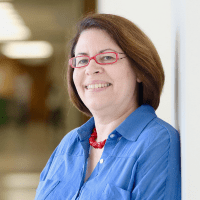
Ruth Lanius
Ruth Lanius, MD, PhD, is a clinician-scientist, researcher, professor of psychiatry at the University of Western Ontario, and a leading specialist on the mind-body effects of trauma and post-traumatic stress disorder (PTSD). She’s published over 250 research articles and book chapters on brain adaptations to trauma and novel adjunct treatments to PTSD and coauthored five books, most recently Sensory Pathways to Healing from Trauma: Harnessing the Brain’s Capacity for Change.
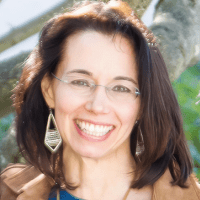
Bethany Brand
Bethany Brand, PhD, is a Emerita Psychology Professor at Towson University with over 30 years of clinical and research experience, the principal investigator on the largest prospective treatment outcome study to date of dissociative disorders (the TOP DD studies), coauthor of the therapist book, Finding Solid Ground: Overcoming Obstacles in Trauma Treatment and The Finding Solid Ground Program Workbook, and author of The Concise Guide to the Assessment and Treatment of Trauma-related Dissociation.