
Enjoy the audio preview version of this article—perfect for listening on the go.
When therapists talk about approaches and developments in our field, we’re likely to discuss the latest brain science research, the impact of AI, and the pros and cons of telehealth—in other words, advances connected to science and technology. But there’s an unconventional new therapeutic approach that taps into the decidedly non-tech era of the ’70s and ‘80s: the world of wizards, spells, and 20-sided dice.
Dungeons & Dragons (D&D) has entered the consultation room. And for some, it’s a genuine clinical game changer—pun intended.
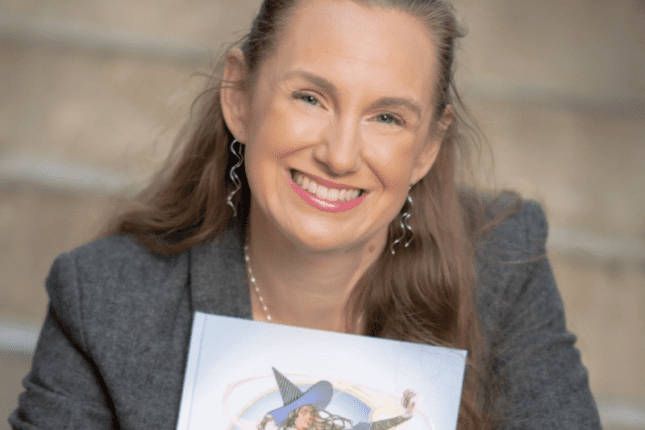
Megan Connell is one of this new breed of therapist innovator/dungeon master who uses tabletop role-playing games (TTRPG) to help clients access emotion, learn social skills, and create relational depth in ways traditional therapeutic dialogue can’t. A psychologist and former Army officer, she’s also a leading voice in the emerging field of applied gaming.
Her book Tabletop Role-Playing Therapy: A Guide for the Clinician Game Master is the first comprehensive guide on using role playing games therapeutically. She’s also the cofounder of Geeks Like Us, a media company dedicated to geek and gaming culture. She spoke with me about ways that therapists can use the collaborative storytelling of TTRPGs—which leverages structure and creativity in ways that engage the imagination—to help clients learn and grow.
Ryan Howes: Were you a role-playing gamer as a kid?
Megan Connell: I played quite a bit in middle school. This was back when we had character sheets and wrote everything out by hand. I took a very long hiatus from it after middle school, and only returned to role-playing games during my PsyD training.
RH: When you started back up, did you have in mind that you wanted to integrate role-playing games into your clinical work?
Connell: I stumbled upon it. I was playing in two different campaigns—which in Dungeons & Dragons refers to an ongoing storyline or adventure. I was thinking about the characters I created in each campaign and how different they were, and then I was like, “Well, they’re both from my brain. They have to have something in common.” When I realized what the commonalities were, I recognized that those were two of my central issues that I really needed to work on. It was a breakthrough moment for me! I also realized this would have taken years to get to in therapy because I had so many defensive walls around these things.
Within a month or so of playing a role-playing game, I was not only able to see these issues more clearly but to have insights into them. And I was like, this is too cool of a tool not to use in therapy.
RH: In many standard board games, you’re the blue piece or the race car, but in TTRPGs, you’re creating the characteristics and the conflicts for your player, correct?
Connell: Yes. In role-playing games, you’ll have one player create the world that the characters are going to interact with and the plot points you’re going to discover. This is the game master, narrator, or dungeon master.
All the other players are responsible for creating a character from the ground up that exists within that world and has ties to that world, and we often project our wants and desires onto the character. So you create a backstory. You create other people your character knows and who have ties to other people’s characters at the table. And then you go on adventures together. A defining factor of role-playing games is that the choices you make as a player affect the world of the game. Your actions matter.
RH: It sounds more like writing fiction than playing a video game.
Connell: It is. In a video game, most of the time, you’re stepping into the role of an established player. When you play TTRPGs and build relationships with other characters and work on solving problems, it gives you a different lens for understanding and seeing yourself that gets behind defense mechanisms. Besides TTRPGs, the only other thing I’ve ever seen help people gain insight in this way is comedy.
Have you ever watched a standup comedian say something, and you’re like, “Yeah, I do that” while you’re laughing? You can see and acknowledge something hard in the moment without being defensive. In role-playing games, because we’re able to project our stuff onto the character we’ve created, we can own it more easily.
That’s my stuff coming up again in the form of Kragnar the Barbarian, but that’s still my stuff. And maybe I do need to work on that. And I can practice working on it through role-playing. If we go back to modalities like psychodrama, role-playing has been used in therapy for a very long time.
RH: So the game and characters offer us a degree of detachment that makes it a little easier to address difficult issues.
Connell: Exactly, because you’re not you, you’re Thangal the wizard. How did Thangal get his power? What did he learn? We think about the character’s motivations, wants, needs, and experiences. Then how do we pull that in and create an interesting dynamic for them to engage in?
RH: Your book mentions the concepts of “bleeding in” and “bleeding out” related to the player/character relationship. Could you explain that?
Connell: For obvious reasons, I’ve replaced those terms with a new term: “emotional permeability.” Essentially, the emotions can come from the game into you, and from you into the game. “Bleed in” is player into the character. If I’m having a bad day and I’m frustrated, I may have my character in the game be testy and frustrated, even though there’s nothing going on narratively in the game that would make them feel that way. That’s my own stuff coming through.
In contrast, if something happens to my character and I feel it very deeply, that’s “bleed out.” It comes out from the character into me. If a character that your character really cares about dies, you might cry, right? Nobody’s died in your life, but it still impacts you. You may feel those emotions very deeply, which allows for behavioral rehearsal.
There was an interesting study done in the early 1980s at a youth center where they found the kids who play D&D were learning conflict resolution and valuing diverse friend groups more than the kids who weren’t. At the gaming table, if the thief steals something and gets the whole party arrested, that’s now conflict within the group that needs to be resolved.
I ran a group where a thief character did something that got the whole group into trouble. They’d just recovered and resolved it, and one of the players looked at the player who was controlling the thief and said, “My character really wants to punch your character right now. I think what you did is funny, but my character’s really mad right now.” And the player with the thief character was like, “I get it.”
I love that the players were able to talk through the conflict and hold space for a part of them, which is their character, that’s angry and in high conflict with another character. They have to work as a group to resolve that and figure out how to meet everybody’s needs.
RH: It’s a great example of different feelings in different parts of self. I can have seemingly opposite feelings at the same time, right?
Connell: I work with the autistic population, and a lot of folks with autism don’t know when they’ve made a mistake. They benefit so much from these difficult conversations where they learn what behavior is rude or hurtful, or challenging but helpful. This is crucial for this population, but people seem afraid to have these conversations today; they’d rather just not talk to someone who made them uncomfortable.
A lot of people diagnosed with autism play all types of tabletop gaming. I think the reason for this is fairly straightforward: it’s a social event with rules that everybody agrees to follow. You’re not just sitting around, having to make small talk. These games allow you to socialize, to have friends, to go on adventures, to have an impact in a way where you don’t get punished for misreading social cues because you can actually ask for help. You can be in the middle of a role-play with your game master and be like, “Wait, I’m really confused. What’s going on here?” And the game master may say, “They’re trying to intimidate you. They’re trying to hint at one thing or another.” You have permission to ask questions without it causing a problem to the narration of the story. Support in the real world isn’t always accessible like that.
RH: Are clients learning how to apply these gaming lessons into their real life?
Connell: For sure. At the most basic level, these are just fun games that can help build social skills. Clinically though, it does do a lot for us. I was working with a client who had a very hard time standing up to their friends, had a lot of social anxiety, didn’t want to say no to people, didn’t want people to dislike them. After playing a session of D&D, they came to me saying, “I’ve got to let you know something. One of my friends wanted a ride to the mall, but I said no.” This chronic people-pleaser had never done anything like this before.
“I didn’t want to go to the mall,” this client told me. “And I felt myself about to say yes. And I realized my D&D character would say no. And so, I said no.” We’d been working on that in individual work—I kid you not—for months. It took playing a role-playing game to move them from that thought to action.
RH: I’m curious about the pragmatics of this. Is this a group-therapy format? I know that for some of these games, the campaigns can take a long time. How do you manage the timing?
Connell: I train people to do closed groups that are set for a certain number of weeks. Twelve weeks is the standard practice for most groups, but I’ve found that 10 weeks tends to work a little bit better with school schedules. And you can tell a pretty good story in 10 sessions, one that really allows people to shine and have healing experiences. And we know from the research that group therapy minute-for-minute is so much more effective than individual therapy across the board.
Another fascinating thing that happens in TTRPG groups is that people show up. People really, really want to be there. When I was running my groups, when people were traveling, they’d still find a place to be alone and phone in so they could participate. That kind of investment isn’t always there in run-of-the-mill group therapy. The fact that people are willing to show up every week is going to improve treatment outcomes.
In role playing games, you also have built-in reinforcement, something you don’t get to have in traditional groups. This is a game, and leveling is part of the game. You get points to level up, and you can figure out how you want to do that. Plus, getting powerful magical items for your character is awesome.
One of the things I figured out was to have players create a therapeutic goal for their character. I’d ask, “How do you want to see your character grow and change over the course of our campaign?” If they engaged in those growth behaviors with their character, they would get rewarded with magic items. Then I’d give award experience points for processing and engaging in the pro-social behaviors that were the goals of the group.
RH: Do people in your gaming groups also have individual therapy to talk about what happened in their campaign?
Connell: Oh, yeah. With TTRPG therapy, it doesn’t feel like therapy to the people in the room. Once in a while, we’ll have something big and deep happen, and we’ll all process and talk about it. But most of the time, the therapeutic impact is a sneaky thing that creeps in, and they don’t even recognize they’ve learned tools or grown until it’s pointed out. Like, look at how far your character has come. Look at how far you’ve come. Look at the things that are changing for you. A lot of times it doesn’t sound like they’re talking about therapy. It just sounds like they’re talking about D&D.
RH: You’re training therapists to do this kind of work in their own practice, to become a game master?
Connell: Yes, exactly. And we train people who aren’t therapists, but are game masters who are working under therapists. This allows a therapist to be another player at the table. Thinking about all the psychological things that are happening, running the story, and remembering the rules of the game can be a lot to manage. You’re wearing a lot of hats when you’re a therapeutic game master. It can be helpful to offload a couple of those hats to somebody so you can just run the games.
RH: What’s the age range of people who engage in this? I’d imagine it’s teens and young adults, but D&D was around in my own Gen Xer childhood. Are there AARP D&D groups?
Connell: Most of the groups I’ve seen or gotten to run are for kids. It’s much easier to get kids to show up for things than adults. A joke in a lot of tabletop role-playing spaces is that the true big bad monster you’re trying to defeat is scheduling. That said, there’ve been adult groups run at VAs with high success rates. I want to get more adult groups running.
RH: You’ve very publicly embraced the term geek, which historically has been derogatory at times. What does that term mean for you?
Connell: I’ve always identified myself as a geek or nerd. I like to think of it as being passionate. I’m excited about things. A few years ago, I even started a company, Geeks Like Us. Our definition of geek is being unapologetically enthusiastic about anything—football, board games, video games, science. It’s just liking or loving something fully.
I think in psychology, too often we’ve ignored the things people love. It’s vitally important to know what these things are because when we understand what’s meaningful to our clients, our connection deepens.
I have a client who’s read a lot of the same books I have. They’ll be talking about a challenge in their life, and I can say, “You know, this is a lot like this one character in that book.” And they’re like, “Oh my God, it is.” And now we can take that character and ask, “How did they work through this? What are the tools that they used?” I think one of the big strengths of geek-based therapeutics and geek-based psychology is being able to take the tools the client already has and help them use those tools to improve their life.
Too often, we tell people, “This is how you have to behave. This is what you need to do.” I don’t think that’s as helpful or as meaningful as meeting people where they are.
RH: Who is the ideal TTRPG therapy client? And who wouldn’t it work for?
Connell: It seems to work with a wide range of clients. There are disorders that I didn’t think would benefit, specifically eating disorders, since group therapy is usually contraindicated—but it can even work there. I’ve consulted with a few people using tabletop role-playing games in eating disorder clinics. They’re making participation in the group a reward for other positive behaviors. And the games are teaching positive social support and helping people build resilience.
I don’t think TTRPG would work as well for more profoundly disabled folks who have a hard time staying in touch with reality, because you do have to hold different frames of reference. If you have a hard time distinguishing what’s real and what’s not, these exercises would be very hard.
I’m sure there are cases and situations where this kind of therapy isn’t optimal, but we’re still uncovering those. It seems like every time I think there’s a limit to who these games are good for, I talk with someone who’s been using them with that population with great success.

Ryan Howes
Ryan Howes, Ph.D., ABPP is a Pasadena, California-based psychologist, musician, and author of the “Mental Health Journal for Men.” Learn more at ryanhowes.net.

Megan Connell
Megan Connell, PsyD, ABPP, is a psychologist, cofounder of HealthQuest, and author of Tabletop Role-Playing Therapy: A Guide for the Clinician Game Master. She’s also the cofounder of the media company Geeks Like Us. She speaks nationally on the intersection of gaming and psychology and is passionate about training therapists to use role-playing games in clinical practice. Contact: MeganPsyD.com.